
The Old Man and the Water-Tight Secret
My old foreman used to say, ‘Water is patient. It will wait for years just for you to make a one-inch mistake.’ He was right. Back in the day, we spent half our lives messing with canisters of yellow glue and rolls of double-sided tape that smelled like a chemical plant and worked about half as well as we hoped. By the time the sun hit those adhesives for three summers, they’d start to curl, turning into something that looked like salt-water taffy. Today, roofing companies have finally wised up. In 2026, the industry has shifted toward heat-welded seams for one simple reason: physics doesn’t lie, but glue does.
The Anatomy of a Failed Seam
When you walk onto a flat roof that’s ten years old, you can usually tell where the disaster started. It’s never in the middle of the field; it’s always at the seams. In the older EPDM or TPO systems that relied on adhesives, you deal with a phenomenon called ‘seam creep.’ As the building breathes—expanding in the heat and contracting when the frost hits—those glued joints are under constant shear stress. Eventually, the adhesive loses its elasticity. It becomes brittle. That’s when capillary action takes over. Water doesn’t just fall into a hole; it gets sucked upward and sideways under the membrane through microscopic gaps in the glue line. It’s a slow-motion drowning of your insulation and plywood deck.
“A roof is only as good as its flashing and its joints. If the seam isn’t a single unit, it’s a liability waiting for a storm.” – Old Roofer’s Adage
The Science of Thermoplastic Fusion
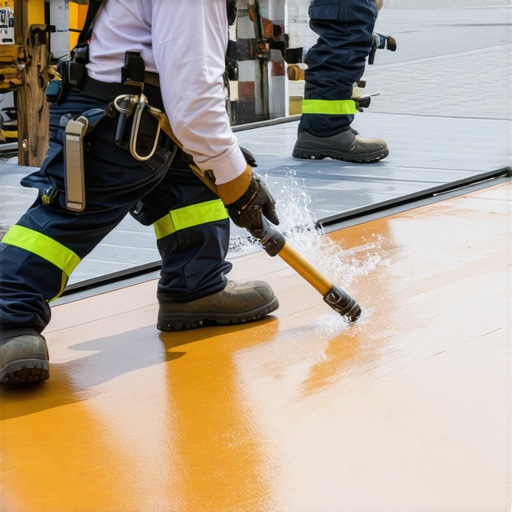
What local roofers are doing now is essentially turning two separate sheets of material into one continuous piece of plastic. When we use a hot-air welder—whether it’s a hand-held Leister or a robotic ‘crawler’—we aren’t just sticking things together. We are reaching the ‘melt point’ of the TPO (Thermoplastic Polyolefin) or PVC membrane. We’re talking about 800°F to 1100°F of concentrated air. This isn’t a surface bond; it’s molecular fusion. The polymer chains of the top sheet literally interweave with the bottom sheet. When it cools, if you try to pull it apart, the membrane itself will tear before the weld fails. That is why roofing professionals have abandoned the ‘peel and stick’ mentality for something more permanent.
Why the North Demands Heat Welding
In cold climates where the thermometer swings sixty degrees in a single week, thermal shock is the primary killer of roofs. When an ice dam forms or snow sits on a flat surface for three weeks, it creates a constant hydrostatic pressure. Glue-down systems eventually give up under that constant moisture. But a heat-welded seam is ‘monolithic.’ It treats the entire roof like a single, giant swimming pool liner. In places like Boston or Chicago, where ‘attic bypass’ and warm air leakage cause condensation under the deck, you need a system that can handle the internal vapor pressure without blowing a seam. If you’ve ever seen a roof ‘scupper’ fail because the flashing tape gave out, you know exactly why we now insist on welding every curb and corner.
The 2026 Equipment Revolution
Modern roofing companies are investing in robotic welders that remove the human error. These machines maintain a perfect speed and temperature, ensuring that the ‘bleed out’ (the small bead of melted plastic at the edge of the seam) is consistent across every square of the installation. We don’t just ‘hope’ it’s sealed; we ‘know’ it is. My forensic investigations usually involve a ‘seam probe’—a hooked tool we run along the edge of the weld. On a glued roof, that hook will eventually find a ‘fishmouth’ or a dry spot. On a heat-welded roof, it’s like trying to find a gap in a solid sheet of steel. It just doesn’t happen when the tech is used correctly.
The Myth of the Lifetime Warranty
Don’t get sucked into the marketing fluff. A ‘lifetime warranty’ from a manufacturer often only covers the material, not the labor to find the leak or fix the rotting cricket or soggy insulation. When a roof fails, it’s almost always due to workmanship at the penetrations. Heat welding allows us to wrap pipes, vents, and HVAC curbs in a way that glue never could. We create a permanent bond to the ‘termination bar’ and the ‘drip edge.’ If your contractor is still talking about ‘seam tape’ in 2026 for a commercial or flat residential project, they are living in the past and you are paying for their nostalgia.
“The building envelope must be continuous. Any break in the thermal or moisture barrier is a failure of design.” – Principles of Modern Architecture
The Physics of the ‘Shiner’ and the Substrate
Even the best weld won’t save a roof if the substrate is trash. We often see ‘shiners’—nails that missed the joist and are backing out due to the freeze-thaw cycle. If you weld a high-end TPO membrane over a poorly fastened deck, those nails will eventually puncture the membrane from the bottom up. A true professional doesn’t just look at the seams; they look at the fastening pattern of the insulation boards. In 2026, we’re seeing more induction welding for the fasteners themselves, which further reduces the number of holes we have to poke in the roof. It’s all about minimizing the ‘points of failure.’
Final Verdict: The Cost of Doing It Right
Yes, hiring local roofers who specialize in heat-welded systems costs more upfront. The equipment is expensive, and the training takes years to master. But when you compare that to the cost of a total tear-off because your ‘cheap’ glued roof failed after seven years, the math is simple. You can pay for the roof once, or you can pay for it three times—once for the initial job, once for the repairs, and once more when you finally realize you need a heat-welded system. Don’t let a ‘trunk slammer’ convince you that tape is ‘just as good.’ It isn’t. It never was. Use the right tech, protect your square footage, and sleep better when the rain starts hitting the glass.“,