
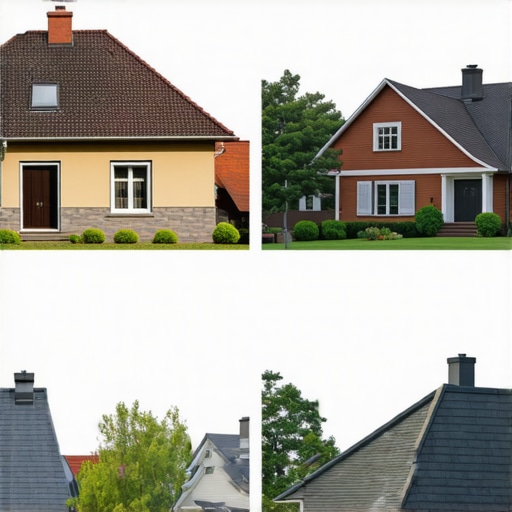
The 2026 Aesthetic: Why Matching Your Roof is More Than a Color Swatch
Walking on a roof that’s been ‘patched’ by a fly-by-night outfit feels like walking on a cheap suit—it looks okay from the sidewalk until you get close enough to see the seams don’t line up. After twenty-five years in this trade, I’ve seen more homeowners get burned by ‘close-enough’ shingle matches than by actual lightning. I remember a job in a coastal town where a homeowner tried to save a few bucks by matching a high-definition 2026 architectural shingle with a standard leftover from the neighbor’s garage. By the time I got there, the different expansion rates had literally ripped the starter strip away, and the plywood underneath was as soft as wet cardboard. The physics of a roof don’t care about your budget; they care about the integrity of the shedding surface. When local roofers talk about ‘matching,’ we aren’t just talking about picking a grey that looks like your old grey. We are talking about the shadow lines, the granule density, and the way the bitumen interacts with the local climate. If you get it wrong, you’re not just ruining your curb appeal; you’re inviting water to find a path into your attic through capillary action.
1. Understanding the Shadow Line and Profile Depth
The 2026 shingle styles are trending toward massive depth—what we call ‘ultra-high-definition’ profiles. In the old days, a three-tab shingle was as flat as a pancake. Now, we deal with multi-layered laminates that create deep shadow lines. If your roofing companies try to slip in a thinner shingle to save on the material bill, the visual break will be obvious from the next block over. Mechanism zooming reveals that these shadow lines aren’t just for show; the varying thickness changes how wind moves over the roof deck. A ‘shiner’—a nail driven too high or through the wrong layer—becomes a pivot point for wind uplift when the profiles don’t match. When the wind hits a mismatched section, it creates a localized low-pressure zone, literally sucking the shingle upward. Local roofers who know their salt will check the offset patterns to ensure the new shingles integrate into the existing drainage plane without creating a ‘hump’ that traps debris in the valley.
“The primary purpose of a roof is to provide a weather-protected environment. Any modification must maintain the continuity of the water-shedding system.” – NRCA Manual
2. The Chemistry of Granule Migration and Color Fade
You can’t just match a new shingle to a five-year-old roof by looking at a brochure. Why? Because of UV degradation and granule loss. As a roof ages, the ceramic-coated granules shed, exposing more of the asphalt. This changes the way light reflects off the surface. If you’re working with roofing companies that don’t understand ‘batch variance,’ you’re going to end up with a checkerboard pattern. The 2026 styles utilize synthetic cool-roof technology where the granules are engineered to reflect infrared radiation. If you mix an old-style shingle with a new infrared-reflective one, the thermal expansion rates will be wildly different. On a 140°F afternoon, the new shingles will stay cooler and expand less, while the old ones grow and push against them. This mechanical stress eventually breaks the seal on the pull-down strip, and suddenly you have shingles flapping like bird wings in the next thunderstorm.
3. Structural Load and Weight Disparity
One thing those ‘trunk slammers’ won’t tell you is that the weight per square (100 square feet) of shingles is changing. The new 2026 designer lines are heavier—sometimes forty to fifty pounds more per square than the materials used even a decade ago. If your local roofers are doing a partial replacement, they have to calculate the load on the rafters. Imagine putting a heavy weighted blanket on only one side of a scale. Over time, that weight disparity can cause subtle shifting in the roof deck, leading to cracks in your interior drywall and causing the flashing to pull away from the chimney. Water is patient. It will wait for that tiny gap to open up, and then it will use hydrostatic pressure to crawl right behind the step flashing and into your living room ceiling. I’ve spent years doing forensic inspections where the leak wasn’t at the shingle, but at the structural transition where two different weights of material met.
“Roofing systems shall be designed and installed to resist the wind loads as specified in this code.” – International Residential Code (IRC) R905.1
4. The Flashing and Cricket Integration
The biggest lie in the industry is that a shingle match is just about the shingles. It’s about the metals. The 2026 styles often require specific color-matched drip edges and flashing kits to maintain the manufacturer’s warranty. If you’re hiring roofing companies that want to ‘reuse’ your old lead or galvanized flashing with new high-end shingles, walk away. You’re looking at galvanic corrosion waiting to happen if the metals aren’t compatible with the new shingle coatings. Furthermore, if you have a chimney wider than 30 inches, you need a cricket—a small peaked structure that diverts water. Matching the 2026 style means rebuilding that cricket to the same height and pitch as the new shingles to ensure the water velocity doesn’t overflow the gutters. If you ignore the transition points, you’ll eventually deal with rotten fascia boards, which costs double to fix later. Real local roofers look at the whole system, from the ice and water shield at the eaves to the ridge vent at the peak, ensuring that every layer works in harmony with the next.
The Warranty Trap: Why ‘Lifetime’ is Often a Mirage
Don’t let a slick salesperson talk you into a ‘Lifetime Warranty’ without reading the fine print regarding matching. Most manufacturers will void your wind or leak warranty if you mix brands or styles on the same slope. They want a uniform system. When local roofers install a ‘system,’ they are using the same brand’s starter strips, shingles, and hip-and-ridge caps. Mixing a 2026 style with 2020 components is a recipe for a denied insurance claim down the road. If a storm hits and the adjuster sees two different types of shingles, they’ll argue the failure was due to improper installation, not the weather. You’re left holding the bag. Protect your investment by demanding a single-manufacturer system and ensuring your roofing companies provide a certified ‘Master Shingle Applicator’ or equivalent to do the work. It’s the difference between a roof that lasts thirty years and one that fails during the first heavy frost. “,