
The Phantom Leak: Why Your New Roof is ‘Raining’ Inside
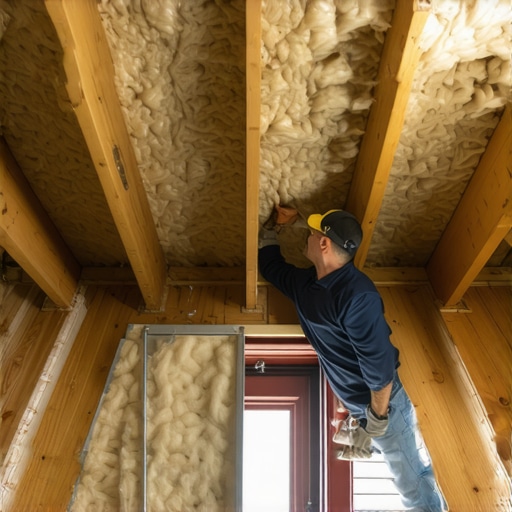
You wake up, walk into the hallway, and there it is—a tea-colored stain spreading across your pristine ceiling. Your first instinct is to call the local roofers who slapped on those architectural shingles last year and give them a piece of your mind. You think the flashing failed. You think a shingle blew off. But when I climb up there with my infrared camera and a moisture meter, I’m not looking at the shingles. I’m looking for the ‘breath’ of your house. Walking on that roof felt like walking on a sponge; the bounce under my boots told me the plywood was already losing its structural integrity. I knew exactly what I’d find underneath before I even popped the hatch. It wasn’t a leak from the sky; it was a leak from the living room. In the trade, we call this the ‘Forensic Autopsy’ of an attic air gap, a phenomenon that is becoming the primary cause of roof failure as we push into the 2026 energy standards.
The Physics of Failure: The Stack Effect and Capillary Treachery
Most roofing companies can nail a shingle, but few understand the thermodynamics of a ‘Thermal Bypass.’ Think of your house as a giant chimney. Warm, moist air from your shower, your stove, and even your breath is under pressure. It wants to go up. If your attic floor isn’t sealed tighter than a drum, that air finds every wire penetration, every recessed light, and every plumbing stack. This is the ‘Stack Effect.’ Once that 70°F air hits the 20°F underside of your roof deck in the winter, it doesn’t just sit there. It undergoes a phase change. The water vapor turns into liquid on the tips of your roofing nails—we call these ‘shiners’—and then it drips. To the untrained eye, it looks like a roof leak. To a forensic roofer, it’s a failure of the building envelope.
“Attic ventilation must be balanced between intake and exhaust to prevent the accumulation of moisture-laden air.” – NRCA (National Roofing Contractors Association) Manual
Sign 1: The ‘Shiner’ Rainfall (Condensation Mapping)
The first sign of a 2026-era attic air gap is the presence of rusted ‘shiners.’ A shiner is a nail that missed the rafter and is sticking through the plywood. In a poorly sealed attic, these nails act as heat sinks. They get cold—freezing cold. When the warm air leaking from your house hits that cold steel, it creates a micro-climate of rain. Over a winter, thousands of these nails can drip enough water to saturate your insulation, killing your R-value and rotting your ceiling drywall. If you see rusted nail tips in your attic, your roofing system is failing from the inside out.
Sign 2: The ‘Melt Pattern’ on the Roof Deck
Go outside after a light frost or a dusting of snow. Does your roof look like a jigsaw puzzle? If you see patches where the snow has melted while the rest of the local roofers‘ work is still white, you’re looking at an air gap. That heat isn’t just ‘escaping’; it’s blasting through a specific hole in your attic floor—likely a ‘cricket’ or a poorly flashed chimney chase—and cooking the shingles from below. This thermal shock causes the shingles to lose their granules prematurely, turning a 30-year product into a 10-year mess.
Sign 3: The ‘Oatmeal’ Plywood Transition
This is where things get expensive. When air gaps allow moisture to linger, it triggers a biological process. Wood-decay fungi don’t need a flood; they just need a consistent moisture content of about 20%. I’ve torn off roofs where the 1/2-inch CDX plywood felt like wet cardboard. You could literally push your thumb through it. This happens because the moisture gets trapped between the underside of the shingle underlayment and the top of the wood. The ‘Mechanism Zooming’ here is brutal: the water molecules use capillary action to wick into the wood fibers, swelling them until the glue bonds fail. If your roof feels ‘soft’ or ‘springy’ when you walk in a valley, you’re not just looking at a repair; you’re looking at a full deck replacement.
Sign 4: Dark ‘Ghosting’ on Insulation
If you pull back the fiberglass batts near a light fixture and the pink wool has turned black, that’s not mold—yet. It’s a filter. Your insulation is acting as a giant air filter for the dust and soot in your home air as it screams through an air gap into the attic. This ‘ghosting’ is the forensic fingerprint of a bypass. It proves that your HVAC system is working double-time to heat the great outdoors because your roofing companies didn’t coordinate with an air-sealing specialist.
“The building official shall require all thermal bypasses to be sealed with an approved material to prevent air leakage.” – International Residential Code (IRC)
Sign 5: The Premature Shingle ‘Crunch’
Walk your roof (carefully). If the shingles feel brittle and ‘crunch’ under your feet like potato chips, but they’re only five years old, you have a ventilation and air gap crisis. Excessive heat buildup in the attic—often reaching 140°F in the summer—literally bakes the petroleum oils out of the asphalt shingles. Once those oils are gone, the shingle loses its flexibility. It can’t expand and contract. It cracks. It leaks. And no ‘Lifetime Warranty’ will cover it because the fine print requires ‘proper ventilation’ according to the manufacturer’s high-velocity standards.
The Surgery: Fixing the Gap Before the Rot Wins
You don’t fix this with a bucket of tar or more vents. Adding more vents to a roof with air gaps is like putting a bigger exhaust on a car with a leaking fuel tank; it actually pulls more conditioned air out of your house. The fix is ‘The Surgery.’ You have to pull back the insulation, find every wire hole, every plumbing pipe, and every top-plate gap, and seal them with two-component spray foam or fire-rated caulk. Only then can your roofing system do its job. Don’t let a ‘trunk slammer’ tell you that you just need a new ridge vent. If the air is leaking from the house, a new vent just accelerates the damage. Investigate the bypass, seal the envelope, and protect your ‘square’ of investment before the 2026 humidity levels turn your home’s bones into compost.