
The Ghost in the Purlins: Why Your Barn Roof is Failing
I’ve spent a quarter-century on steep-slope decks and low-slope industrial sheds, and if there’s one thing I’ve learned, it’s that water doesn’t care about your feelings. It only cares about gravity and the path of least resistance. My old foreman used to say, ‘Water is patient. It will wait for you to make a mistake.’ When it comes to rural barns, those mistakes are usually written in the language of rot, rust, and ruined hay. We’re looking at 2026 now, and the game has changed. We aren’t just slapping corrugated tin on a frame anymore. We’re dealing with ‘Thermal Bridging’ that turns your barn into a literal rain chamber from the inside out.
Walk into a poorly ventilated barn in mid-January. You’ll smell it before you see it—that sharp, stinging scent of ammonia mixed with the damp musk of fermented bedding. Look up at the roof deck. If you see frost on the nail tips, those are ‘Shiners.’ Those missed nails are heat-syncs, pulling the warmth from the livestock below and meeting the freezing air outside. The result? Condensation that drips back down, turning your structural plywood into something with the structural integrity of a wet biscuit. This is the forensic reality of the rural barn, and it’s why eco-friendly roofing isn’t just about saving the planet; it’s about saving your livelihood.
“A roof is only as good as its flashing.” – Old Roofer’s Adage
1. High-Albedo Recycled Standing Seam Metal
Forget the cheap screw-down panels. If you’re looking at roofing companies for a 2026 build, you want a standing seam system with a high-albedo rating. This is the ‘Forensic Surgery’ of the roofing world. We aren’t talking about raw galvanized steel that blinds you in the sun. We are talking about 95% recycled aluminum or steel coated in Kynar 500 resins that reflect UV radiation back into the atmosphere. This prevents ‘Thermal Shock,’ where the metal expands and contracts so violently between a 40°F night and a 100°F day that the fasteners eventually back themselves out like a slow-motion car wreck.
The mechanism here is ‘Capillary Action.’ On a traditional barn roof, water gets sucked up under the laps of the panels through microscopic gaps. A true 2026-spec standing seam uses a mechanical lock that physically prevents water from moving uphill. When you combine this with a ‘Radiant Barrier’ underlayment, you aren’t just keeping the rain out; you’re managing the physics of the entire building envelope. This is especially vital in the North where ‘Ice & Water Shield’ isn’t just a luxury—it’s the only thing standing between you and an ice dam that will rip your gutters off the fascia.
2. Structural Composite ‘Slate’ (The Polymer Powerhouse)
Barns have massive roof planes. If you tried to put real slate on a 60-square barn (that’s 6,000 square feet for the laypeople), the weight would crush the rafters before you finished the first course. Enter the 2026 composite. These are made from recycled post-industrial plastics and rubbers. They look like weathered wood or heavy stone, but they weigh a fraction of the real thing. The ‘Mechanism Zooming’ here is all about ‘Impact Resistance.’ In rural areas, hail doesn’t just dent your roof; it shatters it. These composites are rated for Class 4 impact, meaning they can take a two-inch ice ball traveling at 70 mph without cracking the ‘Secondary Water Resistance’ layer.
Local roofers often overlook the ‘Uplift Ratings’ on these materials. In a flat, rural landscape, wind is a constant predator. A barn is basically a giant sail. If your contractor doesn’t understand ‘Staggered Nailing’ patterns or the specific geometry of a ‘Cricket’ to divert water around a cupola, you’re going to lose half your roof in the first spring gale. I’ve seen roofing jobs where the ‘Trunk Slammers’ used standard galvanized nails on a coastal barn, only for ‘Galvanic Corrosion’ to eat the heads off the nails within three years because of the salt air. Use stainless. Always.
“The building code is a minimum standard, not a gold medal. It’s the ‘D-‘ grade that keeps you from going to jail, not the grade that keeps your building dry for fifty years.” – International Residential Code (IRC) Commentary
3. Integrated Solar-Thermal Metal Ribbing
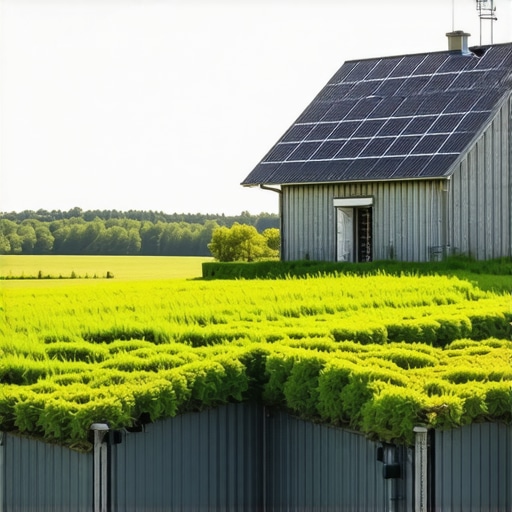
This is the frontier. By 2026, roofing companies aren’t just installing covers; they are installing power plants. We’re seeing thin-film CIGS (Copper Indium Gallium Selenide) solar cells integrated directly into the metal ribs of the roof. No heavy glass panels, no ‘Thermal Bridging’ from mounting brackets that pierce the deck. This is ‘Seamless’ in the literal sense. The energy harvested can run the ventilation fans that prevent the ‘Attic Bypass’ issues I mentioned earlier. If you can keep the air moving at the ridge, you prevent the ‘Rotting Plywood Oatmeal’ syndrome that kills barns.
When you’re vetting local roofers for this tech, ask them about the ‘Valley’ details. A valley is where two roof planes meet, and it’s where 90% of failures occur. In a barn, these valleys collect debris—leaves, twigs, owl pellets. If the valley isn’t ‘Open’ and lined with a non-corrosive metal, it becomes a dam. Water backs up under the shingles or panels through ‘Hydrostatic Pressure,’ and suddenly you have a waterfall over your combine harvester. Don’t let a salesman tell you a ‘Closed’ valley is just as good. It’s cheaper for them, and more expensive for you ten years from now.
The ‘Lifetime Warranty’ Trap
Let’s talk turkey. A ‘Lifetime Warranty’ is a marketing hallucination. Most of those warranties are prorated, meaning by the time your roof actually fails in year fifteen, the manufacturer will write you a check for the price of a ham sandwich. What you want is a ‘Workmanship Warranty’ from a contractor who has been in the same zip code for longer than five minutes. Look for a ‘Square’ count that makes sense for the price. If someone is quoting you half the price of everyone else, they aren’t ‘efficient.’ They are cutting corners on the ‘Ice & Water Shield’ and the ‘Drip Edge.’ They are using ‘Shiners’ and leaving your ‘R-Value’ to rot in the humidity. Don’t be the guy I have to visit for a forensic audit in 2028. Do it right the first time.