
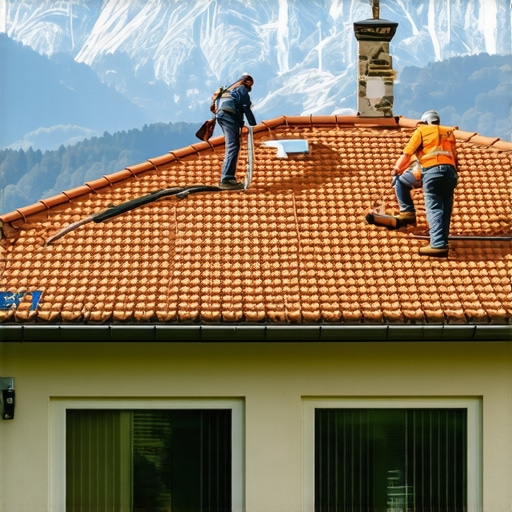
The Autopsy of a Failed Valley: Why Your Ceiling is Bleeding
You see a brown, tea-colored stain spreading across the drywall in your living room. You call three local roofers, and they all point to the same spot: the valley. In the trade, we call this the ‘grand central station’ of water runoff. It is where two roof planes meet to form a channel, and in a heavy downpour, it carries more water than any other part of the system. But here is the thing about 2026 roofing: we are seeing failures in brand-new installs that shouldn’t happen for twenty years. My old foreman used to say, ‘Water is patient. It will wait for you to make a mistake.’ And boy, was he right. I’ve spent the last quarter-century crawling through 140-degree attics looking for the ‘ghost leaks’ that less experienced roofing companies leave behind. The most common culprit? The valley gap.
The Physics of Failure: Capillary Action and Surface Tension
To understand why a valley fails, you have to stop thinking of water as a liquid that just ‘runs down.’ You have to think of it as a hungry predator looking for a way in. When a massive volume of water hits a valley, it creates what we call a hydrostatic head—a fancy term for the pressure exerted by the weight of the water. If your local roofers used a ‘California Valley’ (where shingles are simply lapped over the center), that water starts to move sideways. Through a process called capillary action, the water is literally sucked upward and backward under the shingles. It defies gravity. It finds the edge of the underlayment, crawls over the top of the plywood, and begins the slow, steady process of turning your structural decking into something resembling soggy oatmeal.
“A roof is only as good as its flashing, and the valley is the ultimate test of that flashing’s integrity.” – Old Roofer’s Adage
The Forensic Finding: The ‘Shiner’ and the Short-Cut
When I perform a forensic tear-off on a failing valley, I usually find one of two things: a ‘shiner’ or a lack of a starter strip. A shiner is a nail that missed the framing and hit the open space of the valley. Over time, the thermal expansion and contraction of the roof—the constant heating and cooling throughout the day—causes that nail to back out. Now you have a silver bullet hole right in the middle of a high-flow water channel. In the tropical humidity of the Southeast, that hole becomes a straw. 2026 roofing companies that know their business have moved away from these lazy practices, but ‘trunk slammers’ are still out there pinning valleys with whatever nails are left in their gun. They don’t understand that the valley isn’t just a part of the roof; it is a high-velocity drainage system.
The Surgery: How Professional Roofing Companies Execute the 2026 Fix
The fix isn’t a bucket of tar. If a contractor shows up with a bucket of ‘bull’ (roofing cement) to fix a valley, fire them on the spot. That is a Band-Aid that will crack in the sun within eighteen months. The real fix—the surgery—requires a full tear-back to the deck. We start with a high-temperature Ice and Water Shield. In 2026, we aren’t using the thin, papery stuff from the nineties. We use a polymer-modified bitumen that heals around the nail shafts. Then comes the metal. A professional open-metal valley, usually 24-gauge steel or heavy copper, is the gold standard. We hem the edges of that metal so that any water trying to move sideways hits a literal wall and is forced back into the center channel. This prevents the capillary creep that destroys fascia boards and soffits.
“Valleys shall be lined with metal, mineral-surfaced roll roofing, or inorganic reinforced shingles in accordance with the manufacturer’s installation instructions.” – International Residential Code (IRC) R905.2.8.2
The Hidden Trap: Underlayment and Thermal Shock
Many roofing companies focus solely on the shingles, but the underlayment is the true hero of the 2026 roof. In high-heat environments like Florida or Texas, the roof deck can reach temperatures that would cook an egg. This thermal shock causes inferior materials to become brittle. When the valley gap is improperly flashed, the plywood expands at a different rate than the metal flashing. Without a high-quality synthetic underlayment to act as a slip-sheet, the metal will eventually tear the fastener holes wider, creating a slow-motion disaster. We call this ‘mechanical stress,’ and it is the primary reason why ‘cheap’ roofing is the most expensive thing you will ever buy. A few dollars saved on materials today turns into a five-figure mold remediation bill five years from now.
The Final Verdict: Don’t Wait for the Drip
The cost of waiting to fix a valley gap is astronomical. By the time you see the stain on your ceiling, the insulation is already compromised, the R-value is shot, and the spores are already blooming. If you are hiring local roofers, ask them specifically about their valley methodology. Do they use a W-swale? Do they hem their metal? Do they use stainless nails to prevent galvanic corrosion? If they look at you like you’re speaking a foreign language, keep looking. Your home is too big of an investment to trust to someone who thinks a roof is just a pile of shingles. A real roofer builds a system designed to fight physics and win. Anything less is just a countdown to the next storm.