
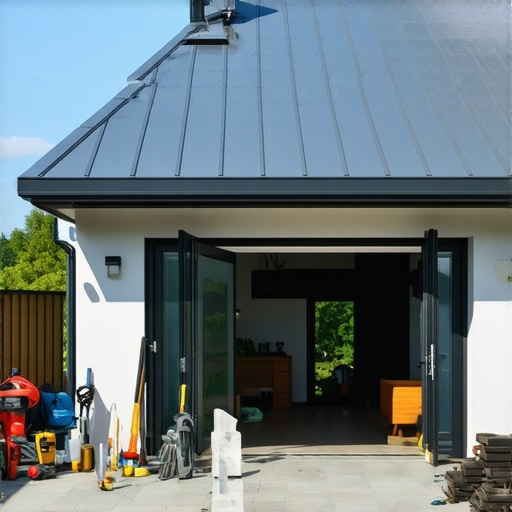
The Material Truth: Why Your Next Roof Should Outlive Your Mortgage
Look, I’ve spent thirty years on a 12-pitch roof staring at the failures of men who thought they could outsmart gravity and water. I’ve seen it all: the ‘cheap’ 20-year shingles that curled into potato chips after five summers, and the ‘professional’ flashing jobs that were little more than a prayer and a tube of $4 caulk. My old foreman used to say, ‘Water is patient. It will wait for you to make a mistake.’ He was right. Water doesn’t sleep, and it doesn’t care about your budget. If there’s a path, it’ll find it, following the capillary action right under your shingles, soaking into the plywood until it turns into a mushy mess that smells like a damp basement. That’s why we need to talk about what’s actually hitting the market in 2026. Local roofers are finally waking up to zinc accents, and it’s about time. Most roofing companies just want to slap on whatever is on sale at the supply house, but if you’re looking at your home as an investment rather than a liability, you need to understand the physics of what you’re putting over your head.
“A roof is only as good as its flashing.” – Old Roofer’s Adage
1. The Physics of the Patina: Self-Healing Architecture
When we talk about zinc in 2026, we aren’t just talking about a shiny piece of metal. We’re talking about a living material. Most roofing materials—asphalt, cheap steel, aluminum—begin their journey toward the scrap heap the second they leave the factory. They oxidize, they pit, and they fail. Zinc is different. When exposed to the elements, zinc undergoes a chemical reaction with moisture and carbon dioxide to form a protective layer of hydroxyl carbonate. This is what we call the patina. Mechanism zooming: If a storm tosses a branch onto your zinc valley and leaves a scratch, you don’t need to panic. Over time, the zinc actually reforms that carbonate layer, essentially ‘healing’ the scratch. Try getting a piece of painted galvanized steel to do that. Once the paint on steel is scratched, the clock starts ticking on rust. With zinc, the clock just resets. Local roofers who know their salt understand that this patina is a shield that lasts eighty to a hundred years. It’s the difference between a roof that dies and a roof that matures.
2. The War on Algae and Moss
If you live in a climate where the sun rarely hits the north side of your gables, you’ve seen the ‘black streaks.’ That’s Gloeocapsa magma, a hardy cyanobacteria that feeds on the limestone filler in modern asphalt shingles. It’s not just ugly; it’s an appetite. It holds moisture against the granule surface, accelerating the breakdown of the shingle. Zinc is a natural fungistat. When it rains, trace amounts of zinc ions are released and wash down the roof. These ions are toxic to moss and algae but harmless to your landscaping. By integrating zinc accents—whether it’s at the ridge, the valleys, or as standing seam sections—you are creating a chemical barrier. You won’t see those nasty streaks because the zinc is effectively sanitizing the roof every time it drizzles. Many roofing companies will try to sell you ‘algae-resistant’ shingles, which are just shingles with a few copper granules tossed in. Those granules wash away in five years. Zinc is the whole plate; it doesn’t run out of juice.
3. Thermal Expansion and the ‘Oil Canning’ Nightmare
I’ve walked on roofs in the dead of summer where the temperature hit 150°F. In those conditions, materials move. Most metals expand and contract so violently that they pull their own fasteners out, creating what we call shiners—nails that missed the rafter or have been backed out by the constant shifting of the deck. When these nails back out, they lift the shingle or the metal panel, creating a direct conduit for water. Zinc has a very specific coefficient of thermal expansion. While it does move, when it’s installed by local roofers who understand ‘sliding cleats,’ it handles the stress of thermal shock far better than rigid steel. It’s a softer, more malleable metal. It doesn’t ‘oil can’ (that annoying wavy distortion you see on cheap metal roofs) as easily because it absorbs the stress within its own molecular structure. It stays flat, stays quiet, and most importantly, stays watertight.
4. The Weight of Responsibility: Structural Integrity
One of the biggest mistakes I see roofing companies make is recommending heavy slate or clay tile for a house that wasn’t engineered for it. You end up with rafter spread, sagging ridge lines, and cracked ceilings. Zinc gives you that high-end, architectural look without the four-ton weight penalty. It’s incredibly light for its durability. This means we can often install it over existing structures without needing a structural engineer to tell us the house is going to collapse. But don’t mistake ‘light’ for ‘weak.’ Zinc is a tank. It’s resistant to corrosion from salt air—crucial if you’re near the coast—and it doesn’t get brittle in the freezing winters of the north. It’s the middle ground: the weight of a feather with the skin of a rhino.
“Modern building enclosures must manage heat, air, and moisture, but moisture is the most frequent cause of premature failure.” – Building Science Axiom
5. Lifecycle Value vs. The ‘Lifetime’ Warranty Lie
Let’s get cynical for a second. Every roofing company out there offers a ‘Lifetime Warranty.’ Ask yourself: whose lifetime? Most of those warranties are prorated, meaning by the time your roof actually fails in year 12, the manufacturer might buy you a cup of coffee and half a bundle of shingles. Zinc is a 2026 choice because we’re moving away from the ‘disposable roof’ culture. Yes, a zinc-accented roof costs more upfront. But when you factor in that you aren’t replacing it in 15 years, and you aren’t paying for moss removal, and you aren’t paying for a forensic investigator like me to find a leak every three years, the math flips. You’re buying time. You’re buying the peace of mind that comes from knowing the most vulnerable parts of your roof—the valleys, the crickets behind the chimney, and the drip edges—are made of a material that won’t quit until your grandkids are retired. When you hire local roofers, make sure they aren’t just ‘shingle flippers.’ Make sure they know how to work a brake, how to solder a joint, and why zinc is the king of the 2026 job site. If they look at you sideways when you mention zinc, find a different company. You want a craftsman, not a trunk slammer.