
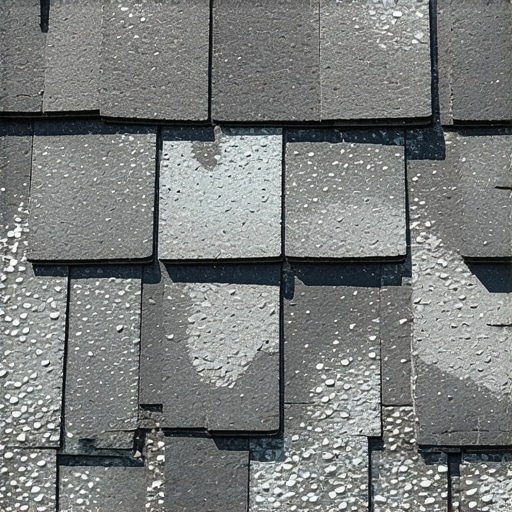
The Forensic Reality of Shingle Decay
I remember standing on a roof in the humid heat of the Gulf Coast last summer; every step felt like I was walking on a wet sponge. The granules weren’t just shedding; they were hemorrhaging. I looked down, and my work boots were covered in ceramic dust. That’s when I knew the fiberglass mat was already compromised. Most local roofers will tell you that a little grit in the gutters is normal, but they aren’t looking at the physics of the decay. When we talk about 2026 shingle granule loss, we are looking at the accelerated breakdown of asphalt binders caused by intensified UV radiation and the relentless thermal shock of tropical weather patterns.
Why Granules Actually Matter
Granules aren’t just there for aesthetics. They are the sacrificial armor of your roofing system. Their primary job is to shield the volatile asphalt layer from ultraviolet rays. Without that shield, the sun fries the oils out of the asphalt, making it as brittle as a saltine cracker. Once those oils are gone, the shingle loses its ability to expand and contract with the heat. In a environment where an attic can hit 140°F by noon, that loss of flexibility is a death sentence for your roof. Local roofers often overlook the chemical scission happening at the molecular level, but the evidence is always there if you know how to read the debris.
“The primary function of the mineral surfacing is to protect the asphalt coating from the weathering effects of sunlight.” – NRCA Roofing Manual
Sign 1: The Gutter Glint and Hydraulic Erosion
The first sign isn’t on the roof; it’s in the troughs. When you see a metallic or ceramic sheen in your downspout runoff, you’re looking at the lifeblood of your roof washing away. This is caused by hydraulic erosion. During a heavy downpour, water doesn’t just flow; it creates micro-currents that pry loose granules from their asphalt beds. If you’re finding more than a handful of grit after a storm, the bond has failed. Roofing companies often dismiss this as ‘settling,’ but in a 2026 context, this is often a sign of ‘scuffing’ during installation or poor factory adhesion. [IMAGE_PLACEHOLDER]
Sign 2: Splotchy Surfaces and the ‘Bald Spot’ Syndrome
Take a look at your roof during the ‘golden hour’ when the sun is low. If you see dark, matte patches surrounded by reflective areas, you have bald spots. This is where the asphalt is fully exposed. This usually happens first in the valleys or around a cricket where water velocity is highest. When the granules are gone, the asphalt begins to bake. It turns from a rich black to a dull grey and starts to crack. This is the ‘alligatoring’ effect. If your roofing professional isn’t pointing these out, they aren’t doing a forensic check; they’re just waiting for a leak to happen so they can sell you a patch job.
Sign 3: The Fiberglass Glint (Thermal Bridging)
This is the point of no return. When you see a shimmering, fiber-like texture through the shingles, the asphalt has completely eroded, exposing the fiberglass mat. At this stage, the shingle is no longer waterproof. It’s a sieve. Water begins to move via capillary action—wicking upward under the laps of the shingles. It finds a shiner (a misplaced nail) and follows it straight into your plywood decking. This is how you end up with a roof that feels like a trampoline. The structural integrity is gone because the thermal bridging is now heating the underside of the shingle from the attic side while the sun cooks it from the top.
Sign 4: Brittle Edges and ‘Potato Chipping’
Walk the perimeter. If the edges of the shingles are curling upward like a stale potato chip, the internal reinforcement has failed. In the Southeast, this is often exacerbated by salt air and high humidity. The lack of granules allows the edges to dry out faster than the center of the shingle. This creates a physical tension that pulls the corners up. Once they curl, wind-driven rain can be pushed inches underneath the course, bypassing the overlap entirely. Most roofing companies will try to tell you this is just ‘old age,’ but it’s actually a failure of the secondary water resistance layer to manage the heat load.
“Roofing shingles shall be fastened in accordance with the manufacturer’s instructions.” – International Residential Code (IRC) R905.2.5
The Trap of the ‘Lifetime Warranty’
Don’t let a salesman distract you with a ‘Lifetime Warranty’ certificate. Those warranties almost always have a ‘pro-rated’ clause that kicks in after just a few years, and they rarely cover ‘labor’ or ‘disposal.’ If your shingles are shedding granules in year five of a thirty-year shingle, the manufacturer will likely blame ‘ventilation issues’ rather than material failure. This is why choosing local roofers who understand attic airflow is more important than the brand of shingle you buy. If the intake and exhaust aren’t balanced, the shingles are being cooked from both sides, and no amount of granules will save them.
The Surgery: Fix or Replace?
If you have localized granule loss around a chimney or a specific valley, you might get away with a surgical repair. But if the shedding is uniform across a square (100 square feet) or more, you’re looking at a total system failure. Smearing caulk over a bald spot is a band-aid on a gunshot wound. It might stop the drip for a month, but it won’t stop the plywood underneath from turning into a petri dish of mold. Real roofing is about managing the physics of water and heat. If your contractor doesn’t talk about ‘uplift ratings’ or ‘perm ratings’ of the underlayment, keep looking. You need a technician, not a shingle-slapper.