
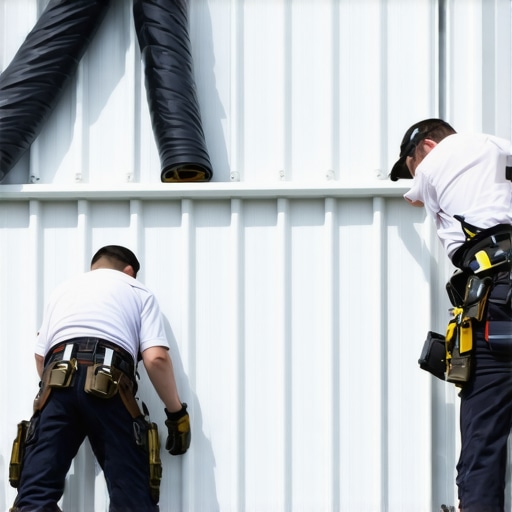
The Material Truth: Why Your Roof is Failing Before the First Storm
I have spent twenty-five years crawling through damp attics and peeling back blistered shingles that look more like potato chips than protection. Most roofing companies are still trying to sell you the same technology your grandfather used, and quite frankly, it is a disaster waiting to happen. My old foreman used to say, ‘Water is patient. It will wait for you to make a mistake.’ He was right. Water does not just fall; it searches. It uses capillary action to climb uphill, sucking moisture under your flashings and into your decking until that plywood feels like wet oatmeal under your boots. If you are looking at local roofers in 2026, you are likely hearing about 2026 PVC liners. There is a reason for that. We are finally moving away from the ‘trunk slammer’ special and toward something that actually handles the physics of a tropical climate.
“A roof is only as good as its flashing.” – Old Roofer’s Adage
1. The Physics of the Hot-Air Welded Seam
Standard roofing relies on adhesives or tape. In the humidity of a Gulf Coast summer, those adhesives are a joke. They start to break down the second the temperature hits 120 degrees on the deck. A 2026 PVC liner does not use glue. We use hot-air welders to fuse the sheets together at a molecular level. When I pull a forensic inspection on a failed roof, the seams are usually the first thing to go. With PVC, the seam is actually stronger than the field membrane itself. You are not just laying a cover; you are creating a monolithic shield that prevents water from migrating laterally when a shiner—one of those missed nails—creates a path of least resistance into your substrate.
2. Secondary Water Resistance and High Uplift Ratings
In our region, wind-driven rain is a constant threat. Most local roofers slap down a bit of felt and call it a day. But when the wind starts gusting, that rain gets pushed horizontally. The 2026 PVC liners are engineered for high uplift ratings. Because the liner is physically bonded or mechanically fastened with heavy-duty plates, the negative pressure of a storm cannot peel it back like a banana skin. This is Secondary Water Resistance (SWR) at its finest. Even if your primary shingles are ripped away, the PVC liner remains as a waterproof barrier, keeping your drywall dry and your insurance claim manageable.
3. The Death of Thermal Shock
Your roof moves. It expands in the midday sun and contracts when the afternoon thunderstorms hit. This thermal expansion is what kills traditional materials. Asphalt cracks. TPO gets brittle. But the high-grade plasticizers in a 2026 PVC liner allow it to stretch and recover. I have seen roofs where the valley had literally torn apart because the material could not handle the movement. PVC handles that stress without breaking a sweat, ensuring that the cricket we built behind your chimney actually stays watertight instead of becoming a leak point.
“The primary function of a roof is to provide a barrier to the passage of water and other elements into the interior of a building.” – NRCA Manual
4. Resistance to Ponding Water and Hydrostatic Pressure
If you have a flat section or a roof that is dead level, you have a ponding problem. Most warranties are void if water sits for more than 48 hours. That is a scam. 2026 PVC is one of the few materials that does not care if it is underwater. It does not rot, and it does not absorb moisture. This prevents hydrostatic pressure from forcing water through the microscopic pores of the material. When I do a tear-off and find rotten fascia boards, it is almost always because the previous contractor used a material that could not handle standing water.
5. Chemical and Algae Resistance
In the Southeast, the humidity breeds Gloeocapsa magma—that black algae that makes your roof look like a science experiment. Beyond aesthetics, this growth holds moisture against the surface. 2026 PVC liners are naturally resistant to organic growth and the salt air that eats away at galvanic metals. Using stainless nails with these liners ensures that the entire system remains corrosion-free for decades, not just a few seasons.
6. Solar Reflectivity and the Attic Heat Trap
The heat inside a poorly ventilated attic can reach 140°F, cooking your shingles from the inside out and skyrocketing your cooling costs. These PVC liners are highly reflective. They bounce the UV radiation back into the atmosphere rather than absorbing it into your living space. This reduces the thermal load on your HVAC system. It is not about being ‘green’; it is about preventing your attic from becoming an oven that bakes the life out of your structural timber.
7. The Lifetime Warranty Trap vs. Real Longevity
Every roofing company promises a ‘Lifetime Warranty.’ It is marketing garbage. Read the fine print, and you will see it is prorated to almost nothing after ten years. 2026 PVC is chosen by professionals because the lifecycle is proven. It does not rely on granules that wash away into your gutters. It is a solid, engineered membrane. When you invest in this level of protection, you are avoiding the square-for-square replacement cost that hits most homeowners every 12 to 15 years. You are buying the last roof your home will ever need. If you want to avoid the headache of a failing system, stop looking for the cheapest bid and start looking at the physics of the material being installed. A 2026 PVC liner is the surgery that fixes the problem, while a cheap asphalt patch is just a band-aid that will fall off in the next rainstorm.