
The Forensic Autopsy of a Failing Anchor
Walking across that steep-slope asphalt in the humid heat of a Gulf Coast afternoon, the first thing I noticed wasn’t the shingles. It was the orange-tinted weep at the base of the fall-protection anchor. I stepped near it, and the deck gave a sickening, muffled groan—not the sharp crack of fresh plywood, but the wet thud of wood that’s basically become mulch. I’ve spent twenty-five years on these decks, and I’ve seen this movie before. If you think a permanent roof anchor is a ‘set it and forget it’ insurance policy, you’re betting your house on a piece of steel that’s currently being eaten alive by salt air and thermal pumping. By 2026, the anchors installed during the post-2020 building boom are going to start failing in spectacular fashion, and most homeowners won’t know it until a local roofer falls through their kitchen ceiling.
“Roofing systems shall be designed and installed in accordance with this code and the approved manufacturer’s installation instructions.” – International Residential Code (IRC) R903.1
The physics of this failure are ruthless. It starts with the salt air—that invisible, corrosive mist that defines life in the Southeast. When a contractor installs a permanent anchor, they’re punching 1/4-inch lag bolts through your waterproofing. If they didn’t use 316-grade stainless steel, the clock started ticking the second the hammer hit the nail. We’re talking about galvanic corrosion. When you have dissimilar metals or even just carbon steel exposed to the electrolyte of coastal humidity, electrons move, and the metal sacrifices itself. The anchor plate might look solid on the top, but underneath, where it sits against the shingle, moisture is trapped. This isn’t just a leak; it’s a slow-motion chemical explosion occurring right above your head.
[image placeholder]
Sign 1: The Iron Oxide Bleed (The Red Flag)
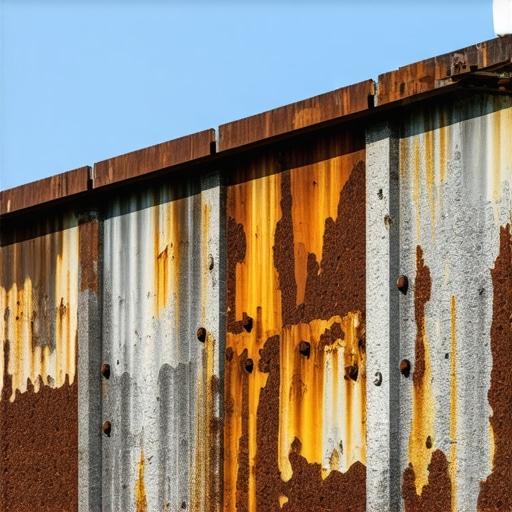
The first sign of the 2026 anchor crisis is what I call the ‘Rust Tear.’ You’ll see a brownish-red streak bleeding down from the anchor point, often staining three or four courses of shingles below it. This isn’t just an aesthetic issue. That streak is literally liquified steel. When water hits that oxidized metal, it carries iron oxide particles down into the granules of your asphalt shingles. This acid-rich runoff actually accelerates the breakdown of the asphalt, causing the granules to slough off. If you see this, the structural integrity of the bolt is already gone. It’s no longer an anchor; it’s a loose tooth. In my experience, by the time you see the streak, the lag bolt has lost 40% of its diameter to the rust gods. You wouldn’t trust your life to a piece of dental floss, so don’t trust a bleeding anchor.
Sign 2: Perimeter Softness and Decking Mush
This is where the mechanism zooming gets ugly. Every time the sun hits your roof, the temperature swings from 80°F to 150°F. This causes thermal expansion. The metal anchor plate expands at a different rate than the wood decking. This movement creates a tiny gap—a micro-fissure—around the bolts. Capillary action then sucks the morning dew or the humid Southeast rain into that gap. Once the water is under the shingles, it hits the plywood. Because the anchor plate is bolted tight, the wood can’t breathe or dry out. It rots from the inside out. When roofing companies come out to do an inspection, they often miss this because the anchor feels ‘tight’ to the touch. But if you walk a circle around that anchor and feel a slight ‘give’ or a spongy sensation, your plywood has turned to oatmeal. We call this a ‘soft square.’ If that anchor is ever actually needed for a fall, the bolts will simply pull out like a hot knife through butter, taking a chunk of rotten OSB with them.
“A roof is only as good as its flashing, and any penetration is a potential point of catastrophic failure.” – NRCA Manual Axiom
Sign 3: Bolt-Head Pitting and Gasket Decay
Look closely at the hardware. Most ‘permanent’ anchors installed by local roofers use a neoprene or rubber gasket to seal the bolt heads. In the high UV environment of the Southern US, these gaskets have a shelf life of about three to five years. By 2026, the gaskets on anchors installed today will be cracked, brittle, and non-functional. When the gasket fails, water travels down the threads of the lag bolt. This is the ‘silent killer.’ You won’t see a leak in your attic because the water is being absorbed by the wood fibers of the rafters. You won’t see a ‘shiner’ (a missed nail) dripping on the floor. Instead, the bolt itself is rusting inside the wood. This weakens the ‘bite’ of the threads. I’ve seen forensic tear-offs where the lag bolt came out by hand because the threads had completely vanished, replaced by a slurry of rust and wet wood pulp. If the bolt heads look pitted or if the rubber underneath them looks like a dried-out desert floor, you are in the danger zone.
The Fix: Surgery vs. The Band-Aid
Don’t let a ‘trunk slammer’ tell you that a bead of caulk will fix this. Smearing silicone around a rusted anchor is like putting a Band-Aid on a gunshot wound. The only way to fix an oxidized anchor is the ‘surgical’ approach. You have to pull the anchor, replace the affected shingles, and most importantly, check the decking. If the wood is compromised, you’re looking at a partial tear-off to replace the ‘square’ of plywood. If you catch it early, a local roofer can swap the carbon steel hardware for 316 stainless and use a high-quality pitch pocket or a properly flashed base. But wait too long, and you aren’t just replacing an anchor—you’re replacing the whole section of the roof. Water is patient. It will wait for you to make a mistake, and it will use that anchor as a highway into your home’s skeletal structure. Protect your investment by demanding an inspection of every penetration, especially those ‘permanent’ safety fixtures that are anything but permanent in our salt-rich air.