
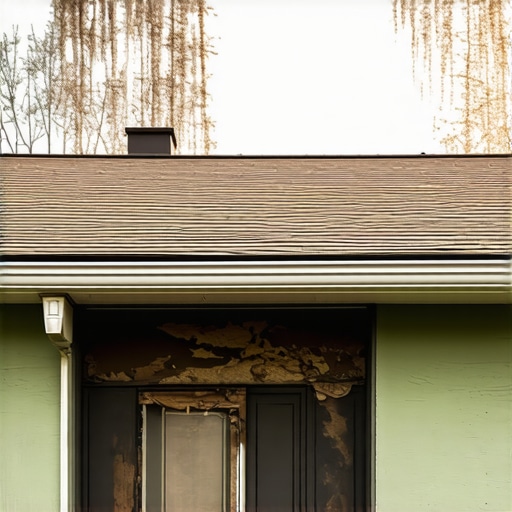
The Anatomy of a Slow Death: Why Your Fascia Is Rotting from the Inside Out
My old mentor, a man we called ‘Grit’ who spent forty years on 12-pitch slopes, used to tell me every morning while we loaded the truck: ‘Water is patient. It will wait for you to make a mistake, and then it will wait ten years for that mistake to eat your house.’ He wasn’t talking about a massive storm or a tree limb coming through the attic. He was talking about the slow, silent, and expensive degradation of the fascia board. When most homeowners call local roofers, they think they have a shingle problem. By the time I get up there with a specialized moisture meter and a flathead screwdriver, I usually find a forensic crime scene where the fascia board has become nothing more than structural mulch.
The Physics of Failure: Why Fascia Rot Is Accelerating
In the humid climates where roofing companies are constantly battling moisture, the fascia board—that long, horizontal strip of wood that finishes the edge of your roof—is the frontline. But it’s a frontline that is often neglected. We are seeing a massive uptick in rot cases projected for 2026 because of the building materials used in the early 2010s that are now reaching their breaking point. To understand the rot, you have to understand capillary action. Water doesn’t just run off your roof; it has a high surface tension. If your drip edge wasn’t installed with a proper ‘kick-out’ or if it’s missing entirely, water clings to the underside of the metal and gets sucked directly into the end-grain of your fascia wood. It’s like putting a straw into a glass of water; the wood literally drinks the storm.
“Fascia boards shall be installed in a manner that provides a continuous water-shedding surface and protects the building’s structural elements from moisture infiltration.” – International Residential Code (IRC) R903.1
Sign 1: The Tell-Tale Shingle ‘Lip’ Sag
The first sign isn’t on the board itself, but in the shingles above it. When you look up from the ground, the shingles should have a crisp, straight line overhanging the drip edge by about 1/2 to 3/4 of an inch. If you notice a ‘dip’ or a wavy pattern at the very edge, the fascia board is likely failing. As the wood rots, it softens. The nails or staples holding the drip edge begin to pull through the ‘punky’ wood. This causes the metal to sag, which in turn pulls the starter course of shingles down. If you see this, the wood underneath is already past the point of no return. You’re not looking at a repair; you’re looking at a square of shingles that needs to be peeled back for a full board replacement.
Sign 2: Gutter ‘Leaning’ and the Lever Effect
I’ve seen dozens of local roofers try to fix a sagging gutter by just driving longer spikes into the fascia. That is a amateur move. Gutters pull away because the wood grain has lost its structural integrity. When 100 feet of gutter is full of water, it weighs hundreds of pounds. That weight acts as a lever. If the fascia is healthy, it holds. If it’s damp, the wood fibers expand and contract, eventually stripping the threads of the gutter screws. If you can see a gap between the back of your gutter and the board, don’t just tighten the screw. That’s a ‘shiner’ waiting to happen—a missed or useless fastener that provides zero grip. The rot is already there, hidden behind the aluminum or vinyl gutter skin.
Sign 3: The ‘Biological Shadow’ (Algae and Fungi)
If you see green or black streaks on the face of your fascia, or worse, actual fungal growth (mushrooms) sprouting from the bottom edge, you are looking at an advanced stage of decay. Wood-destroying fungi don’t just appear; they require a consistent moisture content of over 20% to thrive. In 140°F attic heat, that moisture should evaporate. If it isn’t, it’s because the water is trapped behind a ‘wrap’ or ‘cladding’—often a thin layer of aluminum that was supposed to protect the wood but is instead acting as a moisture trap. Roofing companies that simply wrap old fascia in metal without treating the underlying wood are essentially building a vertical swamp.
Sign 4: Peeling Paint and the ‘Sponge’ Test
Paint doesn’t just peel because it’s old; it peels because the wood behind it is saturated. When the sun hits your roof, the water inside the wood tries to escape as vapor. It hits the back of the paint film and pushes it off, creating those characteristic bubbles. Take a screwdriver and press it against the bottom edge of the fascia. If it sinks in more than an eighth of an inch with minimal pressure, you have ‘punky’ wood. This is the stage where the structural cellulose has been eaten away by enzymes, leaving only a brittle skeleton. This is often where I find crickets (water diverters) were never installed behind chimneys or large dormers, causing a localized deluge that rots the fascia in weeks.
Sign 5: Interior Soffit Staining
Go outside at dusk with a powerful flashlight and shine it up at your soffits (the underside of the roof overhang). If you see dark circles or ‘tea-staining’ around the vents, the water has already breached the fascia and is moving horizontally into your rafters. This is the ‘Forensic Autopsy’ moment. Water moves along the wood grain via hydrostatic pressure, driven by the wind. Once it hits the soffit, it’s only a few inches away from your exterior wall plate and your insulation. At this point, you aren’t just calling local roofers; you might be calling a mold remediation team.
“A roof is only as good as its flashing and the integrity of its perimeter drainage.” – National Roofing Contractors Association (NRCA) Manual
The Surgery: Fixing It Right the First Time
You can’t caulk your way out of fascia rot. I’ve seen homeowners try to ‘scab’ a new piece of wood over the old one, but that’s like putting a band-aid on a gangrenous limb. The only real fix is a ‘tear-off.’ You have to remove the gutters, pull back the drip edge, and cut out the infected section back to the nearest healthy rafter tail. I always recommend switching to a PVC-based fascia board or a pressure-treated board that has been back-primed. If your contractor isn’t talking about Secondary Water Resistance or checking the health of your valley flashing while they are at it, they are just a trunk-slammer looking for a quick buck. Don’t let a $500 fascia repair turn into a $15,000 rafter and ceiling replacement. Watch the signs, understand the physics, and demand a forensic approach to your roof’s health.