
The Ghost in the Attic and the Lesson of the Storm
My old foreman used to say, ‘Water is patient. It will wait for you to make a mistake, but the wind? The wind is a thief that doesn’t wait.’ I remember standing on a steep slope in a coastal zip code after a minor tropical depression had rolled through. The roofing companies in the area were swamped, but I was there for a forensic look. The homeowner was baffled. They’d paid for a ’30-year’ roof only three years prior. To the untrained eye, the shingles looked fine, but upon closer inspection, I could see the tell-tale signs of mechanical failure. The wind hadn’t ripped the shingles off; it had lifted them just enough to break the thermal seal, and then the fasteners—those tiny pieces of galvanized steel—had failed their only job. This wasn’t a material problem. It was an installation crime. If you are looking at roofing companies today, you need to understand that by 2026, the way we secure a roof has shifted from ‘good enough’ to ‘aerodynamically mandatory.’
The Physics of Uplift: Why Your Roof Wants to Fly
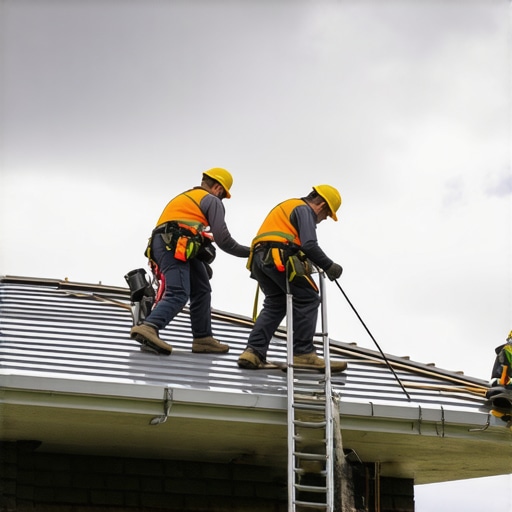
Most homeowners think gravity is what keeps their roof on. In reality, during a high-wind event, your roof acts like an airplane wing. As wind rushes over the ridge, it creates a low-pressure zone. The high-pressure air inside your attic—warmed to 120°F or higher—pushes upward. This is Bernoulli’s principle in its most destructive form. When local roofers talk about ‘uplift ratings,’ they are talking about the struggle between that internal pressure and the mechanical grip of your fasteners. [image_placeholder_1]
By 2026, the industry has moved toward a more aggressive understanding of the ‘Perimeter Zone.’ We’ve learned that the wind doesn’t hit a roof uniformly. It swirls at the corners, creating vortices that exert three times the pressure of the wind hitting the center of the slope. If your roofing contractor is using the same four-nail pattern on the eaves as they are in the field, they are setting you up for a ‘blow-off’ the next time a summer squall hits 60 mph. We now demand an ‘Enhanced Fastening’ zone, often requiring six or even eight nails per shingle in these high-stress areas.
“Fasteners shall be driven into and through the roof sheathing or into a roof-framing member.” – International Residential Code (IRC) Section R905
The Mechanics of the Fastener: Ring-Shank vs. Smooth
Let’s get into the weeds of the trade. If you see a roofer carrying a bucket of smooth-shank nails, send them packing. In the high-heat, high-humidity environments of 2026, smooth nails are a liability. As the plywood deck expands and contracts with the daily cycle of sun and rain, those smooth nails ‘creep.’ Eventually, they become what we call ‘shiners’—nails that have backed out of the wood, pushing the shingle above them upward. Not only does this look terrible, but it also punctures the shingle from the underside, creating a pinhole leak that will rot your decking before you ever see a drop on your ceiling.
Modern roofing calls for ring-shank nails. These have small ridges or ‘threads’ along the shaft. When driven into southern yellow pine or OSB, the wood fibers collapse into these rings, creating a mechanical lock. Zooming in on the mechanism: it’s not just friction; it’s a physical interference fit. The pull-out resistance of a ring-shank nail is nearly double that of a smooth nail. This is the difference between a roof that survives a hurricane and one that ends up in your neighbor’s pool.
The ‘Shiner’ and the Hidden Decay
A ‘shiner’ isn’t just a physical protrusion; it’s a thermal bridge. In the winter, that cold metal nail head reaches into your warm attic. Moisture in the air condenses on the cold nail, dripping onto the insulation. Over time, this leads to mold and the smell of rotting plywood that I’ve encountered too many times. When local roofers miss the rafter and leave a nail hanging in the air, they call it a shiner. It’s a sign of a rushed job. A professional uses a ‘cricket’ to divert water around chimneys and ensures every nail is buried deep into the ‘meat’ of the lumber.
“A roof is only as good as its flashing and the integrity of its mechanical attachments.” – National Roofing Contractors Association (NRCA) Guidelines
The Underlayment: The Last Line of Defense
If the shingles are the armor, the underlayment is the skin. By 2026, the old-school 15-lb felt is essentially obsolete. It’s paper soaked in oil, and it tears like a wet napkin. High-wind fasteners are only effective if the underlayment can handle the stress. We now use synthetic, cross-woven poly-olefins. These materials are nearly impossible to tear by hand. More importantly, in high-wind zones, we are seeing the adoption of ‘Secondary Water Resistance’ (SWR). This involves taping the seams of your plywood or using a peel-and-stick membrane across the entire deck. If the wind manages to rip the shingles off, the SWR keeps the house dry. It turns a $50,000 interior renovation into a simple $10,000 shingle repair.
The Warranty Trap: Marketing vs. Reality
Don’t get seduced by the ‘Limited Lifetime Warranty’ printed on the shingle wrapper. Those warranties cover manufacturing defects—like if the granules fall off prematurely. They almost never cover wind damage if the shingles weren’t installed according to the manufacturer’s strict high-wind instructions. If your roofer skips the starter strip at the eave or misses the ‘nailing line’ by even an inch, the warranty is void before the first nail is driven. The 2026 standard for high-wind installation requires the nail to pass through the common bond—the area where two layers of the shingle overlap. This gives the nail double the holding power. If the roofer ‘high-nails’ it, the wind will simply peel the shingle off the nail head, a failure known as ‘pull-through.’
Choosing a Roofer Who Respects Physics
When you interview local roofers, don’t ask about price first. Ask about their fastening schedule. Ask if they use ‘staggered’ patterns. Ask how they handle the ‘Drip Edge’—if they nail it every 4 inches or every 12. A ‘trunk slammer’ will give you the 12-inch cheap version. A forensic-grade roofer knows that the drip edge is the first place the wind gets a ‘finger-hold’ under your roof. If that edge lifts, the whole system unzips like a cheap jacket.
Roofing is an invisible art. Once the shingles are down, you can’t see the nails. You can’t see the flashing. You can only trust the process. In 2026, the process is about more than just keeping the rain out; it’s about anchoring your home to the earth when the atmosphere tries to pull it apart. Water is patient, but the wind is violent. Build accordingly.