
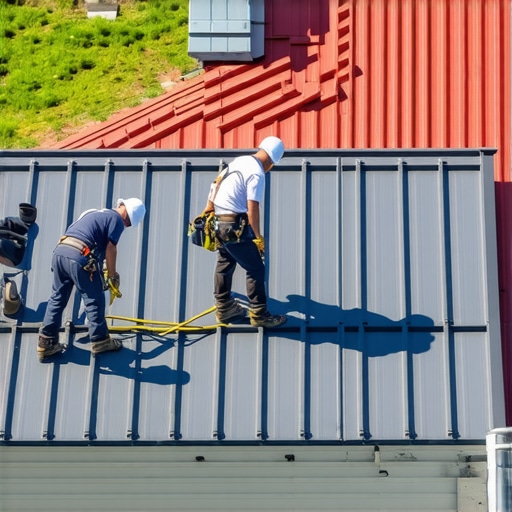
The Deception of the ‘Forever Roof’
I have spent twenty-five years crawling across scalding roof decks, smelling the distinct, metallic tang of oxidized Galvalume and the pungent rot of water-logged fascia. Most roofing companies will tell you that a metal roof is a ‘one-and-done’ solution. They sell it as a bulletproof vest for your home. But after two decades of forensic tear-offs, I can tell you that a metal roof is only as resilient as the physics of its installation. If your local roofers don’t understand the violent dance between thermal expansion and hydrostatic pressure, you aren’t buying a lifetime solution; you’re buying a very expensive leak that will hide behind your drywall for five years before showing its face.
“A roof is only as good as its flashing, and metal is the least forgiving material when the flashing fails.” – Old Roofer’s Adage
The Mentor’s Hard-Earned Wisdom
My old mentor, a man who had been high-pitching since the late 70s, used to tell me every morning while we loaded the truck: ‘Water doesn’t have a watch, kid. It’s got all the time in the world to find that one screw you over-torqued.’ He was right. I’ve seen roofing systems that looked beautiful from the curb but were structurally hollow because the installer didn’t understand the chemistry of the salt air. In our coastal climate, the humidity doesn’t just sit; it migrates. It finds the ‘shiners’—those missed nails or poorly aimed screws—and uses them as a highway to your rafters. By 2026, the building codes will have tightened, but the shortcuts taken by ‘trunk slammers’ will remain the same.
Question 1: How Do You Mitigate Galvanic Corrosion and Fastener Fatigue?
When you interview local roofers, don’t ask about the color. Ask about the metallurgy of the fasteners. In high-salt environments, a standard galvanized screw is a ticking time bomb. You need to hear them talk about 304 or 316 stainless steel. But it goes deeper than material. Mechanism zooming reveals the real threat: Thermal Expansion. A thirty-foot metal panel can grow and shrink by nearly half an inch in a single day as it fluctuates between the cool of a 70°F night and the 150°F roar of the afternoon sun. If a contractor ‘pins’ that panel too tightly without allowing for movement at the clips, the metal will literally tear itself apart at the screw holes. This creates ‘ovaling,’ where the hole becomes larger than the neoprene washer meant to seal it. Ask them: ‘Are you using fixed clips or floating clips for these long-run panels?’ If they look at you like you’re speaking Greek, show them the door.
Question 2: What Is Your Strategy for Secondary Water Resistance (SWR)?
The metal panel is the ‘rain screen,’ but the underlayment is the actual roof. In the Southeast, wind-driven rain can be pushed upward, defying gravity, and sliding under the laps of your metal panels. This is capillary action—the same force that pulls water up a straw. I have inspected countless roofing jobs where the local roofers used cheap felt paper under a premium metal panel. The result? The heat of the metal ‘cooks’ the oils out of the felt, turning it into brittle cornflakes within seven years. You must insist on a high-temperature, self-adhering synthetic membrane. This acts as a ‘gasket’ around every fastener. If a hurricane-force wind rips a panel off, that SWR layer is the only thing keeping your living room from becoming a swimming pool.
“Roof assemblies shall be integrated with a secondary water-resistive barrier to ensure the continuity of the building envelope.” – IRC Building Code R905.1
Question 3: How Do You Manage the ‘Cricket’ and Dead Valley Physics?
The most common failure point I see in forensic investigations is the cricket—the small peaked structure behind a chimney designed to divert water. Many roofing companies try to ‘roof over’ these complex geometries with flat metal sheets and a prayer’s worth of caulk. Caulk is a maintenance item, not a permanent waterproofing solution. I’ve seen valleys where the metal panels were cut too short, allowing debris to dam up and force water sideways under the ‘ribs.’ You need to see a plan for ‘hemmed’ edges. When water hits a valley, it has momentum. If that valley isn’t deep enough and wide enough to handle the square footage of the shedding planes above it, the water will overtop the splash guards. Ask your contractor to draw—on a piece of scrap plywood if they have to—exactly how they plan to flash the ‘dead valleys’ where the roof meets a vertical wall. If they say ‘we just use plenty of sealant,’ they are telling you they don’t know how to fold metal.
The Trap of the ‘Lifetime’ Warranty
Do not be seduced by the ‘Limited Lifetime Warranty’ printed on the brochure. Those warranties cover the paint finish, not the labor and certainly not the water damage inside your home. If your local roofers disappear six months after the job, that warranty is a ghost. You are looking for a workmanship warranty backed by a manufacturer’s ‘No Dollar Limit’ (NDL) guarantee. This means the manufacturer has inspected the roofing and trusts the installer’s hands enough to put their own bank account on the line. In the world of high-end metal, the details—the countersunk screws, the offset wood-to-metal transitions, and the ridge vent baffles—are what separate a 30-year asset from a 5-year disaster.
This article really hits home about the importance of proper installation techniques when it comes to metal roofing, especially in coastal areas. I’ve seen firsthand how shortcuts with flashings and fastener choices can lead to costly repairs down the line. I appreciate the emphasis on using floating clips and high-quality stainless steel fasteners—those details are often overlooked by homeowners trying to save a bit upfront. The point about secondary water resistance is also critical; I’ve always recommended high-temperature membranes over basic felt, especially in wind-prone regions. It makes me wonder, how common is it for local roofers to be aware of and prioritize these detailed aspects? Do you think ongoing training or certification programs could elevate the industry’s standard for metal roof installations? I’d love to hear how others are ensuring quality workmanship sticks around long-term—because at the end of the day, a roof is an investment that should last decades, not just a few years.