
The Anatomy of a Slow Motion Disaster
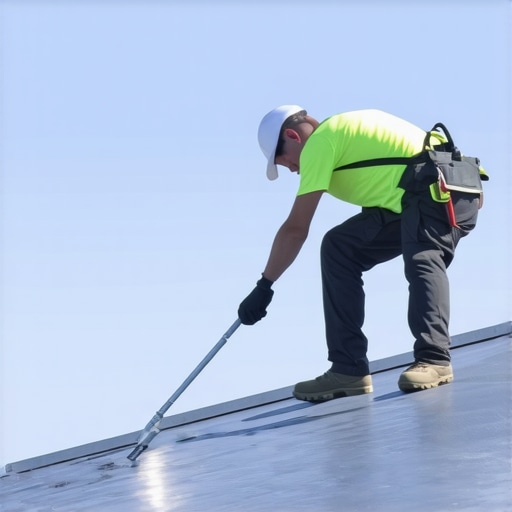
I’ve spent the better part of three decades standing on pitches that would make a mountain goat nervous, poking at soft spots in plywood with a pry bar. Most homeowners think a roof failure is a sudden event—a tree limb through the rafters or a hurricane peeling back the deck. It rarely is. Usually, it’s a slow, silent murder. It starts with a microscopic gap in a seal, a tiny space where physics takes over. My old foreman used to say, ‘Water is patient. It will wait for you to make a mistake.’ He was right. That’s why the shift toward 2026 Smart Seals among reputable local roofers isn’t just a trend; it’s an admission that the old ways of ‘caulk and walk’ are costing us millions in premature failures.
The Physics of the ‘Shingle Siphon’
To understand why roofing companies are abandoning traditional asphaltic adhesives for Smart Seals, you have to understand capillary action. Imagine two surfaces pressed together—a shingle over a starter strip. When rain hits, surface tension allows water to move upward against gravity. It siphons into the nail line. If the adhesive strip doesn’t create a literal molecular bond, that water finds a ‘shiner’—a nail driven slightly crooked—and follows the shank straight into the roof deck. Once that moisture hits the plywood, the clock starts. In the humid heat of the Southeast, that wood doesn’t just get wet; it ferments. I’ve opened up roofs where the OSB looked fine from the attic but felt like wet cardboard under a bootsole because the seals failed to mitigate wind-driven rain.
“The building envelope shall be designed and constructed to prevent the accumulation of water within the wall or roof assembly.” – International Residential Code (IRC), Section R703.1
What Exactly is a 2026 Smart Seal?
We’re moving away from simple bitumen-based sticky strips. The ‘Smart Seal’ technology surfacing in 2026 utilizes a reactive polymer that doesn’t just sit on top of the granule; it eats into the underlying layer. It’s a chemical weld. Traditional seals are ‘dumb’—they get brittle in the cold and liquefy in the 150°F heat of a July afternoon. Smart Seals use a phase-change material that maintains its elasticity regardless of the thermal shock hitting the roof. When the sun goes down and the temperature drops 40 degrees in three hours, your roof expands and contracts. A standard seal snaps under that tension. A Smart Seal stretches. This is the difference between a roof that lasts its full 30-year rating and one that needs a ‘surgery’ repair after the first major storm cycle.
The ‘Trunk Slammer’ Problem
The reason you still see some roofing companies skipping this tech is the bottom line. A ‘square’ (100 square feet) of high-end shingles equipped with these reactive seals costs more. The ‘trunk slammers’—contractors who work out of the back of a pickup and vanish after the check clears—will tell you it doesn’t matter. They’ll use a standard architectural shingle with a low-grade seal and bank on the fact that the leak won’t show up in the living room for at least four years. By then, their phone number is disconnected. Professional roofing companies are tired of the reputation hit. We’re tired of being called out to fix a 5-year-old roof that’s shedding shingles like a dog in summer because the cheap adhesive oxidized into dust.
The Critical Role of the Cricket and the Valley
Seals aren’t just about the flat surfaces. The real war is fought in the valleys and behind chimneys. If your roofer isn’t using a smart-sealant transition at the ‘cricket’—that small peaked structure behind a chimney designed to divert water—you’re in trouble. Water doesn’t just flow; it eddies. It swirls in those corners, searching for a breach. I’ve seen chimneys where the flashing looked perfect, but because the sealants used weren’t UV-stable, they’d cracked. Those cracks acted like straws, sucking water behind the masonry. The new 2026 standards for local roofers mandate these high-flex seals in every transition zone to stop this specific failure point.
“A roof is only as good as its flashing and the integrity of its seals at the most vulnerable transitions.” – NRCA Manual of Quality Control
The Surgery vs. The Band-Aid
When I’m called for a forensic inspection and find failed seals, I give the homeowner two choices. You can do the ‘Band-Aid’—smear some high-grade mastic over the shingles and hope for the best. It’ll last a year, maybe two. Or, you do the surgery. You tear off the affected area, replace the saturated underlayment, and install shingles with integrated Smart Seal tech. It’s more expensive upfront, but it stops the rot. In our climate, where wind-driven rain can hit at 70 miles per hour, anything less than a chemical-bond seal is just a suggestion to the water. 2026 roofing companies are finally realizing that an ounce of polymer is worth a ton of plywood replacement later.