
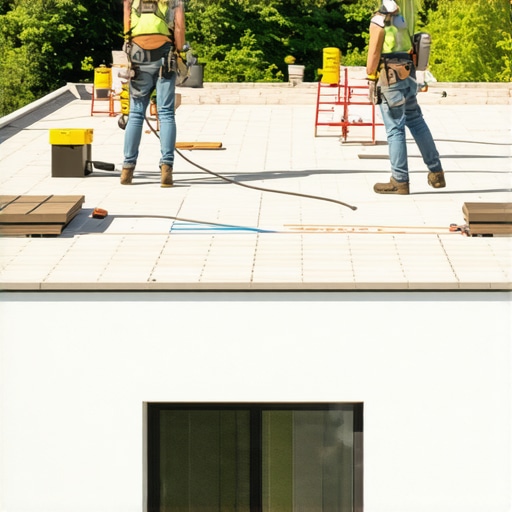
The Forensic Reality of the Low-Slope Deck
Walking on that roof felt like walking on a sponge. I knew exactly what I’d find underneath before I even pulled my knife. In the flat roof game, especially across the frost-bitten corridor of the North, moisture isn’t just a nuisance; it’s a cancer. When the deck yields beneath your boot, you aren’t just looking at a leak—you’re looking at a systemic failure of the thermal envelope. As we head into 2026, the building codes have sharpened their teeth, and the standard ‘patch and pray’ methods of the past decade are being exposed for the fraud they are. Hiring local roofers isn’t about supporting a neighborhood business; it’s about hiring someone who understands the specific physics of ice damming and thermal bridging that occurs when your attic air bypasses into the plenum space of a flat assembly.
1. Hyper-Local Climate Calibration
Local roofing companies understand the ‘micro-load’ of our specific region. In the North, a flat roof isn’t actually flat; it’s a complex drainage system that must contend with the freeze-thaw cycle. A guy from three states away doesn’t understand the specific way our local wind patterns drive moisture into a scupper. A local expert knows that if you don’t install a cricket behind a chimney or a large HVAC unit, you’re essentially building a private pond on your roof. This ponding water exerts hydrostatic pressure that will eventually find a shiner or a poorly executed fish-mouth in a seam, forcing water through the insulation and into your structural decking.
“A roof is only as good as its flashing.” – Old Roofer’s Adage
2. Navigating the 2026 Energy Code Reality
The 2026 updates to the International Building Code (IBC) and International Residential Code (IRC) have significantly increased the required R-Value for continuous insulation on low-slope decks. Roofing is no longer just about the membrane; it is about the entire assembly. Local roofers are intimately familiar with these regional enforcement shifts. They know that simply slapping a new layer of EPDM over old, wet ISO board is a recipe for a structural collapse under snow load. They ensure that the thermal expansion of the polyisocyanurate boards is accounted for with proper fastening patterns to prevent the membrane from ‘tenting’ and eventually splitting.
3. The Forensic Identification of ‘Ponding’
Water is patient. It will wait for you to make a mistake. One of the primary benefits of local roofing companies is their ability to perform a ‘drainage audit’ before the first roll of material is ever cut. If your roof holds water for more than 48 hours after a rain, it’s not a roof; it’s a liability. Local pros look for the subtle signs of structural deflection. They understand that a square of roofing (100 square feet) adds significant weight, and if the original joists weren’t sized for the 2026 snow load requirements, you’re asking for trouble. They focus on the ‘Mechanism of Failure’—zooming in on the capillary action that sucks water upward under a loose termination bar.
4. Material Truth: EPDM vs. TPO vs. Modified Bitumen
In our cold climate, material choice is everything. A ‘trunk slammer’ might sell you on a cheap TPO because it’s easy to install, but a veteran local roofer knows that EPDM (ethylene propylene diene monomer) handles the extreme contraction of a -20°F night much better. They understand the molecular degradation that happens when UV radiation hits a low-quality membrane. They won’t just sell you a product; they will explain the physics of the heat-welded seam versus the taped seam. They know that in our zone, the thermal shock of a sudden summer thunderstorm hitting a 150°F black roof can cause cheap materials to crack like old leather.
“Water is a persistent investigator, always searching for a way through the path of least resistance.” – NRCA Technical Manual
5. The Myth of the ‘Lifetime Warranty’
Let’s talk about the trap. Many national roofing companies offer a ‘Lifetime Warranty’ that is buried in fine print. These warranties often exclude damage caused by ponding water or ‘lack of maintenance.’ Local roofers offer something better: accountability. If a seam opens up or a valley fails after a heavy blizzard, you aren’t calling an 800-number in another time zone. You’re calling a guy who lives ten miles away and whose reputation depends on his uplift ratings. They know that a warranty is just a piece of paper, but a properly flashed curb is a 30-year solution.
6. Specialized Trade Tools and ‘Trade Slang’ Expertise
When you hire local, you’re hiring a crew that knows how to use a moisture probe and infrared thermography to find the rot before it hits the ceiling joists. They talk about pitch and dead-level decks with the seriousness of a heart surgeon. They aren’t looking to ‘cover up’ the problem; they are performing surgery on the building’s crown. They look for the attic bypasses where warm, moist air from your bathroom fan is venting directly under the roof deck, causing the plywood to turn into something resembling wet cardboard. This level of forensic detail is what separates a professional from a day-laborer with a ladder.
7. Protecting Your Investment from the ‘Sponge Effect’
By the time you see a brown spot on your ceiling, the insulation has been saturated for months. This ‘Sponge Effect’ destroys the R-value of your home, sending your heating bills into the stratosphere. A local roofing expert understands the air-sealing requirements of 2026, ensuring that the vapor barrier is continuous and that the secondary water resistance layer is installed with precision. They don’t just replace the shingles; they restore the integrity of the structure. They ensure the drip edge is properly integrated into the gutter system to prevent fascia rot, a common failure point that ‘cheap’ contractors always overlook. In the end, the cost of a local professional is significantly lower than the cost of a failed roof and the subsequent mold remediation.