
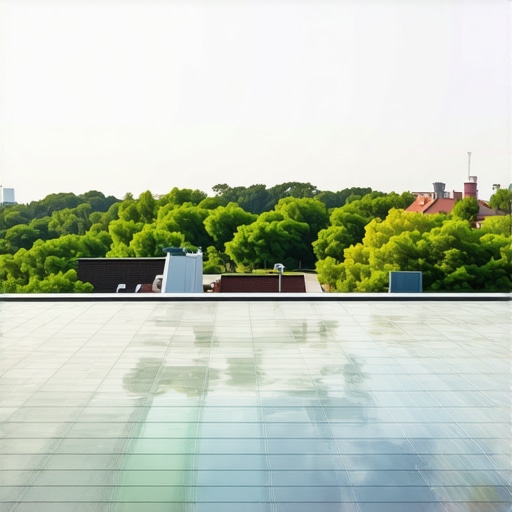
The Urban Griddle: A Forensic Look at the Heat Island Crisis
Walking onto a flat roof in the middle of a dense urban center during a July heatwave feels less like a job site and more like stepping into a blast furnace. I remember one specific inspection in downtown Phoenix where the ambient air was 110°F, but the roof surface was screaming at 178°F. My boots were literally sticking to the asphalt, and the air shimmering off the surface was so distorted I could barely see the parapet wall. That wasn’t just a hot day; it was a forensic demonstration of the Urban Heat Island (UHI) effect. When local roofers talk about ‘heat mitigation’ in 2026, most are just repeating sales brochures. But if you’ve spent twenty-five years tearing off scorched materials, you know the physics is far more brutal than the marketing suggests.
The UHI effect occurs when concentrated pockets of dark, non-reflective surfaces—mostly roofs and roads—absorb solar radiation all day and bleed it back into the atmosphere all night. By 2026, the regulatory landscape has finally caught up to the reality that a roof isn’t just a lid on a box; it’s a thermal radiator that dictates the energy grid’s stability. Modern roofing companies are now forced to deal with Solar Reflectance Index (SRI) requirements that would have seemed impossible a decade ago. But let’s get one thing straight: a ‘white roof’ isn’t a magic wand if the person installing it doesn’t understand thermal emittance and the messy reality of the valley and the cricket.
The Physics of Failure: Why Standard Materials Cook Your House
To understand how we mitigate this, we have to look at the mechanism of failure. Standard asphalt shingles are essentially fiberglass mats soaked in oil and covered in rock dust. In a high-UV environment, those oils don’t just sit there. The heat triggers an exothermic breakdown. We call it ‘off-gassing.’ The volatiles that make a shingle flexible evaporate, leaving behind a brittle, cracked skeleton that resembles a dried-out lakebed. When you walk on a roof like that, it sounds like you’re crunching through potato chips. That’s not just age; that’s thermal shock.
“The Solar Reflectance Index (SRI) is a measure of the relative steady-state temperature of a surface with respect to a standard white surface (SRI=100) and a standard black surface (SRI=0) under standard solar and ambient conditions.” – NRCA Technical Manual
In 2026, we are zooming in on the microscopic level of those shingles. We’re seeing ‘cool’ granules that use specialty ceramic coatings to reflect infrared light while still appearing dark to the human eye. This isn’t just for aesthetics; it’s about preventing the roof deck from becoming a heat sink. If the deck reaches 140°F, that heat is going to find its way into your living room through thermal bridging, no matter how much pink fluff you have in the attic. The real pros are looking at the square as a complete thermal envelope, not just a series of shingles.
The Material Truth: Cool Roofs vs. Marketing Hype
If you’re looking for a replacement in 2026, the options are overwhelming. But here is the cynical truth from someone who has seen every ‘next big thing’ fail: most of them are garbage if the installation is rushed. For the desert climates, we are seeing a massive shift toward highly reflective metal and specialized PVC membranes. Metal is a favorite of mine because it has low thermal mass. It gets hot fast, but it cools down the second a cloud passes over. Asphalt, on the other hand, is like a brick; it holds that heat for hours after sunset, keeping the neighborhood a stifling ten degrees warmer than the suburbs.
Then there’s the ‘Lifetime Warranty’ trap. When roofing companies promise you a fifty-year roof in a 120-degree climate, they are betting you’ll move before the material fails. The UV degradation in the Southwest is so aggressive that even the best coatings will lose 20% of their SRI within the first three years due to dirt accumulation and microbial growth. If your roofer isn’t talking about a maintenance plan to keep that surface clean, they aren’t mitigating the heat island effect; they’re just selling you an expensive white sheet that will be grey and hot by 2029.
The Anatomy of an Urban Roof in 2026
The 2026 standard involves more than just the top layer. We are now seeing integrated systems that use radiant barriers installed directly under the valley flashing and venting strategies that utilize the stack effect more efficiently. I’ve seen too many ‘energy-efficient’ roofs fail because some sub-contractor left a shiner—a missed nail—protruding through the deck. That nail acts as a thermal needle, conducting heat directly from the hot roof surface into the attic insulation. Multiply that by five hundred nails, and your ‘cool roof’ is now a heater.
“Roof assemblies shall be designed and installed in accordance with this code and the approved manufacturer’s installation instructions.” – International Residential Code (IRC) R905
True mitigation requires a forensic approach to air sealing. If your roofing contractor isn’t looking at your soffit vents and ensuring they aren’t blocked by insulation, they are failing you. You can have the highest SRI rating in the world, but if the hot air is trapped in your attic because of poor ventilation, the heat island effect is happening inside your house. We use the ‘Mechanism Zooming’ technique to look at how air moves sideways under the ridge cap. If that air isn’t moving, the shingles are cooking from both sides.
Don’t Get Scammed by the ‘Green’ Label
As we move deeper into 2026, ‘green’ and ‘sustainable’ are words that get thrown around to justify a 30% markup. Don’t fall for it. Ask for the SRI data sheets. Ask about the emittance rating. A material that reflects heat but can’t shed it is useless in a city. And please, for the love of your bank account, ignore the guys who say they can ‘spray-coat’ your old shingles to make them cool. Those coatings often trap moisture against the shingles, leading to rot that you won’t see until your foot goes through the plywood. I’ve performed those autopsies, and they aren’t pretty. The smell of trapped, rotting organic mat in 150-degree heat is something you never forget. Pick a contractor who understands the physics of the assembly, not just the color of the shingle.