
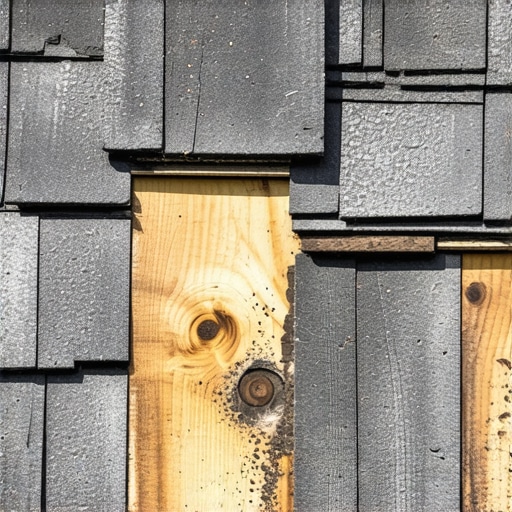
The Anatomy of a Failing Roof: Why Your Ceiling Is Crying
You see that brownish, tea-colored ring on your bedroom ceiling? Most people call that a leak. I call it an autopsy report. By the time that water marks your drywall, the forensic story of your roof’s failure has been written for months, maybe years. As a veteran who has spent 25 years crawling through 140°F attics and peeling back shingles like scabbed skin, I’ve seen it all. I’ve seen ‘local roofers’ skip the basics to save a buck, and I’ve seen the homeowners pay for it tenfold. Walking on a roof recently felt like walking on a sponge; I didn’t need to see the attic to know the plywood had turned into a wet, fibrous mulch. If your roof was installed during the rush of the last few years, you are likely sitting on a ticking time bomb of 2026 plywood rot. This isn’t just about water coming through a hole; it’s about the physics of failure, the betrayal of materials, and the sheer negligence of ‘trunk slammers’ who don’t understand how water actually moves.
The Forensic Scene: Walking on a Memory Foam Mattress
I remember a job last October. A homeowner called roofing companies because they noticed a ‘slight dip’ near the valley. When I climbed the ladder and took my first step off the eaves, my boot sank three inches. It didn’t crunch like dry wood; it squished. Walking on that roof felt like walking on a sponge. I knew exactly what I’d find underneath. This wasn’t a storm damage issue. This was a slow-motion execution of a roof deck. The ‘local roofers’ who handled the previous replacement had failed to account for vapor drive. They trapped the moisture inside, and the 7/16-inch OSB (Oriented Strand Board) had basically reverted to its original state: a pile of wood chips and glue, minus the glue. This is the reality for thousands of homes heading into 2026. If you ignore the signs, you aren’t just looking at a new roof; you’re looking at a full structural deck replacement.
“A roof is only as good as its flashing.” – Old Roofer’s Adage
The Physics of Failure: How Water Defies Gravity
To understand rot, you have to understand that water is a patient predator. It doesn’t just fall down; it climbs. Through a process called capillary action, water molecules use surface tension to pull themselves into tight spaces—like the gap between an un-flashed shingle and a starter strip. In the humid Southeast, where wind-driven rain is a daily occurrence, water doesn’t just hit the roof; it is pressurized against it. If your roofing companies didn’t install a proper drip edge with a structural kick-out, surface tension pulls that water backward, underneath the shingle, where it hits the raw edge of your plywood deck. Once that wood gets a taste of moisture, it wicks it deep into the center of the board. This is where the 2026 rot begins. The wood fibers swell, the resins break down, and the structural integrity of your home’s ‘lid’ evaporates.
1. The ‘Shiner’ Effect: The Attic’s Cold Fingers
In the trade, we talk about ‘shiners.’ A shiner is a nail that missed the rafter and is sticking through the plywood into the attic space. On a cold morning, those nails act as thermal bridges. They get cold, and the warm, moist air from your house—because your local roofers didn’t check your attic ventilation—condenses on that cold nail. Drip. Drip. Drip. It’s not a leak from the outside; it’s a leak from the inside. Over a few seasons, those shiners rot out the wood around them, creating soft spots that you won’t see until a heavy snow or a technician’s foot goes right through the deck. This is why forensic inspection of the attic is more important than looking at the shingles themselves.
2. The ‘Oatmeal’ Deck: OSB Delamination
Oriented Strand Board is the standard today, but it’s a fickle beast. When OSB stays wet, it undergoes ‘thickness swell.’ The edges expand and never shrink back. By 2026, many roofs installed during the 2021-2022 building boom will reach their saturation limit. When I peel back a square of shingles on a failing roof, I often find the OSB has the consistency of oatmeal. You can poke a screwdriver through it with zero resistance. This happens because of a lack of Secondary Water Resistance (SWR). Without a high-quality synthetic underlayment, the wood is defenseless against the humidity that breathes through the shingles.
“Proper ventilation is not an option; it is a structural necessity for the longevity of the roof assembly.” – National Roofing Contractors Association (NRCA)
3. The ‘Ghost’ Stains and Vapor Drive
In tropical climates like ours, vapor drive is a constant battle. The sun beats down on wet shingles, turning that moisture into vapor. That vapor wants to move toward the cool, air-conditioned interior of your home. If the roofing companies you hired used a cheap, non-breathable felt, that vapor gets trapped against the plywood. It bakes the wood from the outside in. You’ll see ‘ghost stains’—faint, dark lines that follow the seams of the plywood. This is the wood’s way of telling you the adhesive is failing. By the time you see a ‘square’ of shingles looking uneven, the rot has already claimed the deck.
4. The Drip Edge Disaster
The most common shortcut I see? Skipping or improperly installing the drip edge. Local roofers often just ‘overlap’ it and call it a day. But if that drip edge isn’t integrated with the flashing and the gutters, water will wick behind the fascia board. This doesn’t just rot the plywood; it rots the rafter tails. Fixing a rafter tail is ‘surgery’—it’s expensive, invasive, and entirely preventable. A forensic roofer looks for the ‘wicking line’ on the plywood edge. If it’s dark, the clock is ticking.
The Fix: Surgery vs. Band-Aids
When you find rot, you have two choices. You can apply a ‘Band-Aid’—smear some mastic on it and hope for the best—or you can perform surgery. Surgery means a full tear-off. It means pulling every ‘square’ of shingles, replacing the rotted 4×8 sheets of plywood, and installing a system that actually breathes. This includes a ridge vent that is properly sized for the attic’s cubic footage and ensuring there are no ‘attic bypasses’ letting your expensive AC air leak into the roof deck. Don’t let a contractor tell you they can ‘just go over’ the existing layer. Putting new shingles over rotted wood is like putting a silk shirt on a corpse. It might look okay for a week, but the underlying decay is still there, and it will eventually collapse. If you’re looking for roofing companies, ask them about their ventilation calculations. If they pull out a calculator, they’re pros. If they just ‘eyeball it,’ keep looking. Your roof’s survival in 2026 depends on the math they do today.