
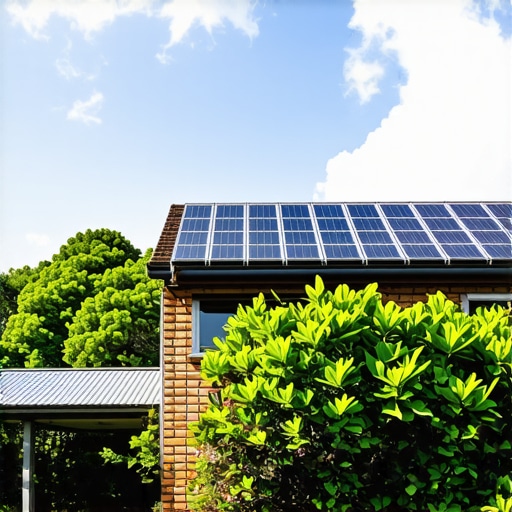
The Greenwashing of the American Coastline
Everyone wants to talk about ‘sustainability’ until the first Category 3 hurricane rolls up the coast and starts peeling back shingles like an orange. I’ve spent two and a half decades on steep-slopes and flat-decks from the Outer Banks down to the Keys, and I’ve seen what happens when eco-friendly promises meet salt-saturated reality. Walking on a roof in a coastal zip code usually feels like walking on a sponge if the previous contractor didn’t know their physics. I remember a job in the Carolinas where the homeowner thought they were being green by using a cheap organic-mat shingle. I stepped onto the western-facing slope and my boot sank three inches. The plywood underneath had turned into something resembling wet Shredded Wheat because the ‘eco’ material couldn’t handle the humidity-driven vapor drive. I knew exactly what I’d find before I even pulled my pry bar: a complete lack of a starter strip and fasteners that had turned into rust-dust because they weren’t 304 stainless steel. Most roofing companies won’t tell you that ‘green’ often means ‘garbage’ if it’s not engineered for a high-velocity hurricane zone (HVHZ).
The Physics of Coastal Decay
In a coastal environment, your roof isn’t just a hat for your house; it’s a sacrificial anode. You’re dealing with wind-driven rain that doesn’t just fall—it moves horizontally, forced upward into the laps of your roofing by hydrostatic pressure. When local roofers talk about eco-friendly options for 2026, we have to look past the marketing brochures and look at the chemistry. Salt spray is a relentless corrosive agent. It finds the tiniest ‘shiner’—that’s a nail that missed the rafter and is sticking out in the attic—and uses it as a bridge for moisture. Once that metal oxidizes, the hole expands, and you’ve got a leak that won’t show up on your ceiling for two years, but is rotting your decking every single day.
“The building envelope shall be designed and constructed to prevent the accumulation of water within the wall assembly.” – International Residential Code (IRC), Section R703
This isn’t just a suggestion; it’s the law of the land, yet I see it ignored constantly in the name of ‘going green.’ If your eco-friendly roof doesn’t breathe, it dies. Let’s look at the three materials that actually hold up to the forensic scrutiny of a guy who has spent 20,000 hours on a pitch.
1. Recycled Standing Seam Aluminum (The Salt-Proof Sentinel)
If you live within five miles of the ocean, steel is a gamble, even with a high-end Galvalume coating. Aluminum is the real MVP of eco-friendly roofing. It’s often made from 90% recycled content (think soda cans and old engine parts) and it doesn’t rust. It develops its own oxide layer that protects the base metal. But here’s the mechanism zoom-in: the standing seam. By eliminating exposed fasteners, you remove the primary failure point. When the sun hits a roof in the South, the thermal expansion is violent. A 100-foot run of metal can grow and shrink by an inch or more. In a cheap screw-down panel, those screws stay put while the metal moves, eventually ‘wallowing out’ the holes until they’re large enough to let in a gallon of water during a tropical depression. A standing seam allows the ribs to slide in their clips, keeping the system watertight while reflecting nearly 70% of solar radiation. This reduces the load on your HVAC, which is the most ‘green’ thing you can actually do for your wallet.
2. Upcycled Polymer Composite Slate
I used to hate ‘fake’ slate. It looked like plastic and curled like a potato chip after three years of UV exposure. But the 2026 iterations have changed the game. These are engineered from post-industrial plastics and rubbers, often sourced from recycled tires and gaskets. The reason they work for coastal homes is the wind-uplift rating. Because these tiles are injection-molded, they can be designed with interlocking tabs. Unlike natural slate, which is heavy and can be brittle when hit by flying debris (a common occurrence in a gale), composite slate has high impact resistance. Mechanism zooming: think about the ‘venturi effect’ over a roof ridge. As wind accelerates over the peak, it creates negative pressure that tries to suck the shingles right off the deck. A properly installed composite system uses a staggered nail pattern that distributes this load across the entire square. If your local roofers aren’t using a high-temp ice and water shield as an underlayment beneath these, they’re setting you up for a forensic nightmare down the road.
“A roof is only as good as its flashing; the material is merely the aesthetic skin that hides the structural skeleton.” – Old Roofer’s Adage
3. Reflective Concrete Tile with Ventilated Battens
Concrete tiles aren’t new, but the way we’re installing them in 2026 is. For a coastal home, weight is actually an advantage for wind resistance, provided your trusses can handle the dead load. The ‘eco’ factor here comes from thermal mass and ‘above-sheathing ventilation’ (ASV). Instead of nailing tiles directly to the deck, we install them on a grid of horizontal and vertical battens. This creates a 1-inch air gap between the roof material and the actual house. When the Florida sun beats down, that air gap acts as a chimney, pulling cool air in at the eave and venting hot air out at the ridge before it ever touches your plywood. This prevents the attic from reaching that 140°F ‘kiln temperature’ that kills your insulation’s R-value. It’s a passive cooling system that lasts 50 years. Just make sure you’re using a ‘cricket’ behind any chimney or large skylight to divert water, or you’ll have a pond sitting on your roof after every afternoon thunderstorm.
The Warranty Trap and The Truth About Local Roofers
Don’t get suckered by a ‘Lifetime Warranty’ printed on a shiny piece of paper. Most of those warranties are pro-rated and only cover the material, not the labor to tear off the failure. In the trade, we call them ‘tail-light warranties’—as soon as you can’t see the contractor’s tail-lights, the warranty is gone. When vetting roofing companies, ask them about their ‘flashing details.’ If they say they’ll just ‘caulk it,’ walk away. Caulk is a maintenance item; it is not a permanent waterproofing solution. You want to see ‘step flashing’ on every sidewall and ‘counter-flashing’ ground into the brick or stucco. If they miss a single ‘valley’ or use galvanized nails instead of stainless in a coastal zone, your eco-friendly roof will be in a landfill in ten years. That’s the opposite of sustainable. True sustainability is building it once and never having to think about it again until your grandkids own the house.