
The Ghost in the Attic: Why 2026 Could Be Your Roof’s Last Winter
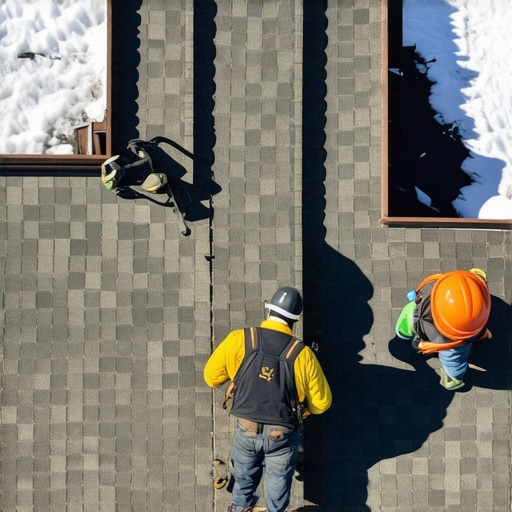
Walking on that roof felt like walking on a sponge. I knew exactly what I’d find underneath. It was a grey Tuesday in November, the kind of day where the dampness clings to your bones, and I was inspecting a colonial-style home for a frantic homeowner who couldn’t understand why his ceiling was weeping. From the ground, the shingles looked fine—maybe a little granular loss, but nothing that screamed ‘catastrophe.’ But the moment my boots hit the deck, the structural integrity told a different story. The plywood had softened to the consistency of wet cardboard. This wasn’t a leak from the sky; it was a slow-motion suicide from the inside out. As local roofers who have crawled through a thousand attics, we see this every year: roofs that were ‘fine’ in September but became total write-offs by February.
As we approach the 2026 winter season, the physics of your shelter remains undefeated. If you think your roofing system is just the visible layer of asphalt you see from the curb, you’re already behind. A roof is a complex thermal envelope, and in cold climates, it is constantly under siege by the differential between 70°F indoor air and sub-zero outdoor blasts. To survive the coming freeze, you need to understand the three specific failure points that turn roofing companies into emergency responders during a blizzard. We aren’t talking about cleaning gutters; we are talking about forensic prep that prevents your home from eating itself.
1. The Anatomy of the ‘Shiner’ and the Condensation Trap
Most homeowners blame the clouds for their leaks. In reality, many of the ‘roofing’ calls we get in mid-winter are actually plumbing and ventilation problems in disguise. It starts with the ‘shiner.’ In the trade, a shiner is a nail that missed the rafter during installation. When the temperature drops, these stray nails become thermal bridges. The warm, moist air leaking from your bathroom fan or unsealed recessed lighting hits that freezing cold nail head. Physics takes over. The moisture undergoes a phase change, turning into frost right on the metal. Over a long, cold winter, that frost accumulates into a thick white coating.
Then comes the first sunny day in January. The attic warms up just enough to melt that frost. Suddenly, you have a hundred tiny faucets dripping onto your insulation, soaking the drywall. By the time you see a brown ring on your bedroom ceiling, the damage is done. You don’t need a patch; you need an air-sealing specialist. When vetting roofing companies, ask them if they check for ‘attic bypasses.’ If they don’t know what that means, they aren’t roofing experts; they’re just shingle installers. You want a team that looks at the intake and exhaust balance. Without proper airflow through the soffits and out the ridge vent, your roof deck is essentially sitting in a steam room all winter. This leads to the ‘oatmeal plywood’ scenario I mentioned earlier. Water vapor is patient. It will wait for the perfect temperature gradient to destroy your structural sheathing from the bottom up.
“A roof is only as good as its flashing and the air management beneath it.” – Old Roofer’s Adage
2. Managing the Hydrostatic Pressure of Ice Dams
If you live in a zone where the snow piles up, ice dams are your primary antagonist. This isn’t just about ice blocking the gutter; it’s about the physics of hydrostatic pressure. When heat escapes your attic because of poor insulation (low R-value), it melts the bottom layer of snow on your roof. That water trickles down the slope until it hits the cold eave, which is overhanging the exterior wall and is the same temperature as the outside air. The water refreezes, creating a ridge of ice. As more water melts and hits that ridge, it pools. This pool of liquid water is now sitting on your roof, and water does not like to sit; it likes to move. It finds the horizontal laps in your shingles and, through capillary action, it gets sucked upward and under the material.
This is where your ‘Ice & Water Shield’—a thick, rubberized bituthene membrane—becomes the last line of defense. In 2026, we are seeing more extreme freeze-thaw cycles. If your local roofers didn’t install at least two courses of this membrane along the eaves, you are essentially relying on paper-thin felt to keep out a lake. We look for ‘shiners’ near the eaves too; every hole in that membrane is a potential entry point when the ice dam pushes water back up the roof. The prep for 2026 involves a forensic check of your eave flashing and the installation of a cricket behind any chimney wider than 30 inches. A chimney cricket is a small, peaked structure that diverts water away from the back of the chimney. Without it, snow packs into that ‘valley’ behind the brick, melts, and forces its way through the counter-flashing. It’s a surgical fix that prevents a five-figure restoration bill later.
3. The Thermal Expansion of Aging Flashing
The third pillar of winter prep is the inspection of penetrations—your pipes, vents, and chimneys. Roofing materials and the structure they cover expand and contract at different rates. This is called thermal expansion. In the summer, your roof might hit 150°F; in a 2026 winter snap, it could hit -10°F. That 160-degree swing puts immense stress on the sealants around your vent boots. Cheap plastic boots will crack like a dry twig after five years of UV exposure and thermal shock. We prefer lead or high-grade silicone boots that can handle the movement.
“The International Residential Code (IRC) requires that all roof flashing be installed in a manner that prevents moisture from entering the wall or roof through intersections and at penetrations.” – IRC Chapter 9
When you call local roofers for a pre-winter check, they should be looking for ‘alligatored’ sealant. If the caulk looks like cracked lizard skin, it’s dead. It won’t hold up when the wind-driven snow starts swirling. We also check the ‘valleys’—the intersections where two roof planes meet. These are the highways of your roof. If the metal valley is rusted or the woven shingles are lifting, the winter weight of snow will compress and force water into those gaps. A square of roofing is 100 square feet, and a single square of snow can weigh hundreds of pounds. That weight physically pushes the roofing components together; if there’s a flaw in the flashing, that pressure will find it. Don’t let a ‘trunk slammer’ tell you a bead of caulk is a permanent fix. True roofing is about metallurgy and geometry, not just glue. If the flashing is failed, it needs a ‘tear off and replace’ surgery to ensure the 2026 winter doesn’t end with a bucket in your living room.