
The Forensic Scene: A Wet Sponge Beneath Your Feet
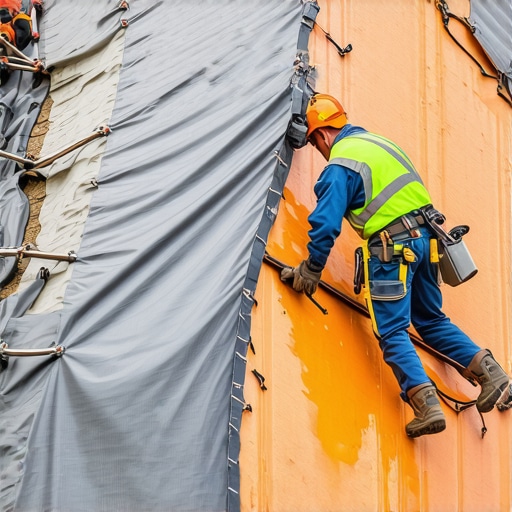
Walking on that roof felt like walking on a sponge. I knew exactly what I’d find underneath. It was a muggy Tuesday morning, the kind where the humidity in the air is so thick you can almost chew it. The homeowner complained of a ‘small brown spot’ in the guest bedroom. By the time I climbed the ladder, I didn’t need a moisture meter to tell me the story. Every step I took resulted in a sickening, squelching sound—the death rattle of saturated OSB. When we finally peeled back the architectural shingles, the plywood didn’t just break; it crumbled like wet cake. This wasn’t a storm victim; it was a victim of physics and bad craftsmanship. As we look toward 2026, many homeowners are going to find themselves calling local roofers not for a standard replacement, but for emergency tarps to stop the bleeding of a failing system.
1. The ‘Shiner’ Epidemic and Fastener Fatigue
The most common reason for a mid-summer emergency tarp is something most roofing companies won’t admit to: the ‘shiner.’ In trade speak, a shiner is a nail that missed the rafter or was driven into the gap between plywood sheets. In a high-humidity environment, these exposed steel nails act as a thermal bridge. During the day, the attic hits 140°F; at night, it cools. This temperature swing causes the metal nail to sweat. That moisture drips onto the insulation, but more importantly, it rusts the fastener from the inside out. By 2026, roofs installed during the post-2020 building boom will see these fasteners fail en masse. When a nail rusts, it loses its ‘pull-out’ resistance. A 40-mph gust—hardly a hurricane—can then lift a whole square of shingles because the nails have the structural integrity of a toothpick.
“Fasteners for asphalt shingles shall be of aluminum, stainless steel, copper or galvanized steel… and shall be long enough to penetrate through the roofing materials.” – International Residential Code (IRC) R905.2.5
2. Capillary Action: The Silent Uphill Leak
Water is supposed to run down, but physics has a trick called capillary action. If your local roofers didn’t install a proper drip edge or if they cheated on the overlap of the underlayment, water will actually travel horizontally or even upwards under the shingles. Think of it like a paper towel dipping into a puddle; the moisture climbs. In our climate, wind-driven rain is forced into the tiny gaps between the shingle courses. If the starter strip wasn’t sealed correctly, that water gets trapped against the roof deck. It sits there, slowly eating away at the adhesive bond until the next minor storm rips the shingle clean off. I’ve seen roofing companies skip the ice and water shield in valleys to save fifty bucks, only to have the homeowner pay five thousand for interior remediation two years later.
3. The Death of the ‘Dead Valley’ and Poor Crickets
A ‘dead valley’ is where two roof planes meet and have nowhere to drain. In 2026, we’re going to see a surge in failures at these junctions. Why? Because most contractors don’t understand the cricket. A cricket is a small peaked structure built behind a chimney or at a wall intersection to divert water. Without it, water pools. Standing water is the enemy of any asphalt system. Asphalt is water-shedding, not waterproof. When water sits, it undergoes hydrostatic pressure, literally pushing its way through the microscopic pores of the shingle. If you see a blue tarp on a roof in a neighborhood with no recent hail, look for a chimney. Ten to one, the flashing wasn’t counter-flashed into the brick, and the water is bypass-leaking directly into the attic framing.
4. Thermal Expansion Rift: The Ventilation Trap
Many roofing professionals focus entirely on the shingles and ignore the lungs of the house: the ventilation. A roof that can’t breathe is a roof that will curl. When an attic isn’t properly vented with a balanced intake (soffit) and exhaust (ridge vent), the shingles get baked from both sides. This extreme heat makes the asphalt brittle, causing the granules to slough off like dead skin. Once the granules are gone, the UV rays destroy the fiberglass mat in months. We are seeing roofs that should last 25 years failing in 8 because they were ‘suffocated.’ In 2026, the thermal expansion will finally cause these brittle shingles to crack at the fastener line, leading to the dreaded ‘blow-off’ that requires an emergency tarp before the next rain cloud rolls in.
“A roof is only as good as its flashing.” – Old Roofer’s Adage
How to Avoid the 2026 Tarp Trap
If you want to avoid being the house with the flapping blue plastic, you need a forensic approach to your next replacement. Don’t just look for the lowest bid among local roofers. Ask about their secondary water resistance (SWR) methods. Demand to see the drip edge installation. If they aren’t using stainless steel nails in coastal or high-humidity zones, they are setting you up for failure. A roof is a system, not a product. If one component—the valley, the flashing, or the ventilation—is ignored, the whole system collapses. Don’t wait for the brown spot on your ceiling to tell you that your roof has already given up the ghost.