
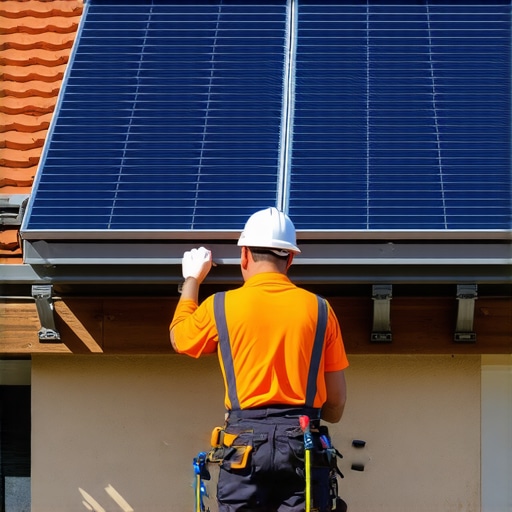
The Forensic Scene: A Sponge Under the Solar Array
Walking on that roof in the humid aftermath of a late-season thunderstorm felt like walking on a sponge. I knew exactly what I’d find underneath before I even pulled my flat bar from my tool belt. The homeowner was baffled; they’d spent forty thousand dollars on a high-end solar array only two years prior, yet here we were, with water dripping onto their mahogany dining table. As I peeled back the shingles around a mid-row mounting bracket, the scent of fermented OSB—that sharp, acidic tang of rotting wood—hit me instantly. The installer had relied on a ‘puck’ system and a prayer, skipping the mechanical flashing. In the roofing trade, we call this a slow-motion disaster. The solar company had made eighteen penetrations into the roof deck, and fourteen of them were leaking because they didn’t understand the physics of a Square of roofing in a northern climate.
The Physics of Failure: Why Traditional Mounting Often Fails
Local roofers are often called in to clean up the mess left by solar-only firms who treat a roof like a simple piece of plywood rather than a living, breathing assembly. When you bolt a rigid metal bracket through an asphalt shingle, you are fighting against Thermal Expansion. In a climate like ours, where the temperature on the roof surface can swing from 140°F in the afternoon sun to 50°F after a sudden downpour, those metal brackets move. If they are just ‘sealed’ with a blob of sealant, that sealant eventually shears. Water then finds the path of least resistance, utilizing capillary action to move sideways under the shingle until it hits the bolt hole. From there, gravity takes over, and your rafters start to rot. This is why 2026 roofing companies have shifted their entire approach to integrated mounting systems.
“A roof is only as good as its flashing.” – Old Roofer’s Adage
Blueprint B: The Material Truth About 2026 Solar Integration
If you are looking at a roof replacement and solar in 2026, the material choice is the difference between a thirty-year solution and a five-year headache. Most roofing companies are still pushing standard architectural shingles because they are easy to install, but for solar-heavy homes, we are seeing a massive shift toward thicker, modified bitumen shingles or standing seam metal. Why? Because when you have guys walking over your roof to install brackets, you want a material that doesn’t lose half its granules in the process. Standard shingles are brittle; high-performance systems use polymers that allow the shingle to ‘heal’ around fasteners.
The ‘Shiner’ Problem and Structural Integrity
One of the biggest issues I see during a forensic tear-off is the ‘shiner.’ This is a nail or bolt that missed the rafter entirely, sticking through the roof deck into the attic space. In the winter, these metal bolts become ‘cold points.’ Warm, moist air from your house hits that cold bolt, condenses, and turns into frost. When the sun comes out, the frost melts, and it looks like you have a roof leak when, in reality, you have a ventilation and fastening problem. Modern local roofers in 2026 now use thermal imaging and digital layout tools to ensure every solar bracket hits the center of the rafter, eliminating the condensation traps that rot out decks from the inside out.
The 2026 Standard: Mechanical Flashing vs. Chemical Sealants
The industry is finally moving away from the ‘caulk and walk’ method. The National Roofing Contractors Association (NRCA) has been clear about this for years, though many ‘trunk slammers’ ignore it. To truly secure a solar bracket, you need a three-stage defense. First, a primary seal at the deck level. Second, a mechanical flashing that integrates with the shingle courses, much like the flashing around a chimney or a Cricket behind a large skylight. Third, a top-level umbrella seal.
“All roof penetrations shall be flashed in accordance with the manufacturer’s instructions and the requirements of this section.” – International Residential Code (IRC) R903.2
When I’m inspecting a job, I look for these layers. If I see a roofer just pumping a tube of cheap silicone around a bolt, I know that roof is on a countdown to failure. Silicone doesn’t bond well to the oils in asphalt shingles over the long term. It pulls away, creating a microscopic gap that sucks in water during high-wind rain events.
The Trap: The ‘Lifetime’ Warranty Myth
Don’t let a salesperson sell you on a ‘Lifetime Warranty’ for a solar-ready roof without reading the fine print. Most of those warranties are voided the moment an outside solar contractor drills a hole in the roof. In 2026, the only way to protect your investment is to have one of the reputable roofing companies handle both the roof and the bracket installation. This ensures a ‘single-source’ warranty. If the Valley starts to leak or a bracket fails, there is no finger-pointing between the solar guy and the roofer. It’s one phone call, one responsibility.
The Forensic Fix: What to Demand from Local Roofers
If you’re hiring today, ask them about Ice & Water Shield placement. In northern climates, this self-healing membrane should be under every solar array, regardless of the pitch. If they tell you it’s ‘extra,’ find a new contractor. It’s a standard requirement for anyone who understands how ice dams interact with solar racks. Solar panels act as a giant heat trap, often causing snow to melt and refreeze at the bottom of the array. Without a robust underlayment, that water will back up under your shingles and find those bracket penetrations. Don’t settle for the cheap bid. The smell of rotting plywood is a lot more expensive than doing it right the first time.