
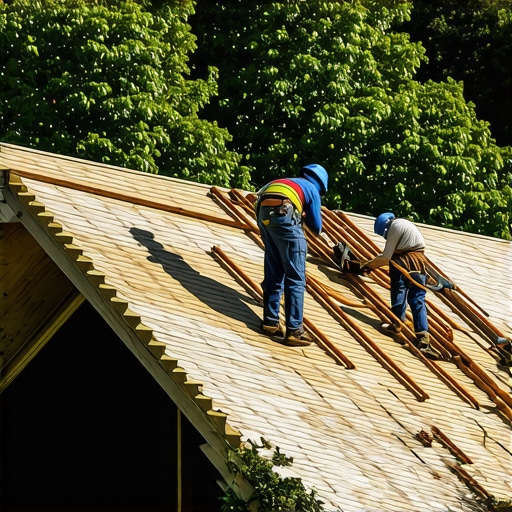
The Shifting Landscape of the American Roof
Walk onto any job site today and you will smell it—not the comforting, familiar scent of hot tar or the oily musk of fresh asphalt, but something cleaner, more clinical. As we move deeper into 2026, the industry is undergoing a tectonic shift that most homeowners won’t see until the first leak hits their drywall. For twenty-five years, I have crawled through damp attics and balanced on 12-pitch gables, and I can tell you that the era of the ‘cheap’ three-tab shingle is dead. It just doesn’t know it yet. Most roofing companies are still pushing the same granulated paper products because that is what their crews know how to nail down. But the elite local roofers—the ones who actually investigate the forensic failure of a structure—are pivoting toward recycled poly-materials. This isn’t just about ‘going green’ for a tax credit. It is about the physics of survival in an increasingly volatile climate.
“A roof is only as good as its flashing, but the material determines if that flashing has anything left to grip after a decade of thermal war.” – Old Roofer’s Adage
My old foreman, a man who smelled like stale tobacco and 30-weight oil, used to say, ‘Water is patient. It will wait for you to make a mistake.’ He was right. In the frigid reaches of the Northeast, where the winter wind howls off the Atlantic and bites into the eaves of homes in Portland and Buffalo, water doesn’t just fall; it searches. It waits for the inevitable moment when your roofing material expands and contracts for the thousandth time, creating a microscopic gap. That is where the new breed of recycled poly-composites enters the fray. These materials, often salvaged from high-density polyethylene (HDPE) and recycled rubber, don’t just sit on the deck; they perform. They are engineered to handle the brutal freeze-thaw cycles that turn standard asphalt shingles into brittle, potato-chip-like husks within ten years.
The Physics of Failure: Why Asphalt is Giving Up
To understand why 2026 is the year of the polymer, you have to understand Mechanism Zooming—the granular way a roof actually fails. Think about a standard shingle. It is essentially a mat of fiberglass or paper soaked in oil-based asphalt and covered in rock dust. The moment it hits your roof, the sun begins to cook out those essential oils. In a climate where the temperature swings from a 10°F midnight to a 60°F afternoon, the roof undergoes massive thermal expansion. The asphalt tries to stretch, but it has lost its plasticity. It cracks. Now, consider the capillary action. When snow sits on those cracks and begins to melt from the heat escaping your attic (a classic thermal bridge issue), the water doesn’t just run off. It is pulled upward, behind the shingle, via surface tension. It finds the nail—the shiner that a rushed installer missed—and follows it straight into your plywood deck.
Recycled poly-materials, specifically the newer 2026 formulations, utilize molecular cross-linking. These aren’t just melted milk jugs; they are sophisticated thermoplastic polyolefins (TPO) and engineered composites. When the temperature drops, the material remains flexible. It doesn’t develop the micro-fissures that allow capillary action to take hold. I have seen roofing jobs where we tore off twenty-year-old asphalt that looked like it had been through a shredder, while the adjacent poly-test-patch we installed years prior still had its original integrity. The recycled content actually adds a layer of impact resistance that virgin plastic lacks, as the blend of different polymer chains creates a more ‘tangled’ and resilient internal structure.
The Warranty Trap and the Local Roofer Reality
If a salesman from one of the big roofing companies tells you they offer a ‘Lifetime Warranty,’ you should probably check if they still have their wallet. In the trade, we know those warranties are written by lawyers to protect the manufacturer, not your living room ceiling. They are pro-rated, they don’t cover ‘Acts of God’ (which apparently includes wind in some states), and they almost always exclude ‘labor.’ This is why local roofers are moving toward recycled poly-materials; they are tired of the callback. A callback is a profit-killer. If a crew has to go back to a job to fix a leak, they are working for free. Poly-materials, with their integrated locking systems and superior dimensional stability, drastically reduce the risk of the ‘mysterious leak’ that haunts every contractor.
“The building envelope must be viewed as a single, contiguous biotic system where the roof acts as the primary shield against entropic decay.” – NRCA Technical Manual (Paraphrased)
When we talk about a square of roofing (100 square feet), the weight and handling matter. Recycled poly-shingles are often lighter than heavy-duty architectural asphalt but have triple the tear strength. This means less stress on your rafters and a faster install. However, the catch—and there is always a catch—is the skill of the hand holding the nail gun. You can have the most advanced 2026 recycled polymer in the world, but if your local roofers don’t know how to properly flash a cricket behind a wide chimney, you are going to have a pond in your attic. A cricket is a small peaked structure designed to divert water away from high-traffic areas, and with poly-materials, these must be integrated with specific adhesives that match the material’s chemistry.
The Environmental Imperative and the Bottom Line
Why the sudden rush to recycled materials in 2026? It isn’t just because contractors have suddenly developed a conscience. It is because the cost of petroleum-based asphalt has skyrocketed. Every time the price of oil jumps, the cost of a ‘standard’ roof climbs. Recycled polymers decouple the roofing industry from the volatility of the oil market. We are taking the waste from yesterday’s consumerism and turning it into a 50-year shield for your home. It’s a pragmatic solution to a supply chain nightmare. When you hire roofing companies that specialize in these materials, you are investing in a product that won’t be sitting in a landfill in fifteen years.
I remember a forensic call-out I did last November. The homeowner was distraught because their three-year-old roof was leaking in five places. When I got up there, I didn’t see storm damage. I saw thermal fatigue. The local roofers had used a budget asphalt shingle that couldn’t handle the ‘heat sink’ effect of the unventilated attic. The shingles had literally ‘cooked’ from the inside out. If that roof had been a recycled poly-composite, the high R-value and thermal resistance would have kept the material stable. We ended up doing a full tear-off. It was a painful lesson for the owner: the ‘cheapest’ bid is usually the most expensive one you will ever pay for.
Conclusion: Choosing Your Shield
When you are vetting roofing companies, don’t ask about the price per square first. Ask about their experience with high-performance polymers. Ask how they handle thermal expansion at the valley. A valley is where two roof planes meet, and it is the most vulnerable point on your house. In the old days, we just slapped some felt and metal down. Today, with poly-materials, we use heat-welded seams or specialized polymer membranes that create a monolithic barrier. If your contractor looks at you with a blank stare when you mention ‘thermal bridging’ or ‘recycled HDPE blends,’ it’s time to find a new pro. The technology of 2026 is here, and it is made of the things we used to throw away, engineered to protect the things we value most.