
The Wet Spot on Your Ceiling Isn’t the Problem—It’s the Symptom
Walking on that roof felt like walking on a sponge. I knew exactly what I’d find underneath. It wasn’t just a leak; it was a decade of systematic neglect masked by layers of cheap silicone. Most homeowners in our region don’t realize their roof is failing until the drywall in the master bedroom starts looking like a topographical map of the Everglades. By then, the forensic investigation is already over—the autopsy has begun. As a veteran who has spent 25 years inspecting the carnage left behind by ‘trunk slammers’ and budget-basement roofing companies, I can tell you that 90% of the ‘catastrophic’ failures I see are actually simple flashing issues that could have been solved in a single afternoon if they had been done right the first time.
When we talk about roofing in 2026, we aren’t just talking about shingles. Shingles are the skin, but flashing is the connective tissue. It is the thin gauge metal—usually aluminum, copper, or galvanized steel—that bridges the gap between different planes of your house. We’re talking about chimneys, dormers, valleys, and skylights. These are the front lines of the war against gravity and physics. When a local roofer tells you that you need a total tear-off because of a leak near a chimney, they are often either lazy or trying to hit a sales quota. A true forensic roofer knows that a surgical strike on the flashing can save a homeowner ten thousand dollars while providing a permanent solution.
The Physics of Failure: Why Water Moves Sideways
To understand why your roof is leaking, you have to understand capillary action. Water isn’t just a liquid that falls down; it is a persistent traveler that uses surface tension to climb. I’ve seen water suck itself upward two inches behind a piece of improperly installed step flashing just to find a missed nail—what we call a shiner. Once that water finds the shiner, it follows the shank of the nail through the plywood deck and begins the slow process of turning your structural support into something resembling wet oatmeal.
“Flashings shall be installed at wall and roof intersections, at gutters, wherever there is a change in roof slope or direction and around roof openings.” – International Residential Code (IRC) R903.2
In our cold northern climate, this problem is amplified by the freeze-thaw cycle. During a typical winter, snow accumulates in the valleys of your roof. The heat escaping from your attic—thanks to poor insulation or thermal bridging—melts the bottom layer of that snow. That water runs down until it hits the cold eave, where it freezes into an ice dam. This dam acts like a reservoir, pushing water backward under the shingles. If your local roofing companies didn’t install a high-quality ice and water shield (a self-adhering polymer modified bitumen underlayment) at least two feet past the interior wall line, that backed-up water will find the flashing joints and enter your home. This isn’t a ‘roof’ problem; it’s a physics problem.
The Anatomy of the One-Day Flashing Surgery
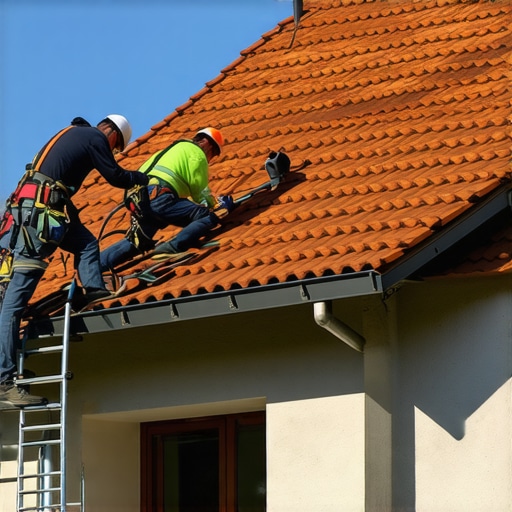
When professional local roofers arrive to fix a flashing leak in a single day, they aren’t reaching for a caulk gun first. They are reaching for a flat bar. The process is surgical. We start by removing the shingles surrounding the failed area—let’s say it’s a chimney. We strip it down to the raw deck to see the extent of the rot. If the plywood is delaminated, we cut it back to the rafters and replace the square. You can’t nail new flashing into rot; it’s like trying to staple paper to a bowl of soup.
The secret to a 20-year fix is the reglet cut. Instead of just slapping metal against the brick and glopping on some roof cement, we use a diamond blade saw to cut a groove directly into the mortar joint of the chimney. We then tuck the counter-flashing into that groove. This creates a mechanical seal that doesn’t rely on the longevity of a bead of caulk. Even if the sealant fails in ten years, the physical overlap of the metal ensures that water shed from the chimney face continues its journey down the roof rather than behind the shingles.
The “Band-Aid” Trap: Why Caulk is the Mark of a Hack
I get cynical when I see a chimney slathered in silver ‘cool roof’ coating or mounds of black tar. That is the signature of a contractor who won’t be in business three years from now. These materials have different thermal expansion coefficients than the metal and brick they are supposed to protect. When the sun beats down on a 140°F July afternoon, the metal expands. At night, it shrinks. Cheap caulk gets brittle and pulls away, creating a microscopic gap. That gap is all the invitations water needs. A real pro uses polyurethane sealants that remain flexible for decades, but even then, the sealant is only the backup. The metal should do the heavy lifting.
“A roof is only as good as its flashing.” – Old Roofer’s Adage
We also have to talk about crickets. If you have a chimney that is wider than 30 inches, the building code requires a cricket—a small peaked structure behind the chimney to divert water to the sides. Without a cricket, the back of your chimney acts like a dam, collecting leaves, pine needles, and debris. This organic matter holds moisture against the flashing for weeks after a rainstorm, eventually eating through the galvanized coating and causing pinhole leaks. Local roofing companies that skip the cricket are setting you up for a failure in five years.
Protecting Your Investment: What to Ask Your Contractor
If you’re hiring local roofers to address a leak, don’t ask about the shingles. Ask about the drip edge and the gauge of the flashing. Ask if they use ‘dead-valley’ protection. A reputable crew can mobilize, strip the problematic area, replace the flashing, and re-shingle it to match your existing roof in about six to eight hours. It’s a messy, loud, and precision-oriented job, but it’s the only way to stop the ‘slow kill’ of your home’s structure. If they show up with only a ladder and a tube of ‘leak stopper,’ send them packing. You aren’t paying for a temporary fix; you’re paying for a forensic-level correction of a construction defect. Don’t let a $500 flashing repair turn into a $20,000 mold remediation project because you waited for the ‘perfect’ time to fix it. The best time was yesterday; the second best time is today.