
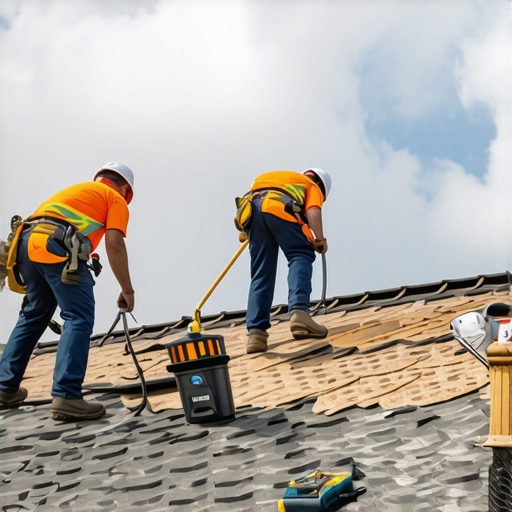
The Knock You Shouldn’t Answer
The sky is still the color of a bruised plum when the first white pickup truck rolls into your neighborhood. You’re still picking branches out of your pool, and there they are: the storm chasers. They’ve got glossy brochures and ‘free inspections’ that always find a catastrophe. But here’s the truth from someone who’s spent three decades peeling back failed systems: most of what they’re looking at isn’t your biggest problem. While they point at a few missing granules, they’re ignoring the fact that your drip edge wasn’t properly integrated with the underlayment, creating a highway for wind-driven rain to bypass your shingles entirely. Walking on that roof felt like walking on a sponge; I knew exactly what I’d find underneath—rotted OSB and the smell of a damp basement in the sky. I remember a forensic call in the Gulf Coast where the homeowner was convinced a few missing tabs were the issue. When I pulled a square of shingles back, the plywood was so saturated you could squeeze water out of it like a rag. The installer had used a cheap felt that had baked and cracked under the 150-degree Texas sun long before the storm ever hit. The storm didn’t kill the roof; the installation did. This guide isn’t about buying a roof; it’s about surviving the aftermath of a storm without getting fleeced by roofing companies that disappear when the next hurricane hits another state.
The Physics of Failure: Why Your Roof Actually Leaks
In the Southeast, we don’t just deal with rain; we deal with horizontal water. During a tropical depression, wind speeds create a pressure differential that literally sucks water uphill. If your local roofers didn’t install a starter strip properly or if they skimped on the ice and water shield (which we use here for secondary water resistance, not ice), that water finds the gaps. It uses capillary action, creeping between the layers of asphalt until it finds a shiner—a nail that missed the rafter. That nail becomes a conduit, a tiny steel straw that drips water directly onto your ceiling.
“The roof shall be covered with approved roof coverings in accordance with the provisions of this chapter.” – International Residential Code (IRC) R903.1
The problem is ‘approved’ is the bare minimum. If you want a roof that survives a 120-mph gust, you need to understand uplift ratings. When wind hits the windward slope, it creates high pressure; as it crests the ridge, it creates a vacuum on the leeward side. This vacuum pulls on the shingles. If the shingles weren’t nailed in the ‘sweet spot’ of the nail line, they will unzip like a cheap jacket. We call it ‘unzipping’ because once one shingle goes, the wind gets under the next, and the mechanical bond is finished. Most ’emergency’ repairs are just guys slapping plastic cement on top of wet granules. That’s a Band-Aid on a gunshot wound. You need to ensure the flashing—the thin metal transition at your chimneys and valleys—is interwoven correctly.
“A roof is only as good as its flashing.” – Old Roofer’s Adage
The Storm Chaser Playbook and the Deductible Scam
Let’s talk about the ‘Free Roof’ pitch. It’s the biggest lie in the industry. Your deductible is a contract between you and your insurance company. If a contractor offers to ‘waive’ it, they are either committing insurance fraud or, more likely, cutting corners on your materials to make up the difference. They’ll skip the cricket behind your chimney—the small peaked structure that diverts water—or they’ll reuse your old, pitted aluminum flashing instead of installing new copper or heavy-gauge steel. In 2026, the technology for detecting hail damage has improved, but so have the scams. They use high-resolution drones to find ‘bruises’ that are actually just natural weathering. Real storm damage involves functional failure: the matting of the shingle must be fractured, or the seal must be broken. Don’t let a ‘sales rep’ who has never held a hammer tell you that you need a full replacement without a forensic analysis of the attic. Go up there with a flashlight. Look for the ‘rust ring’ around nails. If you see rust, you have a slow-motion disaster. If you see daylight around your vent pipes, your boots are cracked. These are the things that fail during a storm, but they are often the result of years of UV degradation and thermal expansion.
How to Handle the Insurance Adjuster
When the adjuster arrives, they are looking for a reason to say no. You need a contractor who speaks ‘Adjuster.’ This means documenting the thermal shock that occurs when a hot roof is hit by cold rain, causing rapid contraction and cracking. It means pointing out the lack of Secondary Water Resistance (SWR) which can lead to lower premiums in many coastal zones. Don’t just show them the shingles; show them the fascia boards that are starting to soft-rot because the drip edge was too short. If you are hiring local roofers, ask for their workers’ comp certificates directly from the carrier. A ‘tailgate warranty’ is worthless the moment the truck rounds the corner. You want a 50-year non-prorated manufacturer warranty that covers the labor. Anything less is just a gamble. [IMAGE_PLACEHOLDER]
The Forensic Path Forward
Emergency roof services aren’t just about throwing a tarp over a hole. It’s about mitigating further damage. A properly installed tarp should be held down with ‘furring strips,’ not just sandbags or bricks which can slide off and kill someone. If you have a valley leak, the tarp must go over the ridge to prevent water from running under the top edge. Long-term, you should consider synthetic underlayment over the old-school organic felt. Synthetic doesn’t tear, it doesn’t absorb water, and it provides a much safer walking surface for the crew. In the heat of the Southwest or the humidity of the Southeast, ventilation is your best friend. A roof that can’t ‘breathe’ will cook the shingles from the inside out, turning the asphalt brittle and making it susceptible to wind damage. Ensure your soffit vents aren’t blocked by insulation; otherwise, your ridge vent is just decoration. If you want to avoid the emergency cycle, stop looking for the cheapest bid. The cheapest bid is usually the one that results in me coming out five years later to tell you that your plywood has turned to oatmeal. Invest in the details: stainless nails for salt air, heavy-duty starters, and a contractor who knows that ‘good enough’ never is.