
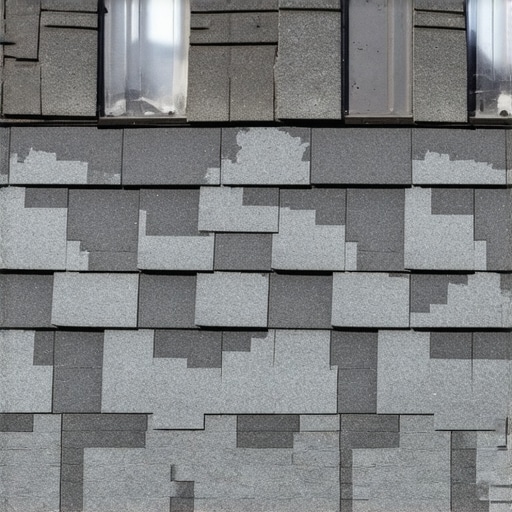
The Autopsy of a Baked Deck
You’re standing on your lawn, squinting against the glare of a high-desert sun that’s been hammering your home for a decade. From the ground, it looks like your roof has developed a series of strange, miniature waves. You might think it’s just the light, but as a forensic roofer with twenty-five years of grime under my fingernails, I can tell you exactly what that sound is: it’s the sound of your shingles screaming. We call it cupping, and by 2026, we’re going to see a massive wave of this failure in the Southwest due to the thermal shock cycles we’ve been hitting lately.
My old mentor, a grizzled veteran who could smell a leak through three layers of felt, used to tell me, ‘The roof is a breathing animal; if you choke the vents, it’ll eventually cough up its shingles.’ He wasn’t talking about a cold; he was talking about the physics of death for an asphalt square. When that attic space hits 150 degrees because some ‘trunk slammer’ forgot to calculate the net free vent area, the shingles are caught in a pincer movement between UV radiation from above and a literal griddle from below.
The Physics of the ‘Cigar Roll’
To understand cupping, you have to look at the molecular level of an asphalt shingle. It’s not just a piece of rock-covered paper. It’s a complex sandwich of a fiberglass mat, moisture-resistant bitumen, and ceramic-coated granules. When your local roofers didn’t account for the thermal expansion in this climate, the shingle begins to lose its volatile oils. As these oils bake out, the mat shrinks. But it doesn’t shrink evenly. The edges pull inward and upward, creating a concave shape. This is the first sign of 2026 shingle cupping: Lateral Distortion.
When the edges lift, they create a perfect pocket for wind-driven dust to settle. This dust acts as an abrasive. Every time the wind blows, those cupped edges vibrate against the shingles above them, grinding away the granules. Once the granules are gone, the UV light hits the raw asphalt mat. That’s when the ‘sun-rot’ begins in earnest. It’s a feedback loop of destruction that no amount of cheap caulk can fix.
“Adequate ventilation is necessary to prevent condensation and to reduce the temperature of the roof cladding.” – NRCA (National Roofing Contractors Association) Manual
Sign 2: The Migration of the Armor
The second sign is what I call the ‘Granule Graveyard.’ Take a walk over to your downspouts. If you see a pile of colored sand that looks like it belongs on a beach, your shingles are shedding their protective layer. In cupped shingles, this migration happens faster. Because the shingle is no longer flat, water doesn’t shed off it linearly. Instead, it pools in the center of the cup. This standing water—even if it’s just a few tablespoons—softens the asphalt over time. During the heat of the day, the granules lose their grip and slide down the slope, leaving the ‘bald spots’ that signal an imminent breach.
This isn’t just a cosmetic issue. Those granules are the only thing standing between the sun and the waterproofing layer. Without them, the asphalt becomes brittle. If you were to walk on it, it wouldn’t feel like a solid surface; it would feel like walking on dry crackers. You’d hear the ‘snap, crackle, pop’ of the fiberglass mat breaking. That is why roofing companies often refuse to do simple repairs on cupped roofs—once the mat is compromised, you can’t even drive a nail through it without shattering the surrounding area.
Sign 3: The Brittle Fracture and the ‘Shiner’ Exposure
The third and most dangerous sign is the exposure of the fasteners. As the shingle cups, it pulls away from the deck. This puts immense pressure on the nails. In a properly installed roofing system, the nail is buried under the overlap. But when a shingle curls, it can actually pull the nail head through the mat, or worse, expose the nail to the elements. This leads to a ‘shiner’—a missed or exposed nail that becomes a direct conduit for water. Capillary action is the enemy here. Water doesn’t just fall into your house; it creeps. It will hit that cupped edge, move sideways along the bottom of the shingle, and find that nail hole. From there, it’s a straight shot to your plywood decking.
“Minimum net free ventilating area shall be 1/150 of the area of the space ventilated.” – International Residential Code (IRC) R806.2
The Surgery: Why the Band-Aid Won’t Work
I’ve seen homeowners try to ‘glue down’ cupped shingles with tubes of roofing cement. It’s a waste of time and money. You’re trying to use a Band-Aid to fix a systemic organ failure. If your shingles are cupping, the underlying cause is almost always a combination of material age and poor attic ventilation. If you don’t fix the airflow, any new shingles you put up there will suffer the same fate within five years. You need to look at your soffit vents and your ridge vents. Are they blocked by insulation? Did the previous contractor even cut the ridge slot wide enough? A real pro will go into the attic—as miserable as that 140-degree crawl is—and check for light coming through the vents before they ever give you a quote for a new square of shingles.
When you’re vetting local roofers, don’t ask about the price of the shingle. Ask about their ventilation strategy. Ask them how they calculate the intake versus the exhaust. If they stare at you with a blank look, show them the door. You need someone who understands the forensic reality of why the last roof failed, or you’re just paying to have the same mistake installed twice. A roof replacement is a surgery, not a haircut. Treat it with that level of gravity, or prepare to find water on your dining room table when the next monsoon hits.