
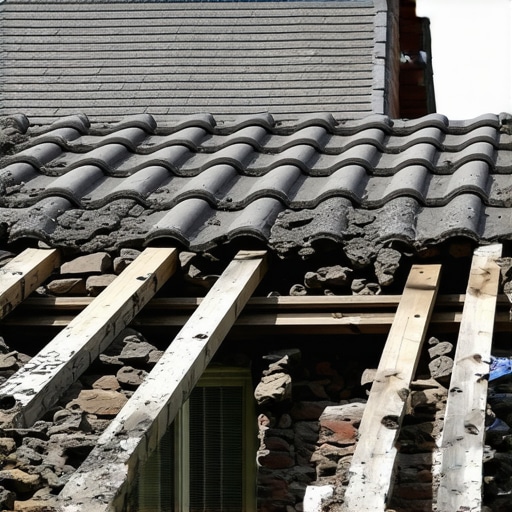
The Spongy Sensation: A Forensic Red Flag
Walking on that roof felt like walking on a sponge. I knew exactly what I’d find underneath. It wasn’t just a simple leak or a few missing granules from a cheap asphalt shingle. My boots didn’t hit the solid resistance of 3/4-inch plywood; instead, they sank into a structural abyss. Most homeowners think roofing is about the surface—the pretty shingles they pick out of a brochure. But for those of us who have spent 25 years in the trade, the roof is a biological system, and the rafters are the bones. When those bones go soft, the entire skeleton is failing. Many roofing companies are currently overlooking the quiet catastrophe brewing in attics across the region, but by 2026, the cumulative effect of poor ventilation and thermal bridging will force a reckoning for thousands of property owners.
The Physics of the ‘Shiner’ and Hidden Rot
To understand why your rafters are failing, you have to look at the physics of a ‘shiner.’ In trade talk, a shiner is a nail that missed the rafter and hangs exposed in the attic space. During a cold snap, these nails become thermal bridges. Warm, moist air from your bathroom or kitchen escapes into the attic—an ‘attic bypass’—and finds that cold metal nail. The moisture reaches its dew point and condenses, dripping onto the rafter below, day after day, winter after winter. Mechanism Zooming reveals that this isn’t just a drip; it’s a delivery system for wood-decay fungi. The water doesn’t just sit on top; it uses capillary action to pull itself deep into the grain of the wood. Over time, the lignin that gives wood its strength dissolves. By the time you see a stain on your ceiling, the rafter has already lost 40% of its load-bearing capacity.
“The roof system shall be designed and constructed to resist the wind loads and snow loads as determined in accordance with Section R301.6.” – International Residential Code (IRC)
Sign 1: The ‘Drunken’ Ridge Line
The first sign of 2026 rafter damage is a ridge line that looks like a wave rather than a straight edge. When you stand back at the curb and look at your roof, the peak should be a sharp, horizontal line. If it dips in the middle or appears ‘wavy,’ your rafters are likely spreading or rotting at the bird’s mouth cut. This is where the rafter sits on the wall plate. Local roofers often miss this because they are too busy looking at the shingles. If the wood here becomes saturated due to an ice dam—where snow melts, runs down to the cold gutter, refreezes, and backs water up under the shingles—the wood softens. Under the weight of a 100-sq-ft ‘square’ of heavy architectural shingles, that softened wood begins to crush. Once the bird’s mouth fails, the rafter pushes outward, threatening the structural integrity of your exterior walls.
Sign 2: Rusty ‘Bleeding’ and Darkened Fibrils
If you have the courage to crawl into your 140°F attic, look at the sides of your rafters. You aren’t just looking for wet spots; you are looking for ‘bleeding.’ This is when the minerals in the wood and the oxidation from the nails create a dark, tea-colored streak down the side of the lumber. This is a sign of chronic moisture saturation. If the wood looks ‘hairy’ or has white, fuzzy growth, those are fungal fibrils. They are literally eating the cellulose. I once saw a roof where the contractor didn’t install a cricket—a small peaked structure used to divert water around a chimney. The water pooled, saturated the roof deck, and turned the rafters into something resembling wet cardboard. You could literally poke a screwdriver through a 2×8 rafter with one hand. This is the ‘Surgery’ phase of roofing; you can’t just slap a new layer of felt down and call it a day. You have to sister the rafters or replace them entirely.
Sign 3: The Ghost of Ice Dams Past
In our cold climate, ice dams are the silent killers of rafters. When your attic isn’t properly sealed, heat leaks out, melting the bottom layer of snow on your roof. That water flows down to the eaves, which are cold because they hang over the edge of the house, and freezes into a block of ice. This creates a dam. The water behind it has nowhere to go but up and under the shingles. Even with a modern ice and water shield, if the installation was rushed by a ‘trunk slammer’ who didn’t prime the deck or didn’t overlap the seams correctly, the water will find the rafter tails. By 2026, the repeated cycles of freezing and thawing will have expanded the wood fibers so much that they lose their internal bond. You’ll notice this as a sagging soffit or fascia board that seems to be pulling away from the house.
“A roof is only as good as its flashing.” – Old Roofer’s Adage
The Contractor Trap: Why Warranties Won’t Save You
When you call roofing companies, they will tout their ‘Lifetime Warranty.’ Let me tell you a secret from the forensic side of the trade: those warranties almost never cover the rafters. They cover ‘manufacturing defects’ in the shingles. If your rafters rot because the ventilation was choked or the flashing was botched, the manufacturer will walk away, and the ‘local roofer’ who did the job will have changed his phone number. You need a forensic inspection, not a sales pitch. If your roof feels soft, don’t wait for a heavy snow load to prove you have a problem. The cost of replacing a few squares of decking and sistering a rafter today is a fraction of what you’ll pay when the ridge collapses. Water is patient. It will wait for you to make a mistake, and it will spend years exploiting it until your home’s skeleton finally gives up.
This post really sheds light on some often overlooked signs of roof failure that go beyond the surface. I particularly found the discussion about ‘shiners’ and how they act as moisture delivery systems to be eye-opening. It’s easy for homeowners to dismiss minor issues like a wavy ridge line or dark stains, but as the article points out, these are signals of deeper, structural problems. I’ve dealt with roof inspections where neglecting these signs resulted in costly repairs down the line. It makes me wonder, how many homeowners actually know how to spot these subtle signs before extensive damage occurs? Personally, I’ve started recommending regular attic inspections to friends and clients, especially in colder climates where ice dams and condensation are more prevalent. Has anyone here experienced or diagnosed hidden rot that was initially invisible from the ground? Would love to hear stories or advice on best practices for early detection.