
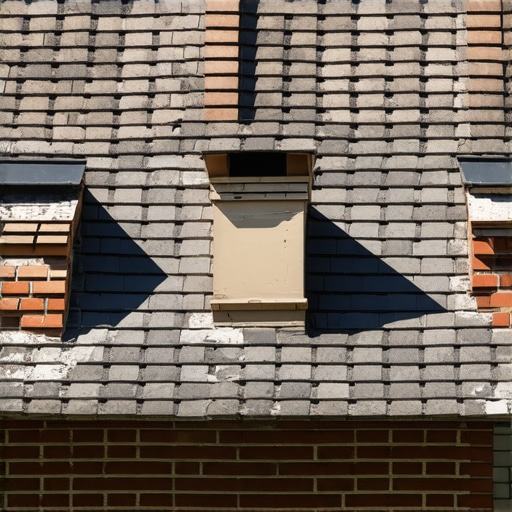
The Anatomy of a Dining Room Drip: Why Your Chimney is Failing
You’re sitting there with your morning coffee, and you see it: a brownish, yellowish ring spreading across the ceiling right where the chimney stack pierces the drywall. You call a few local roofers, and they tell you it’s just ‘flashing.’ But as a forensic investigator who has spent three decades on a pitch, I can tell you it’s rarely just a piece of bent tin. In our industry, we say water is patient. My old foreman, a man who could spot a leak from the ground while driving thirty miles per hour, used to say, ‘Water doesn’t just want in; it waits for you to make a mistake, and then it lives there.’ By the time you see that stain, the decay has been living in your rafters for three seasons. We are seeing a massive uptick in chimney-related failures as we approach 2026, largely due to the way older masonry is reacting to the extreme freeze-thaw cycles we’ve seen in the Northeast lately. If you don’t know what to look for, you’re just paying for a temporary patch that will fail by next winter.
“A roof is only as good as its flashing, and chimney flashing is the most complex intersection on any residential structure.” – Old Roofer’s Adage
Sign 1: The ‘Bleeding’ Brick and Mortar Fatigue
When you look up at your chimney, do you see white, salty streaks? That’s efflorescence. It’s not just a cosmetic issue; it’s a sign that the masonry is saturated. In the roofing world, we see this as the first stage of a ‘gap’ forming. Water isn’t just coming over the top; it’s migrating through the brick itself. When local roofers talk about chimney gaps, they often ignore the porosity of the brick. If the mortar is crumbling (spalling), it creates a microscopic ledge. Capillary action—the same physics that lets a paper towel soak up a spill—pulls water upward and behind your step flashing. Once it’s behind the metal, it’s a straight shot to your plywood. If that plywood stays damp, it turns into what we call ‘oatmeal.’ You can’t nail a new roof to oatmeal. This is why roofing companies that just ‘caulk and walk’ are doing you a massive disservice.
Sign 2: The ‘Shiner’ Shadow and Thermal Bridging
Sometimes the gap isn’t a hole you can see; it’s a thermal gap. In a cold climate, your chimney acts like a giant radiator, but it’s a two-way street. If your attic insulation is lacking near the stack, warm air escapes through an ‘attic bypass.’ This warm air hits the cold underside of the roof deck and condenses. I’ve seen cases where a homeowner thought they had a massive chimney leak, but the ‘gap’ was actually an air seal failure. We look for ‘shiners’—nails that missed the rafter and are sticking out into the attic space. During a cold snap, these nails frost over. When the sun hits the roof, they drip. If these shiners are concentrated around your chimney, your local roofers need to look at air sealing, not just slapping more tar on the base. The gap here is a gap in the thermal envelope, and it rots a roof just as fast as a hole in the shingles.
Sign 3: The Failure of the ‘Cricket’ and Dead Valleys
If your chimney is wider than 30 inches, the International Residential Code (IRC) requires a cricket. A cricket is a small, peaked false-roof built behind the chimney to divert water. Without it, you have a ‘dead valley.’ Imagine a five-gallon bucket of water being dumped on your roof every minute during a storm. All that water hits the back of the chimney and just sits there. It pools. It builds hydrostatic pressure. Eventually, that pressure finds a gap in the underlayment. Many roofing companies skip the cricket because it’s a ‘framing’ job, not a ‘roofing’ job. But if you’re looking at a 2026 roof replacement, and your chimney is a dam, you’re asking for a catastrophe. You’ll feel the roof deck bounce like a diving board when you walk behind that chimney; that’s the sound of the structural integrity leaving the building.
Sign 4: Counter-Flashing Separation and the ‘Caulk Trap’
True chimney flashing is a two-part system: step flashing (the ‘L’ shaped pieces that go under the shingles) and counter-flashing (the metal tucked into the brick joints). The gap we often find is where the counter-flashing has pulled away from the masonry. Most local roofers will just squirt a tube of polyurethane sealant in there and call it a day. But masonry and wood move at different rates. This is called differential expansion. The brick stays still while the wood frame of your house breathes, grows, and shrinks with the humidity. A rigid bead of caulk will snap in six months. A real pro will grind out the mortar joint, tuck the metal in deep, and use a mechanical fastener. If you see a thick, messy bead of silver or black ‘goop’ around your chimney, you have a ticking time bomb. The gap is hidden under the goop, and the wood underneath is likely black with mold.
“Flashing shall be installed in such a manner as to prevent moisture from entering the wall and roof through joints in copings, through moisture-permeable materials and at intersections of built-in flashing and adjoining materials.” – IRC R903.2
Sign 5: The Kick-out Flashing Oversight
This is the most common forensic failure I find. Where the roof eave meets the chimney wall, you need a ‘kick-out’ flashing. This is a specially bent piece of metal that directs water away from the wall and into the gutter. Without it, water runs down the roof-to-wall intersection and dives directly behind your siding or into the chimney’s shoulder. I’ve torn off roofs where the entire corner post of the house was rotted through because of a missing $15 piece of metal. Roofing companies often overlook this because it involves the siding, and they ‘only do roofs.’ But a roof is a system. If the water leaves the roof and enters the wall, the roof has failed. In 2026, as building codes get tighter on moisture management, these small gaps are the difference between a 30-year roof and a 5-year nightmare. Don’t let a ‘trunk slammer’ tell you it’s fine; if the water isn’t being kicked away from the structure, your house is being slowly digested by rot.