
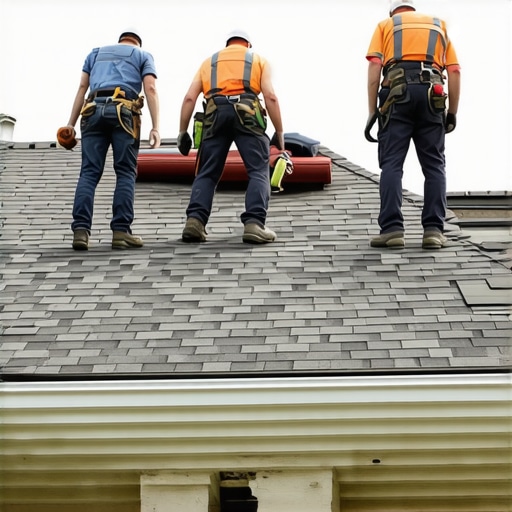
The Black Streak Epidemic on Your Roof
Walk outside and look at your north-facing slope. If it looks like someone spilled a gallon of black ink across your shingles, you aren’t looking at dirt. You’re looking at a living, breathing organism—Gloeocapsa magma—and it is eating your investment. Most roofing companies will tell you it is just an aesthetic issue. They are lying to get the sale. As a forensic investigator who has spent 25 years watching roofs fail, I can tell you that those black streaks are the beginning of the end. Walking on that roof felt like walking on a sponge. I knew exactly what I’d find underneath: degraded granules and a compromised mat. When the algae holds moisture against the asphalt, it accelerates the loss of the ceramic granules that protect the shingle from the sun’s UV hammer. Once those granules go, the asphalt bakes, cracks, and curls. You aren’t just losing curb appeal; you’re losing years of service life.
The Physics of Algae Growth in 2026
Why is this getting worse? Modern roofing shingles are packed with limestone as a filler. Algae loves limestone; it’s a buffet for bacteria. In the humid Southeast or any coastal pocket, this isn’t a possibility—it’s a mathematical certainty. Local roofers are now seeing shingles fail five to seven years early because the ‘bio-film’ created by the algae creates a micro-climate on the shingle surface. This moisture-trapping layer encourages the growth of moss and lichen, which have roots (rhizoids) that physically anchor into the asphalt, prying it apart from the fiberglass mat. By the time you see the streaks from the curb, the damage is already structural. We are talking about capillary action pulling water sideways under the lap of the shingle, where it hits the nails—or ‘shiners’—and starts the slow rot of your decking.
“A roof is only as good as its flashing.” – Old Roofer’s Adage
The Material Truth: 2026’s Top Algae-Resistant Contenders
When you call roofing companies today, they’ll throw a dozen brochures at you. But for 2026, the technology has shifted from a surface coating to a molecular integration. Here is the brutal breakdown of what actually works in a high-humidity environment. First, we have the copper-ion heavyweights. CertainTeed and GAF have doubled down on copper-infused granules. The chemistry is simple: when it rains, water hits the copper, releasing ions that create a toxic environment for algae spores. But not all copper is equal. Some brands use a thin coating that wears off after five years. You want to look for shingles that meet the 25-year streak-free warranty standards. This isn’t just marketing; it’s a measurement of the sheer volume of copper granules per square (100 square feet). If the manufacturer is stingy on the copper, your roof will be green by 2031.
Why “Lifetime Warranties” Are Marketing Smoke
Don’t get suckered by the ‘Lifetime’ label. In the roofing trade, ‘Lifetime’ usually means the lifetime of the shingle, which the manufacturer can decide is over the moment a major storm hits or the moment you fail to prove you’ve done ‘regular maintenance.’ Most algae warranties are prorated. If your roof starts streaking in year eight, they might give you a few bundles of shingles, but they won’t pay for the labor to tear off the old ones or the cost of the dumpster. Local roofers know that the real value is in the ‘No-Streak’ guarantee period. If a brand offers a 25-year algae warranty, it means they’ve loaded the granules with enough copper to withstand a quarter-century of rain-induced ionization. Anything less is just a temporary bandage on a terminal problem.
“The primary purpose of the roof covering is to provide weather protection for the building…” – International Building Code (IBC) Section 1501.1
Metal vs. Asphalt: The Humidity Battle
If you are tired of the asphalt cycle, many roofing companies are pushing standing-seam metal. From a forensic standpoint, metal is the apex predator for algae resistance. There is no limestone for the bacteria to eat. However, the installation is where the ‘trunk slammers’ fail. If your local roofers don’t use high-temp underlayment or if they miss a cricket behind the chimney, the algae resistance of the panel won’t matter because the plywood underneath will turn to oatmeal. In the Southwest, we worry about thermal expansion, but in the humid zones, we worry about the ‘sweat’ under the metal. Proper ventilation is the only thing that saves you here. You need a balanced system of intake at the soffits and exhaust at the ridge to keep that attic from becoming a sauna that rots the roof from the inside out.
The Contractor Trap: How to Vet Local Roofers
Picking the right brand is only 30% of the battle. The other 70% is the guy holding the nail gun. You want a crew that understands starter strips and doesn’t just ‘high-nail’ the shingles. A high-nailed shingle will blow off in a 40mph gust, algae-resistant or not. Ask them about their drip edge installation. If they aren’t tucking the underlayment over the drip edge at the eaves and under it at the rakes, they are rookies. You need a contractor who treats the roof like a system, not a series of overlapping plates. Look for companies that carry specialized certifications from the manufacturers (like Master Elite or Select ShingleMaster). These guys are held to higher standards and can offer the extended warranties that actually cover labor. If they can’t explain the physics of attic bypass or thermal bridging, show them the driveway.
Final Forensic Verdict
The cost of a roof replacement in 2026 is too high to take a gamble on cheap materials. If you live in an area where the humidity stays above 60%, you must insist on high-load copper granules. Brands like the GAF Timberline UHDZ or CertainTeed Landmark ClimateFlex are currently leading the pack for a reason—they address the molecular failure of asphalt in wet climates. Don’t wait for the leaks to start. Once the algae has established a foothold, it’s like a cancer for your rafters. Invest in the copper technology now, or prepare to pay a premium for a premature tear-off in a decade.