
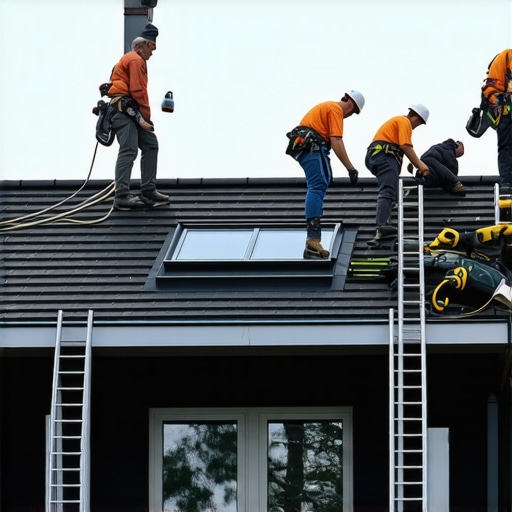
The Autopsy of a ‘Mystery’ Leak
The sound of a steady tink, tink, tink against a hardwood floor at 3 AM isn’t just an annoyance; it’s the sound of your equity eroding. I recently walked a roof where the homeowner had already paid three different local roofers to ‘fix’ a skylight leak. Each one had slapped another layer of black mastic around the frame, creating a literal dam that trapped water against the shingles. When I stepped onto the deck, the shingles felt like a sponge. I knew exactly what I’d find: a rotted mess of OSB that looked more like mulch than building material. This is the reality when roofing companies treat a skylight as an afterthought rather than a complex thermal and hydraulic penetration.
“A roof is only as good as its flashing.” – Old Roofer’s Adage
The Physics of Failure: Why Skylights Fail in the Cold North
In our climate, we aren’t just fighting liquid water; we are fighting the physics of phase changes. Most skylight leaks reported to roofing companies in 2026 aren’t actually leaks from the outside—they are condensation events caused by thermal bridging. When warm, moist air from your kitchen or bathroom hits the cold glass or the uninsulated aluminum frame of an older skylight, it liquefies. That water then runs down the light shaft, drips behind the drywall, and mimics a roof leak perfectly. Furthermore, we deal with the dreaded ice dam. When snow builds up behind the uphill side of a skylight, it creates a pool of standing water. Through capillary action, that water is sucked upward under the shingles and over the top of the flashing. If your roofer didn’t install a full square of ice and water shield wrapped up the curb, you’re toast.
Fix 1: The Step Flashing Overhaul (No More Goop)
Most roofing companies are lazy. They want to use ‘continuous’ flashing because it’s faster. But water is patient. To truly seal a skylight, you must use individual pieces of step flashing woven into every single course of shingles. This ensures that any water moving sideways is directed back out onto the face of the shingle. If you see a contractor reaching for a caulk gun instead of a tin snip, send them packing. We are talking about mechanical shedding, not chemical bonding. You need to integrate the flashing so that gravity is your friend, not your enemy.
Fix 2: The Elevated Curb Strategy
In 2026, we are seeing more ‘deck-mounted’ skylights, but for many homes, a ‘curb-mounted’ unit is the only way to survive heavy snow loads. By building a 2×4 or 2×6 wood curb and mounting the skylight on top of it, we lift the critical ‘seal’ point out of the drainage plane. This prevents the unit from being submerged during a heavy downpour or snow melt. I always insist on a custom cricket—a small peaked structure—on the uphill side of any skylight wider than 30 inches. This diverts the river of water around the unit instead of letting it hammer against the top flange.
“Waterproofing is the art of directing water where you want it to go, not just trying to stop it.” – Modern Building Axiom
Fix 3: Secondary Water Resistance (The 12-Inch Rule)
When I perform a forensic tear-off, I often find that the ‘pro’ forgot the most important layer: the transition membrane. Before the flashing goes on, the entire wooden curb must be wrapped in a high-temperature, self-adhering membrane that extends at least 12 inches onto the roof deck in all directions. This creates a secondary ‘bathtub’ seal. Even if a shingle fails or a shiner (a misplaced nail) creates a hole in the flashing, this membrane prevents the water from reaching the plywood. It’s the difference between a minor repair and a total interior ceiling replacement.
Fix 4: The Air-Sealing and Insulation Audit
If you want to stop ‘ghost leaks’ in 2026, you have to look inside the house. The skylight shaft is often the most poorly insulated part of a home. We use spray foam or rigid board insulation to seal the gap between the skylight frame and the rough opening. This stops the attic bypass where warm house air escapes into the roof system. Without this, you get localized melting on the roof, which leads to ice dams and, eventually, a saturated roof deck. Professional roofing companies should be looking at your R-value, not just your shingles.
The Cost of a ‘Cheap’ Fix
I’ve seen homeowners try to save a few hundred bucks by hiring ‘the guy with the truck.’ Six months later, they are spending $10,000 on mold remediation and a new dining room ceiling. In the roofing world, you pay for the expertise of the man who knows where the water is going to go before it even rains. If your contractor isn’t talking about hydrostatic pressure and thermal breaks, they aren’t fixing your skylight—they’re just delaying the inevitable collapse. Stop looking for a patch and start looking for a forensic solution.