
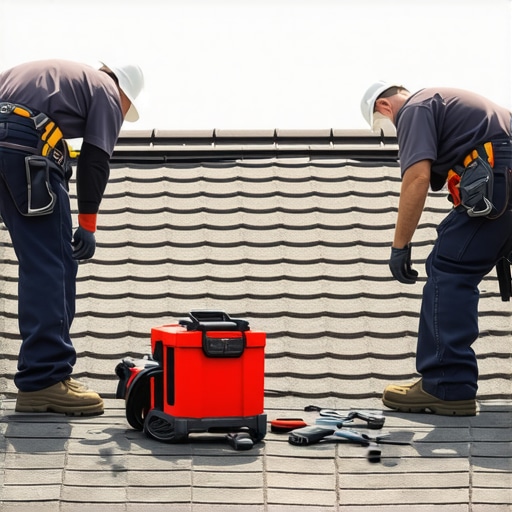
The Forensic Scene: When Your Roof Becomes a Sponge
Walking on that roof felt like walking on a sponge. I knew exactly what I’d find underneath. It wasn’t just old age; it was a slow-motion architectural homicide. The homeowner in the driveway was complaining about a ‘small damp spot’ over the master bedroom, but my boots were sinking three inches into the decking with every step. I could smell it before I even pulled a shingle—that cloying, earthy scent of saturated OSB that’s basically turned back into sawdust. This wasn’t a failure of the material; it was a failure of physics and maintenance. As we head into 2026, many local roofers are seeing a massive uptick in these ‘invisible’ failures. If you think your shingles are fine just because the sun is out, you’re missing the war happening beneath the granules.
1. The Physics of Granule Loss: More Than Just ‘Bald Spots’
Most roofing companies will tell you that shingles lose granules over time. That’s a surface-level truth. The deeper reality is about the degradation of the bitumen mat. Think of the granules as sunscreen for the asphalt. When those ceramic-coated stones wash into your gutters, the underlying asphalt is exposed to raw UV radiation. In a high-UV climate, this creates a process called ‘thermal shock.’ During the day, the shingles bake at 150°F, expanding and stretching. At night, as the temperature drops, they contract violently. Without granules to regulate the heat absorption, the asphalt becomes brittle, develops micro-fissures, and eventually, the shingle begins to ‘curl’ at the edges. This isn’t just cosmetic. Once that shingle curls, it creates a pocket that catches the wind. One good gust, and your roofing system starts shedding squares like a dog in summer. Maintaining your roof in 2026 means inspecting the grit in your downspouts; if it looks like a gravel pit, your roof is effectively naked.
“A roof is only as good as its flashing.” – Old Roofer’s Adage
2. The Capillary Action Trap: Why Small Leaks Are Lies
Water is patient. It doesn’t just fall; it climbs. Through a process called capillary action, surface tension pulls water upward into tight spaces—like the gap between an unsealed shingle and the one beneath it. This is why local roofers often find rot three feet above where the actual leak appears on your ceiling. If your starter strip wasn’t installed with the right offset, or if a ‘shiner’ (a nail driven too high or missed into the gap) is present, water will find that steel shank. Once it hits the nail, it follows the metal down into the plywood. In cold climates, this is exacerbated by the freeze-thaw cycle. Water gets in, freezes, expands the gap, and melts, allowing more water to get in deeper. [image_placeholder] By the time you see a brown ring on your drywall, the forensic evidence suggests that the structural integrity of your decking has been compromised for at least two seasons. Proper maintenance requires checking the ‘sealant bond’—literally tugging on the shingles to ensure the factory adhesive is still biting.
3. The Attic Bypass: The Silent Roof Killer
You can hire the best roofing companies in the world to lay shingles, but if your attic is a sauna, those shingles will ‘cook’ from the inside out. This is ‘Mechanism Zooming’ at its most brutal. We call it thermal bridging. When your attic isn’t vented properly, heat accumulates. In the winter, this heat escapes through the ceiling and warms the underside of the roof deck. This melts the bottom layer of snow on your roof, which then runs down to the cold eaves and refreezes, creating an ice dam. That dam backs up water under the shingles.
“The primary purpose of a roof is to shed water, but its secondary purpose is to manage the building’s environment.” – NRCA Manual
In 2026, maintenance isn’t just about shingles; it’s about air sealing. If you have a ‘bypass’—a gap around a chimney or light fixture—you are pumping moisture into the attic. That moisture hits the cold roof deck, turns into frost, and then drips back down. You’ll think your roofing is leaking, but in reality, your house is just breathing its own sweat.
4. The ‘Shiner’ and the Corrosion Cycle
Let’s talk about the ‘shiner.’ This is the trade term for a nail that missed the rafter or was driven into the ‘valley’ of the shingle improperly. In a forensic teardown, these are the smoking guns. Every nail is a thermal bridge. In a 140°F attic, that nail is a cold point where condensation gathers. Over five years, that nail rusts. The rust expands the hole in the asphalt. Now you have a direct conduit for wind-driven rain. If your local roofers didn’t use stainless or high-quality galvanized nails, especially near salt air, those fasteners are disintegrating. Maintenance for 2026 involves a ‘nail pop’ inspection. If you see shingles lifting slightly, it’s often because the plywood has expanded and ‘spit out’ the nail. This is a sign that your decking is moving too much, likely due to moisture imbalances.
5. The ‘Lifetime’ Warranty Myth and Material Reality
Don’t get seduced by ‘Lifetime’ marketing. In the roofing trade, ‘Lifetime’ usually means ‘until the original owner sells the house’ or is heavily depreciated after year ten. For 2026, the real maintenance tip is understanding the ‘Age-of-System’ vs. ‘Age-of-Material.’ A shingle might be rated for 30 years, but in a harsh climate, its functional life is often 18-22. If your local roofers used a ‘closed valley’ (where shingles are woven) instead of an ‘open valley’ (with a metal ‘cricket’ or flashing), the debris buildup in those crotches will rot the shingles in half the time. You need to clear the organic debris. Pine needles and oak leaves hold moisture against the granules, creating a ‘mulch’ that eats the asphalt. If you see moss, don’t power wash it; you’ll blast the life right out of the shingle. Use a zinc-based solution and be patient. The goal is to keep the shedding surface clear so gravity can do its job.