
The Great Material Deception: Why Your Roof is Brittle
Walking on that roof felt like walking on a sponge. I knew exactly what I’d find underneath. It wasn’t just that the shingles were old; it was that they had failed prematurely due to a lack of understanding of thermal shock. As we move toward 2026, the roofing industry is facing a crisis of material integrity that most roofing companies aren’t talking about. The asphalt shingles being churned out today aren’t the same heavy-duty mats your grandfather installed. They are thinner, leaner, and packed with more limestone filler than bitumen. In the blistering heat of the Southwest, where the sun doesn’t just shine—it punishes—this chemical imbalance leads to what I call ‘Premature Vitrification.’ The shingle stops being a flexible water-shedder and starts behaving like a sheet of glass.
“Roofing materials shall be compatible with each other and with the building.” – International Residential Code (IRC)
1. The Spider-Web Fissure (Micro-Cracking)
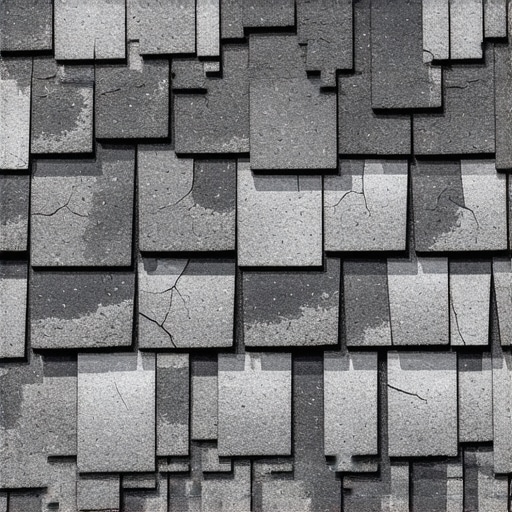
The first sign of 2026-era shingle failure is the micro-fissure. This isn’t your standard hail hit or a tree limb scrape. This is a molecular breakdown. Mechanism zooming reveals that UV radiation triggers a process called volatilization. The essential oils in the asphalt are sucked out, leaving behind a brittle matrix. When the temperature fluctuates—going from 140°F in the afternoon to 60°F at night—the shingle undergoes massive thermal expansion and contraction. Because the oils are gone, the shingle can’t stretch. It snaps on a microscopic level. Local roofers often miss this, but if you look closely at the edges of the granules, you’ll see tiny, jagged canyons forming. Once these webs appear, capillary action begins. Water doesn’t just sit on top; it gets pulled into the shingle, reaching the fiberglass matting and rotting it from the inside out.
2. Differential Edge Curling
By 2026, we are seeing a trend in ‘differential cooling’ failures. The top layer of a shingle (the one covered in granules) cools at a different rate than the adhesive strip on the bottom. This creates an internal tension. If you see the corners of your shingles starting to lift—not because of wind, but because they are physically curling upward like a dried leaf—you are looking at a manufacturing defect exacerbated by heat. This curl exposes the ‘starter strip’ and creates a pocket where wind-driven rain can be forced upward. In the trade, we call this ‘hosing.’ It’s as if a neighbor is pointing a garden hose directly under your shingles. If your roofing companies aren’t checking the pliability of these edges during an inspection, they aren’t doing a forensic job; they’re just looking for an easy sale.
3. Granule Avalanche in the Gutters
Check your downspouts. If they look like they’re spitting out coffee grounds, your roof is balding. The granules are the only thing protecting the bitumen from UV death. In the current market, the bond between the granule and the asphalt is weakening. When the shingle cracks, even slightly, the bond is broken, and the granules wash away in the first monsoon. This is the ‘death spiral’ of a roof. Less granules mean more UV exposure, which means more cracking, which leads to more granule loss. It’s a feedback loop that can turn a 30-year shingle into a 10-year liability. When you find a ‘shiner’—that’s a nail missed by the installer that’s now rusted and exposed—it acts as a heat sink, accelerating the cracking in that specific square of roofing.
“A roof is only as good as its flashing.” – Old Roofer’s Adage
The Warranty Trap: Why ‘Lifetime’ is a Lie
Most roofing companies will sell you on a ‘Lifetime Warranty.’ Here is the cynical truth: those warranties are heavily prorated and often only cover manufacturer defects, which are nearly impossible to prove once the shingle has been baked in the sun for five years. They don’t cover ‘Acts of God,’ which insurance companies use to describe the very heat that causes the cracking. Instead of chasing a piece of paper, focus on the material. In high-UV zones, you need to consider the move from standard asphalt to SBS-modified bitumen. These are ‘rubberized’ shingles that can actually handle the thermal dance without snapping. They cost more per square, but they don’t turn into crackers after a few summers.
Choosing Your Surgeon: Avoiding the Trunk Slammers
Don’t just hire the guy who knocks on your door after a storm. You need a forensic-minded contractor who understands the physics of ventilation. If your attic isn’t breathing, your shingles are being cooked from both sides. A proper roofer will check your crickets (those small diversions behind chimneys) and ensure your valleys are lined with heavy-duty ice and water shield, even in the desert, to prevent hydrostatic pressure from forcing water through those new cracks. Stop looking for a ‘roofing company’ and start looking for a master of the building envelope. If they don’t mention ventilation and thermal shock in the first ten minutes, show them the driveway.