
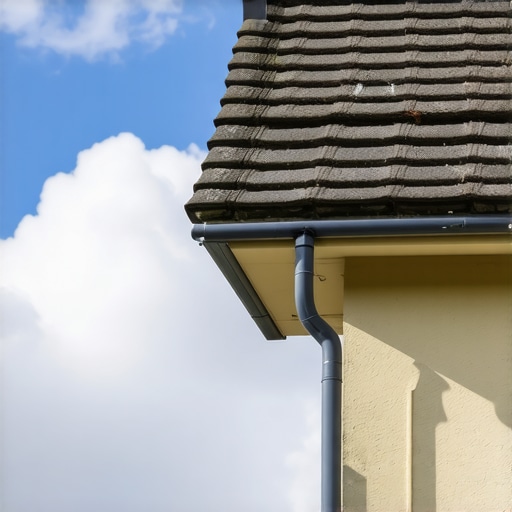
The Anatomy of a Gutter Collapse
The first sign wasn’t the waterfall cascading over the front porch during a July thunderstorm; it was the faint, sickly scent of damp cedar lingering in the soffit. When I stepped onto that ladder, the gutter didn’t just feel loose—it groaned. Walking on that roof felt like walking on a sponge. I knew exactly what I’d find underneath. The fascia board was so saturated it had the consistency of wet bread. This wasn’t a freak accident. It was a slow-motion architectural suicide. Local roofers often see this as a simple fix, but a forensic look reveals a deeper decay. By 2026, thousands of homes will face this exact scenario because of three specific mechanical failures that are being ignored today.
1. The Physics of Pitch and Structural Fatigue
Water is heavy. A single gallon weighs about 8.3 pounds. When a gutter system is improperly pitched—even by a fraction of an inch—you aren’t just looking at a puddle; you’re looking at a static load the original installers never accounted for. Most roofing companies slap gutters up with a standard slope, but they fail to account for the eventual settling of the structure. Over the next two years, minor foundation shifts will turn those slight slopes into stagnant ponds. This is where hydrostatic pressure begins its work. Stagnant water creates a constant weight that pulls on the spikes or hangers, slowly enlarging the holes in the fascia. Once those holes are wallowed out, the system loses its structural integrity. It starts with a ‘shiner’—a missed nail or a loose fastener—and ends with the entire 40-foot run of aluminum tearing away during a heavy downpour.
“Gutters must be sloped a minimum of 1/8 to 1/4 inch per 10 feet toward the downspouts to ensure proper drainage.” – General Industry Standard for Sheet Metal and Air Conditioning Contractors
2. Capillary Action and the Missing Drip Edge
The most common crime I see in the field is the missing or improperly installed drip edge. Water is a sticky substance; it has high surface tension. Without a proper metal drip edge tucked behind the gutter, water doesn’t just fall into the trough. It performs a U-turn. It clings to the underside of the shingle, crawls back up the roof deck, and drips directly onto the wooden fascia board. This is capillary action. By 2026, the cumulative effect of this moisture will have rotted the sub-fascia and the rafter tails. You can hire local roofers to put on new shingles, but if they don’t address that gap, you’re just putting a new lid on a rotten box. I’ve seen squares of plywood that had to be replaced because a simple five-dollar piece of flashing was omitted. This moisture doesn’t just sit there; it invites carpenter ants and mold, turning your attic into a biological hazard zone long before the gutters actually fall off.
3. Thermal Expansion and the ‘2026 Material Fatigue’ Point
We are entering a cycle of extreme thermal shifts. Metal expands when it’s hot and contracts when it’s cold. In our climate, the temperature on a roof deck can swing from -10°F in February to 140°F in August. This constant movement puts immense stress on the sealant in the valleys and mitered corners of your gutters. Most modern caulks have a five-to-seven-year lifespan before they lose their elasticity. If your gutters were installed around 2019 or 2020, they are approaching their ‘fatigue point.’ Once that sealant cracks, water enters the seam, freezes, and expands, prying the metal apart. It’s a silent failure. You won’t see it from the ground, but the water is already eating away at your foundation, causing soil erosion that will eventually lead to cracked basement walls.
“A roof is only as good as its flashing.” – Old Roofer’s Adage
The surgery for this isn’t a tube of caulk from a big-box store. It requires a full tear-off of the affected gutter line, inspection of the wood behind it, and the installation of a cricket if there’s a chimney causing a water bottleneck. Don’t wait for the dining room ceiling to bubble. If you see your gutters pulling away even a hair’s breadth, the clock is already ticking toward 2026. Hire a professional who knows how to look for the physics of failure, not just someone looking to spray some foam and move on to the next job.