
The High-Tech Circus of Modern Roofing
You walk into a consultation with most roofing companies today and they’ll throw a glossy brochure in your face about ‘energy savings’ and ‘green tech.’ It is mostly smoke and mirrors designed to distract you from the fact that they are hiring sub-crews who couldn’t find a rafter if their life depended on it. I have spent twenty-five years on top of steep-slope assemblies, smelling the slow-cook of asphalt shingles in the July sun and watching the steam rise off a fresh tear-off. My old foreman used to say, ‘Water is patient. It will wait for you to make a mistake.’ In 2026, energy efficiency isn’t just about sticking a fan on a hole in the deck; it is about the physics of the entire envelope. If you are looking for local roofers, you need to look past the sales pitch and into the actual mechanics of thermal transfer. Let’s look at how the trade is actually changing, stripped of the marketing fluff.
1. The Physics of Albedo: Beyond Simple ‘Cool Roofs’
In the past, a ‘cool roof’ was just a white shingle that looked like an eyesore on a residential street. By 2026, roofing companies are using complex ceramic-coated granules that reflect infrared light while maintaining deep, aesthetic colors. We are talking about the Solar Reflectance Index (SRI). When those UV rays hit a standard dark shingle, the granules absorb the energy, transferring it through the bitumen layer, into the glass-mat substrate, and finally into the plywood deck. That deck becomes a giant radiator, pumping infrared heat into your attic insulation until it reaches its saturation point. Local roofers who know their salt are now installing shingles that stay 50 degrees cooler by bouncing that spectrum back into the atmosphere before it ever touches the wood. If you ignore the SRI rating, you are just paying to bake your own house.
2. Passive Ventilation and the Net Free Area (NFA) Calculation
Most roofing companies treat ventilation like an afterthought, cutting a hole and slapping a ridge vent on top. That is a recipe for a ‘hot spot’ that kills shingle life. Proper 2026 energy efficiency requires a balanced system where the intake at the soffit matches the exhaust at the ridge. We calculate the Net Free Area (NFA) down to the square inch. Without this, you get stagnant air pockets. In a 140°F attic, that heat conductive-loops back down through your ceiling. I’ve seen shiners (nails that missed the rafter) dripping with condensation because the attic was so poorly ventilated it created its own weather system. A real pro ensures the drip edge and intake vents aren’t choked by over-blown insulation.
“A roof is only as good as its flashing and its ability to breathe; heat is as much an enemy as water.” – NRCA Manual Guidelines
3. Thermal Bridging and the R-Value Gap
You can have R-60 insulation in your attic, but if your roofing companies aren’t addressing thermal bridging, you’re losing the fight. Every wooden rafter is a bridge that conducts heat faster than the insulation around it. In 2026, we are seeing the rise of over-deck insulation—rigid foam boards installed directly over the structural deck before the underlayment goes down. This breaks the thermal bridge. When I’m performing a forensic teardown, I can see the ghosting on the old plywood where the rafters were because they stayed at a different temperature than the rest of the deck. Modern local roofers use this ‘outsulation’ method to keep the actual structure of the home inside the conditioned space.
4. The Evolution of Synthetic Underlayments
The days of #15 and #30 felt paper are dead. That stuff is basically cardboard soaked in oil; it wrinkles, it tears, and it degrades under heat. 2026 energy-efficient roofing relies on multi-layer synthetic underlayments that act as a secondary air barrier. These materials are engineered to be ‘breathable’—allowing water vapor to escape from the house while preventing liquid water from getting in. This prevents the ‘greenhouse effect’ under your shingles. When local roofers use cheap felt, they are trapping moisture that eventually turns your plywood into something resembling wet oatmeal. I once tore off a square of shingles where the felt had literally fused to the wood because it couldn’t handle the thermal cycling.
5. Building-Integrated Photovoltaics (BIPV)
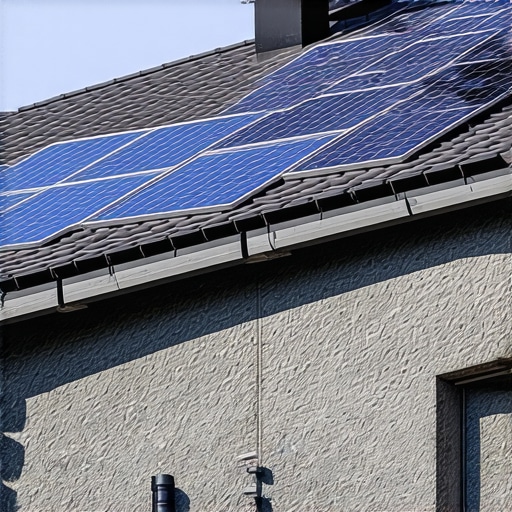
We are moving past the era of heavy, ugly solar panels bolted through the roof with lag bolts that create sixteen leak points per array. Modern roofing companies are now certified installers for BIPV—solar shingles. These are the roof. They handle the wind-uplift, they shed water, and they generate power. The mechanism here is about reducing the ‘thermal load’ of the solar cells themselves. Older panels would heat up and radiate that heat into the attic. 2026 solar shingles are designed with rear-side ventilation channels to keep the cells cool and the attic cooler. If your contractor doesn’t know how to flash a valley around a solar array, find someone else.
6. Precision Edge Metal and Eave Detailing
Energy efficiency is often lost at the edges. If the drip edge is installed incorrectly, or if there is a gap between the fascia and the deck, you get ‘wind-washing.’ This is when outside air blows into your insulation, stripping its R-value. Expert local roofers now use custom-bent edge metals and closure strips to ensure the building envelope is airtight where it needs to be and breathable where it’s designed to be. It’s about controlling the airflow, not just hoping for the best. I’ve seen crickets built behind chimneys that were beautiful, but the contractor forgot to seal the air bypasses, leading to a massive energy leak that cost the homeowner thousands over five years.
“The building envelope must be viewed as a singular system; a failure in one quadrant is a failure of the whole.” – Vitruvius Modernized
7. Phase-Change Materials (PCM) in Roofing Assemblies
The cutting edge for 2026 is Phase-Change Materials. These are substances incorporated into the underlayment or the shingles themselves that absorb heat as they melt (at a microscopic level) and release it as they solidify. It’s like having a thermal battery on your head. During the peak of the day, the PCM absorbs the thermal energy, preventing it from entering the home. At night, it releases that heat back to the sky. This levels out the ‘thermal shock’ that causes shingles to expand and contract, which is what eventually pops the nails and creates those leaks that bring me out for repairs. Most roofing companies won’t even mention this because it requires actual technical knowledge to install.
The Warranty Trap: Don’t Get Burned
Let’s talk about the ‘Lifetime Warranty.’ In the trade, we know that is mostly a marketing gimmick. Those warranties often only cover ‘manufacturer defects’—and guess what? If the roof wasn’t ventilated to the exact square inch of the NFA requirements, the manufacturer will void your warranty the moment a claim is filed. They’ll point to ‘thermal degradation’ caused by installer error. This is why picking local roofers based on the lowest bid is a fool’s errand. You want someone who understands the science of the 2026 materials, not just someone who can swing a hammer. If they aren’t talking about air sealing and convective loops, they aren’t building you an energy-efficient roof; they’re just giving you a temporary lid. A roof should be a shield, not a heat-sink.