
The Ghost of a Bad Inspection
Walking on that roof felt like walking on a sponge. I knew exactly what I’d find underneath: a graveyard of delaminated OSB and rusted fasteners that had been cleared by a local roofing company just last summer. The homeowner thought they saved five hundred bucks on a ‘discount’ inspection. Instead, they bought a thirty-thousand-dollar total loss. In the desert heat, where the sun beats down like a hammer on an anvil, your roof isn’t just a cover; it’s a thermal shield. If that shield has a chink, the desert will find it and exploit it until your rafters are sawdust.
1. The ‘Binocular Inspection’ Trap
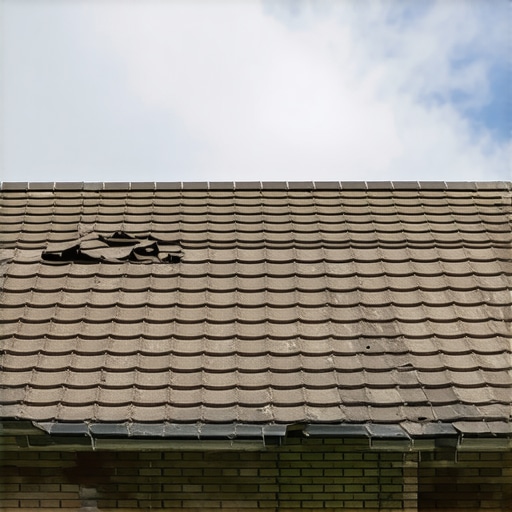
If your inspector never pulled a ladder off their truck, you didn’t get an inspection; you got a drive-by appraisal. A real pro needs to feel the deck under their boots. In our Southwest climate, UV radiation turns asphalt shingles into brittle potato chips. From the ground, a roof might look ‘clean,’ but up close, you might see the ‘granule loss’ that signals the end of a shingle’s life. When those ceramic granules shed, the asphalt mat is exposed to raw UV. This leads to thermal shock—where the material expands in the 110°F midday heat and contracts violently at 60°F at night. A cheap inspection misses the hairline fractures caused by this cycle because they aren’t looking at the grain.
[IMAGE_PLACEHOLDER]
2. Ignoring the ‘Shiners’ in the Attic
A cut-rate inspector stays outside. A forensic veteran goes into the attic. I’m looking for ‘shiners’—those missed nails that didn’t hit the rafter. In a poorly ventilated desert attic, these metal shiners act as thermal bridges. When your AC is cranking and the attic is a stagnant 140°F, moisture (even in the desert) can condense on those cold nail tips. Over time, that tiny bit of moisture rots the surrounding wood. If your inspector didn’t come out of your house with insulation in their hair and sweat through their shirt, they didn’t do their job.
“A roof is only as good as its flashing.” – Old Roofer’s Adage
3. The Missing ‘Cricket’ Check
Check your chimney. Is there a small peaked structure behind it? That’s a cricket. Its job is to divert water away from the wide masonry stack. Cheap inspectors often skip checking the integrity of the cricket’s valley. In flash-flood-prone areas, water piles up behind a chimney like a dam. If the flashing isn’t stepped properly or if the cricket is undersized, water will find its way in through hydrostatic pressure. It doesn’t just leak; it pushes. I’ve seen ‘repaired’ roofs where the contractor just smeared a gallon of mastic around the chimney. That’s a band-aid on a gunshot wound.
4. Thermal Expansion Oversight
In the Southwest, materials move. A lot. A cheap inspection fails to check the expansion joints on longer runs of metal or tile. If the roofing was pinned too tightly, the sheer force of thermal expansion will eventually pull the fasteners right out of the wood. We call it ‘fastener back-out.’ When you see a tile that’s slipped an inch or two, it’s rarely a wind issue; it’s a thermal issue that a lazy inspector ignored because they weren’t looking for structural movement, just ‘missing pieces.’
5. The ‘Square’ Count Discrepancy
A sign of a shady inspection is a lack of actual measurements. When we talk about a square, we mean 100 square feet. A cheap inspector guesses. They’ll tell you that you have 30 squares when you actually have 35. Why? Because they want to give you a low-ball estimate to get the job, then hit you with ‘unexpected material costs’ later. A forensic inspection involves a satellite-derived report or a manual tape-measure verification of every plane, valley, and ridge. Precision matters because underestimating the scale means underestimating the ventilation requirements.
6. Ventilation Vacuum
Most local roofers focus on the intake but forget the exhaust. If your inspector didn’t calculate the Net Free Venting Area (NFVA), the inspection was a failure. In high-heat zones, an imbalanced ventilation system creates a vacuum. It can actually pull conditioned air from your living space into the attic, driving up your energy bills and baking your shingles from the inside out. I’ve seen plywood decks turned to ‘oatmeal’—not from rain, but from trapped attic heat that couldn’t escape because the ridge vents were choked by debris or poorly installed.
“The roof shall be covered with approved roof coverings secured to the roof deck in accordance with the manufacturer’s installation instructions.” – International Residential Code (IRC) R905.1
7. The Drip Edge Denial
The drip edge is the unsung hero of the roof perimeter. It’s a piece of metal flashing that directs water into the gutters and away from the fascia. Cheap companies often skip this or reuse old, rusted flashing to save twenty bucks. During a ‘cheap’ inspection, they won’t even mention it. But if that drip edge is missing or incorrectly installed, water will use capillary action to ‘climb’ back up under the shingles or soak into the fascia boards. I’ve seen fascia rot so bad that the gutters literally fell off the house during a monsoon. All because an inspector didn’t want to bend over and check the eave detail.
The Final Audit: Why ‘Free’ Costs the Most
The roofing industry is plagued by the ‘free inspection’ hook. Usually, that’s just a salesman with a clipboard looking for hail dings to trigger an insurance claim. A forensic inspection is different. It’s a diagnostic deep-dive. You want someone who understands the physics of water and the brutality of the sun. If you’re hiring roofing companies based solely on the lowest bid, you’re essentially gambling with the largest investment you own. Real roofing isn’t about the shingles you see; it’s about the physics you don’t. Pay for the expertise now, or pay for the failure later. Your roof is a system, and in 2026, with material costs rising and climates shifting, you can’t afford to be cheap about the basics.