
The Death of the Ladder and the Rise of the Lens
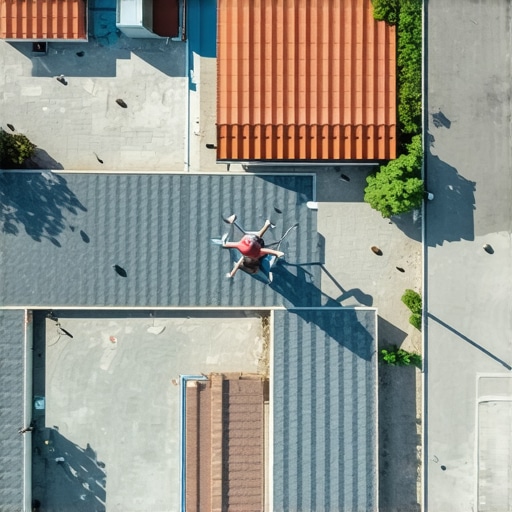
My old foreman used to pull his truck up to a job site, squint at the peaks through a pair of dusty binoculars, and say, ‘Water is patient. It will wait for you to make a mistake.’ He was right. Back then, we found leaks by crawling on our hands and knees, feeling for soft spots in the plywood and looking for the tell-tale granules of a dying shingle. But by 2026, the game has shifted. The best roofing companies aren’t just sending a guy up a 40-foot extension ladder with a tape measure anymore. They are launching birds. Specifically, drones equipped with high-resolution photogrammetry and thermal sensors. If you are hiring local roofers who aren’t using drone overlays, you are likely paying for guesswork and ‘shiners’—those missed nails that stay hidden until your ceiling starts to sag.
1. Eliminating the ‘Human Error’ in a Square
When we talk about a ‘square’ in the trade, we mean 100 square feet of roofing material. Calculating that accurately on a complex roof with multiple hips, valleys, and a steep 12/12 pitch is a nightmare with a physical tape. Drone overlays use 3D mapping to calculate every square inch of the deck with sub-centimeter accuracy. We used to round up ‘just in case,’ but drone data stops that waste. The overlay creates a digital twin of your home, ensuring the material order is exact. No more extra bundles of shingles sitting in your driveway for three weeks because the estimator couldn’t measure a cricket properly.
“Roofing assemblies shall be designed and installed in accordance with this code and the approved manufacturer’s installation instructions.” – International Residential Code (IRC), Section R903.1
2. The Forensic Truth of Thermal Overlays
In the Midwest, where the temperature swings 40 degrees in a single day, thermal shock is a silent killer. Traditional inspections can’t see what’s happening under the surface. A drone equipped with a FLIR (Forward Looking Infrared) camera creates a thermal overlay that highlights moisture trapped between the roof membrane and the insulation. Water has a different thermal mass than dry wood. As the sun sets and the roof cools, those wet spots stay warm. On a drone overlay, they glow like a neon sign. This is the difference between a ‘patch job’ that fails in six months and a targeted surgical repair that actually solves the problem.
3. Spotting the ‘Shiner’ Before the Leak Starts
A ‘shiner’ is a roofer’s cardinal sin—a nail that missed the rafter and is sticking through the roof deck into the attic. In the winter, these nails get frost on them; in the summer, they drip. Drone overlays allow for high-resolution ‘orthomosaic’ maps. This means I can zoom in on a single nail head from a 4K image captured 50 feet in the air. We can see if the previous crew used high-pressure guns that over-driven the nails, slicing through the shingle mat instead of securing it. You can’t see that from the ground, and most local roofers won’t tell you they found it while they’re standing on the ridge.
4. The ‘Adjuster-Proof’ Documentation
Dealing with insurance adjusters is a battle of evidence. If a storm hits and you have hail damage, the adjuster wants to see ‘functional damage,’ not just ‘cosmetic bruises.’ 2026 roofing tech allows us to overlay a pre-storm 3D model with a post-storm scan. This ‘change detection’ software highlights exactly where the impact occurred. It’s hard for an insurance company to deny a claim when you have a side-by-side topographic map showing a 30% loss in granule thickness across the southern slope. [image_placeholder]
5. Safety on the ‘Deadly Pitch’
Let’s be blunt: every time a roofer steps onto a wet 10/12 pitch roof, they are risking a trip to the ER. Drone overlays allow us to perform the entire initial assessment from the safety of the gutter line or the ground. This doesn’t just keep the crew safe; it keeps your liability down. If a contractor falls off your roof, your homeowners’ insurance is the next thing in the crosshairs. By using drones for the heavy lifting of the inspection, roofing companies reduce their overhead and their risk, which—in a fair world—should reflect in the transparency of their pricing.
6. Identifying Structural Sag and Drainage Failures
Water doesn’t always move where you think it does. I’ve seen roofs where the valley looked fine, but the drone overlay showed a subtle structural sag in the rafters that was causing water to pool and move sideways via capillary action. A drone’s 3D mesh can detect a 2-degree deviation in the roof plane. If your roof has a ‘swale’ that’s trapping water against the fascia, the overlay will flag it. Without that bird’s eye view, a roofer might just slap new shingles over a structural problem, essentially putting a fresh coat of paint on a rotting fence.
“A roof is only as good as its flashing and the integrity of the substrate it rests upon.” – National Roofing Contractors Association (NRCA) Guidelines
7. Long-Term Asset Management
In 2026, a roof isn’t a ‘set it and forget it’ product. Smart local roofers provide the homeowner with the digital overlay files. Think of it like a medical record for your house. Five years down the line, if you want to install solar panels or if another storm rolls through, you have a baseline. You can see how the UV radiation is degrading the asphalt or if the starter strip is beginning to lift. It turns a reactive repair into a proactive strategy. If you aren’t getting a digital twin of your roof in 2026, you’re stuck in the 1990s, and your house will eventually pay the price. The smell of rotting plywood is expensive; a drone flight is cheap.