
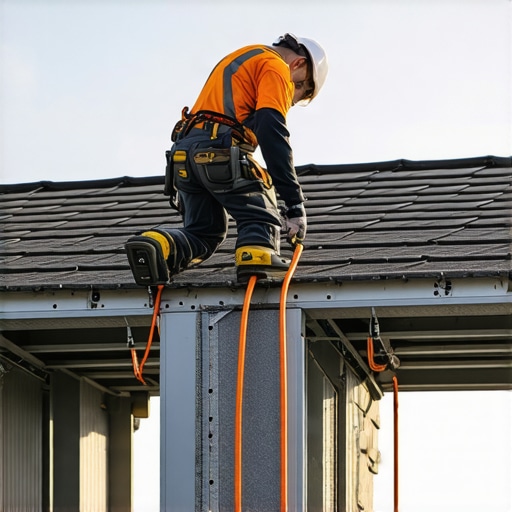
The Evolution of the Roof Deck: Why Carbon Fiber is Replacing the Status Quo
My old foreman used to say, ‘Water is patient. It will wait for you to make a mistake.’ For twenty-five years, I have seen every mistake in the book. I have spent thousands of hours in 140-degree attics, the smell of damp insulation and the sight of blackened, rotting roof decks etched into my brain. Most homeowners think roofing is just about slapping some shingles over felt paper, but that is why local roofers are often back five years later fixing the same leaks. By 2026, the industry is finally waking up. The elite roofing companies are moving away from traditional organic mats and turning to carbon fiber. This is not about a flashy trend; it is about the physics of survival in a climate that is getting harsher by the season.
1. Tensile Strength and the End of Shingle Tears
When you look at a standard asphalt shingle, the core is usually a fiberglass mat. It is brittle. If you bend it in the cold, it snaps. Carbon fiber, however, brings a level of tensile strength that was previously reserved for aerospace engineering. In regions where we deal with heavy snow loads, that weight creates immense tension on the roof’s structural points. Carbon fiber reinforced shingles do not just sit there; they actively resist the shear forces that try to pull the roof apart. It stops the ‘shiner’—those nails that missed the rafter—from becoming a pivot point for a tear. When a two-ton snow pack begins to slide, it exerts a lateral pull. Traditional mats fail at the nail head. Carbon fiber does not.
“A roof is only as good as its flashing, but its lifespan is determined by the stability of its substrate.” – Old Roofer’s Adage
2. Thermal Stability in Extreme Cold
In the North, we fight a constant battle with thermal bridging and expansion. Most materials grow and shrink with the temperature. This constant movement is what backs nails out and creates those annoying ‘pops’ you hear at night. Carbon fiber has a near-zero coefficient of thermal expansion. While your neighbor’s roof is expanding and contracting, stressing every valley and ridge cap, a carbon-reinforced system stays dead-still. This stability means the sealants and adhesives used by roofing companies stay bonded longer because they are not being tugged back and forth every time the sun hits the deck.
3. The Weight-to-Strength Ratio Revolution
I have walked on roofs that felt like sponges. Often, that is not just rot; it is structural fatigue from a house trying to support a material it was never designed for. Carbon fiber allows for ‘Structural Shingles’ that provide the impact resistance of heavy slate or concrete tile at a fraction of the weight. This means we can provide a Category 4 impact-rated roof without needing to beef up the rafters or add expensive structural supports. It saves the homeowner money on labor and prevents the slow sag that leads to water pooling in the low spots.
4. Capillary Action and Moisture Defiance
Water does not just fall; it climbs. Through capillary action, moisture can pull itself upward under a shingle. Most local roofers try to stop this with more nails or more goop. Carbon fiber weaves can be engineered to be hydrophobic at a molecular level. When integrated into the underlayment, it acts as a secondary water resistance layer that literally pushes water away from the seams. I have seen plywood turn to mush because a tiny bit of moisture got trapped between the felt and the deck. Carbon fiber systems are designed to be vapor-permeable but liquid-tight, allowing the house to breathe while keeping the rain out.
5. Impact Resistance Beyond the Hail Stone
When we talk about hail, we are talking about kinetic energy. A standard asphalt shingle absorbs that energy by cracking its internal glass mat. Once that mat is cracked, the shingle is done. Carbon fiber dissipates that energy across a wider surface area. Instead of a localized fracture, the mesh distributes the shock. In the forensic roofing world, we call this ‘load path management.’ By the time 2026 rolls around, insurance companies will likely be mandating these materials because they simply do not fail the same way under a hail barrage.
“The building envelope must be viewed as a single, integrated system, where every component supports the integrity of the whole.” – NRCA Technical Manual
6. Chemical Resilience Against Algae and Salt
If you live near the coast or in a high-humidity zone, you know the black streaks of Gloeocapsa magma. These algae eat the limestone filler in cheap shingles. Carbon fiber does not have fillers that algae can digest. It is chemically inert. It does not care about salt air or acid rain. For roofing companies, this means fewer warranty calls for ‘cosmetic’ issues that are actually precursors to structural failure. When the material does not degrade chemically, the granules stay embedded longer, protecting the asphalt from UV radiation.
7. Precision in the Valley and Crickets
The valley is where most roofs die. It is where the most water flows and where ice dams usually start. Carbon fiber liners in the valleys and around a cricket—the diverter behind your chimney—offer a level of puncture resistance that lead or copper can’t match without being incredibly thick and difficult to work with. You can’t accidentally put a hole in a carbon-fiber valley with a stray tool or a heavy boot. It provides a ‘hard shell’ at the most vulnerable points of the architecture.
The Trap: The Warranty Illusion
Do not be fooled by ‘Lifetime Warranties.’ Most are written by lawyers to protect the manufacturer, not you. They cover ‘manufacturer defects’ but not ‘installation errors’ or ‘acts of God.’ If your local roofer does not understand the physics of ventilation or the importance of kick-out flashing, it doesn’t matter if your shingles are made of diamonds. Carbon fiber is a superior tool, but it still needs a craftsman to install it. Ensure your contractor isn’t just a ‘trunk slammer’ looking for a quick check. Ask them about their ice and water shield placement and how they handle attic bypasses to prevent condensation buildup.