
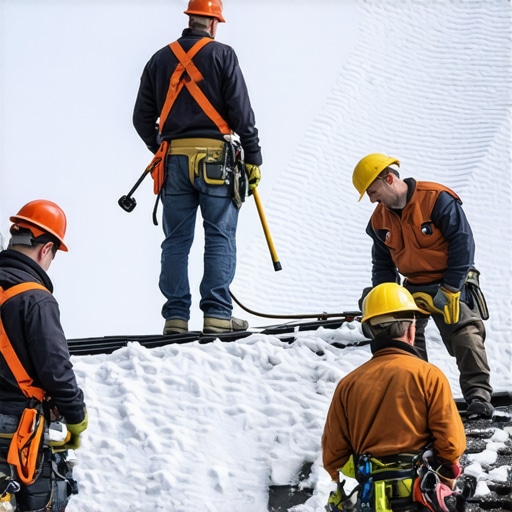
The Forensic Reality of a Winter Roof Failure
Walking on that roof felt like walking on a sponge; I knew exactly what I’d find underneath before the first shingle was even pried up. It was late November, the air had that sharp, metallic bite that precedes a heavy lake-effect snow, and the homeowner was complaining about a ‘small damp spot’ above their dining room chandelier. To the untrained eye, the roof looked fine from the curb. But under my boots, the structural deck was giving way. When we finally peeled back the layers, the plywood wasn’t just wet—it was delaminated and black with fungal growth. This wasn’t a leak from a single storm; it was a slow-motion execution caused by three winters of poor attic bypass management and a complete lack of ice and water shield at the eaves. Local roofers see this every year: homeowners waiting until the first blizzard to realize their shelter is compromised. By then, you’re not looking at maintenance; you’re looking at a forensic teardown.
1. The Physics of the Ice Dam: Beyond the Icicle
Most people see icicles and think they look like a Christmas card. I see them and think about hydrostatic pressure. An ice dam doesn’t just sit on your roof; it creates a reservoir. When heat escapes from your living space into the attic—a process known as thermal bridging—it warms the roof deck. That snow sitting directly on the shingles melts, runs down to the cold eave, and freezes solid. This creates a literal dam. As more snow melts, the water pools behind that ice. Because water is patient and follows the path of least resistance, it finds its way under the shingles through capillary action.
“In cold climates, the primary cause of roof leaks in winter is not the failure of the shingle itself, but the lack of adequate ventilation and insulation leading to ice damming.” – NRCA Manual
This water isn’t just dripping; it’s being pushed upward under the lap of the shingle by the weight of the snow above it. If you don’t have a high-temperature self-adhering underlayment—what the trade calls ‘Ice and Water Shield’—extending at least 24 inches past the interior wall line, that water is going into your drywall.
2. Hunting the ‘Shiner’: The Silent Drip
When I’m doing a forensic attic inspection, I’m looking for shiners. A shiner is a nail that missed the rafter or the strapping, leaving the shank exposed in the attic space. During a brutal winter, these nails become tiny lightning rods for frost. Warm, moist air from your bathroom fans or poorly sealed recessed lights hits that freezing cold nail. Over a week of sub-zero temperatures, a thick coating of hoarfrost builds up on the nail. Then, the sun comes out. That frost melts and drips onto your insulation, destroying the R-value and creating those mysterious brown spots on the ceiling that disappear once the weather stays warm. If your local roofers aren’t looking for shiners during their prep, they aren’t looking deep enough. We pull those nails or clip them to stop the condensation cycle before it rots your ridge beam.
3. The Chimney Cricket and Flashing Integrity
If your chimney is wider than 30 inches and doesn’t have a cricket—a small peaked structure behind it to divert water—you’re asking for a winter disaster. Snow packs in behind a chimney like a glacier. As it goes through the freeze-thaw cycle, it expands. This expansion can pop the mortar joints or pull the counter-flashing right out of the brick.
“A roof is only as good as its flashing.” – Old Roofer’s Adage
I’ve seen roofing companies try to fix this with a bucket of mastic or ‘bull,’ but that’s a Band-Aid on a gunshot wound. Proper winter prep involves checking the reglet cuts and ensuring the step flashing isn’t corroded by salt air or chemical de-icers. If that metal is pitted, the winter moisture will find a way through.
4. Managing the Attic Bypass and Air Sealing
Roofing isn’t just about shingles; it’s about airflow. If your attic is 70 degrees when it’s 20 degrees outside, your roof is going to fail prematurely. We look for ‘attic bypasses’—holes for plumbing stacks, electrical wires, or top plates that haven’t been foamed shut. These holes allow the heat you paid for to migrate into the attic, causing the snow to melt unevenly. This creates a micro-climate on your roof deck that accelerates the aging of the asphalt. We use thermal imaging to find these heat leaks. If you see a patch of roof where the snow melts faster than the rest, that’s not ‘good sun exposure’; that’s a thermal leak that needs to be plugged before the 2026 winter season hits.
5. Gutter Slope and the Weight of Saturated Debris
A single square of roofing—that’s 100 square feet—can hold hundreds of pounds of snow. If your gutters are clogged with maple seeds and grit from aging shingles, that water can’t evacuate. It freezes into a solid block of ice that weighs more than the gutter spikes can handle. I’ve seen entire gutter runs ripped off the fascia board because the homeowner thought they could skip the fall cleaning. When that gutter pulls away, it exposes the sub-fascia and the rafter tails to raw moisture. Once that wood gets ‘punky’ and soft, you’re looking at a structural repair that costs five times what a simple cleaning would have.
6. Shingle Brittle-Point and Wind Uplift
As asphalt shingles age, the essential oils evaporate, leaving them brittle. In the winter, when the thermometer drops, these shingles lose their ability to flex. If you have a ‘flapping’ shingle—one where the sealant strip has failed—the winter winds will snap it like a cracker. We call this wind uplift. During a prep inspection, we check the bond of the sealant strip. If it’s gone, we hand-seal them with a specialized cold-weather adhesive. You don’t want to be the house on the block with a blue tarp in February because a few ‘shiners’ or a failed seal strip allowed the wind to peel your roof like a banana.
7. The ‘Trunk Slammer’ vs. The Professional
Finally, the most important tip for 2026 is choosing who touches your roof. The industry is full of ‘trunk slammers’—guys who show up after a storm, throw down some cheap shingles, and disappear. A forensic-level roofer understands the chemistry of the materials. They know that installing shingles below 40 degrees requires special care because the factory adhesive won’t activate. They know that using galvanized nails instead of stainless in high-moisture areas leads to systemic failure. When you’re vetting roofing companies, ask them about their ventilation calculations. If they can’t explain Net Free Venting Area to you, they aren’t local roofers; they’re just installers. Protecting your home from the 2026 winter requires a surgeon’s precision, not a salesman’s pitch. Pay for the surgery now, or pay for the autopsy later.