
The Forensic Scene: When ‘Green’ Turns to Gray
Last Tuesday, I stood on a roof in a quiet cul-de-sac that looked perfect from the curb. But as soon as my boots hit the shingles, I felt that sickening give. It was like walking on a giant, sun-baked sponge. I didn’t even need to pull my moisture meter to know what was happening underneath. When we finally tore it back, the sight was a nightmare: 40 squares of plywood that had softened into something resembling wet Shredded Wheat. The homeowner thought they were being eco-friendly by layering new shingles over old ones to ‘save the landfill,’ but all they did was trap a decade of attic humidity against the deck. The smell of fungal rot and stagnant air was thick enough to chew on. This is the reality of roofing in our changing climate—if you don’t understand the physics of moisture and heat, ‘eco-friendly’ is just a fancy word for a premature replacement.
The Material Truth: Beyond the Marketing Gloss
In the world of local roofers, everyone is suddenly an environmentalist because that’s where the tax credits are. But as a forensic investigator, I look at the molecular level. Most suburban roofs fail not because of a storm, but because of a slow, agonizing death caused by thermal shock and poor air movement. As we look toward 2026, the suburbs are shifting. We aren’t just slapping 3-tab asphalt down anymore. We’re dealing with higher UV indexes and more aggressive ‘rain bombs.’ Here is the brutal truth about the seven technologies actually worth your mortgage payment.
“Proper attic ventilation is not merely a recommendation; it is a fundamental requirement for the performance of the entire building envelope.” – NRCA (National Roofing Contractors Association) Manual
1. Integrated Solar Shingles (BIPV)
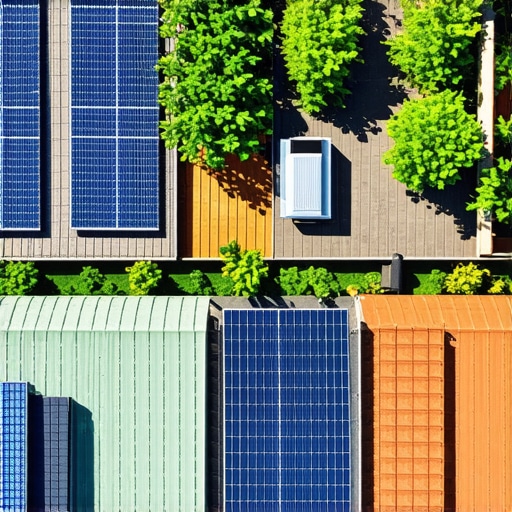
Forget those ugly blue panels bolted through your deck with lag bolts that eventually leak. Building-Integrated Photovoltaics (BIPV) are the future. We’re talking about shingles that are the solar cells. The engineering trick here isn’t just the electricity; it’s the heat management. Standard solar panels create a ‘hot box’ between the panel and the roof. Modern BIPV systems use a rear-venting channel that allows air to scour the underside, preventing the heat from baking your decking. When roofing companies install these, they have to be surgical. One shiner—a nail that misses the rafter and hangs into the attic—can act as a lightning rod for condensation, dripping onto your insulation every morning.
2. Standing Seam Metal: The 100-Year Loop
Metal is the king of the ‘Infinite Loop.’ Most of the steel on a modern suburban roof has already lived three lives as a toaster or a car frame. In the North, metal is a godsend for shedding snow before it can turn into an ice dam. In the Southwest, its high albedo (reflectivity) keeps the attic from hitting 150°F. The ‘Mechanism Zooming’ here is the expansion and contraction. Metal grows and shrinks. If your contractor pins the sheets too tight, the roof will literally ‘oil-can’ or buckle, making a popping sound every time the sun goes behind a cloud. You want a floating clip system that lets the roof breathe.
3. Upcycled Polymer Composites
We’re seeing shingles made from recycled tires and post-consumer plastics. They look like slate or cedar shakes, but they won’t rot or crack. The forensic win here is impact resistance. While standard asphalt gets bruised by hail—leaving a ‘crater’ that loses its granules and exposes the bitumen to UV death—composites just bounce the ice off. It’s about longevity. If a roof lasts 50 years instead of 15, that is the ultimate eco-win.
4. The Physics of ‘Cool Roof’ Granules
Even if you stick with asphalt, the science has changed. We now have shingles with specially engineered granules that reflect infrared radiation. You can’t see it with the naked eye, but through a thermal camera, the difference is staggering. This isn’t just about the electric bill; it’s about preserving the oils in the shingle. When UV rays hit a standard shingle, they break the polymer chains in the asphalt, making it brittle. Reflective granules act like a permanent sunscreen, keeping the ‘skin’ of your house flexible.
5. Atmospheric Water Collection Systems
In 2026, the roof isn’t just a shield; it’s a funnel. We are seeing integrated gutter systems that lead to filtration stacks. But here’s the catch: you need a roof surface that doesn’t leach toxins. You can’t collect drinking water off a roof treated with zinc strips for algae. This is where high-grade TPO or coated metal comes in. Local roofers often miss the cricket—the small peaked structure behind a chimney—which is essential for directing this high-volume water flow toward your collection points without it pooling and causing a leak.
6. Bio-Based Self-Healing Underlayments
The underlayment is the ‘second roof.’ We are moving away from petroleum-based #30 felt toward plant-based synthetics. Some of these new membranes are self-healing. If a roofer steps on a nail and pulls it out, the membrane actually closes the hole. This prevents the dreaded ‘slow leak’ that rots out your rafters over five years before you ever see a spot on the ceiling.
7. Smart Dynamic Ventilation
This is the most underrated eco-fix. A roof that ‘thinks.’ Using solar-powered sensors, these ridge vents open and close based on the humidity and temperature in the attic. This stops the ‘stack effect’ where your expensive AC is sucked out through the ceiling bypasses. It maintains the R-value of your insulation by keeping it dry. Wet insulation has the R-value of a wet rag.
“Water is patient. It will wait for you to make a mistake, and it will use gravity, wind, and capillary action to find the one unsealed nail head in a thousand square feet.” – Old Roofer’s Axiom
The Warranty Trap
Don’t get suckered by the ‘Lifetime Warranty’ stickers. Read the fine print. Most of those warranties are pro-rated and only cover ‘manufacturer defects,’ not ‘poor installation.’ If your roofing company doesn’t install a starter strip or misses the valley flashing, the manufacturer will laugh you out of the room. True eco-friendliness comes from a roof that is installed so well it never needs the warranty. You want a contractor who talks about ‘capillary breaks’ and ‘hydrostatic pressure,’ not just ‘curb appeal.’ If they don’t mention the ice and water shield at the eaves, they aren’t building a 2026 roof; they’re building a 1990s disaster.
The Cost of Waiting
A roof is a system, not a product. When you ignore a small leak, you aren’t just losing water; you’re losing the structural integrity of your home. The 2026 suburbs demand better. Whether it’s the 140°F thermal shock of a Texas afternoon or the thermal bridging of a Chicago winter, your roof is the only thing standing between your family and the elements. Pick a material that lasts, and a contractor who treats a hammer like a surgical instrument.