
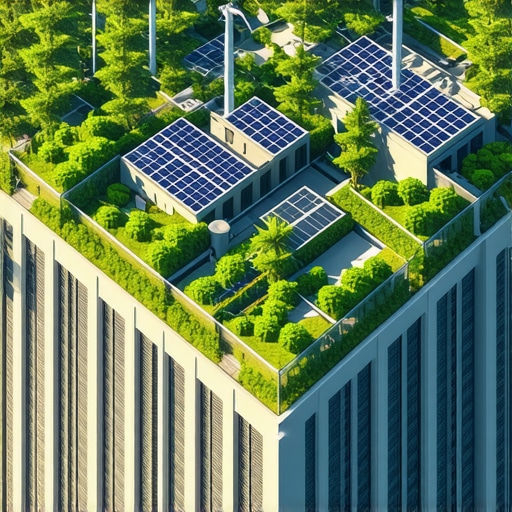
The Forensic Reality of the Urban Sky
Walking on that roof felt like walking on a sponge. I knew exactly what I’d find underneath—a $200,000 disaster wrapped in a ‘green’ marketing brochure. Up here, 40 stories above the pavement, the air is different. It’s thinner, the wind is a constant predatory force, and the UV radiation doesn’t just tan the surface; it cooks the polymers right out of the membrane. Most local roofers are used to the 4:12 pitch of a suburban ranch, but a high-rise is a different beast entirely. It’s an ecosystem of pressure differentials and thermal expansion that most roofing companies simply aren’t equipped to handle. By 2026, the building codes are going to get even tighter, and if you’re still thinking about asphalt and gravel, you’re already behind the curve.
1. Intensive Vegetative Systems: The 8.3-Pound Problem
Everyone loves the idea of a park on top of their skyscraper. It looks great in the rendering, but from a forensic perspective, it’s a managed leak. An intensive green roof isn’t just dirt and grass; it’s a complex assembly of root barriers, drainage mats, and moisture retention layers. The physics here is brutal. Water weighs 8.3 pounds per gallon. When you have a saturated substrate after a heavy storm, the dead load on that structural slab is massive. If your roofing contractor didn’t account for the hydrostatic pressure at the drains, that water is going to find a way into the penthouse. The mechanism is simple: capillary action. Water gets trapped between the root barrier and the primary waterproofing, and unless your local roofers used a monolithic liquid-applied membrane, that moisture is going to migrate sideways until it finds a shiner or a cold joint in the concrete.
2. Blue Roofs and the Art of Controlled Failure
In 2026, we’re not just trying to shed water; we’re trying to hold onto it. Blue roofs are designed to provide temporary storage of storm water. Think of it as a giant, shallow bathtub. The drainage is throttled by a flow-control device. This is where the trade term ‘Birdbath’ takes on a whole new meaning. On a standard roof, standing water is the enemy. On a blue roof, it’s the design. But here’s the trap: if the scuppers aren’t flashed with stainless steel or a reinforced PMMA, that constant submersion will cause the membrane to swell and eventually delaminate. Most roofing companies treat a drain like a simple hole, but in a blue roof system, it’s the most stressed component of the entire building envelope.
“A roof is only as good as its flashing, and a flat roof is only as good as its drains.” – Old Roofer’s Adage
3. Solar-Reflective Bio-Resin TPO
Thermoplastic Polyolefin (TPO) has been the darling of the commercial world for years, but the 2026 iteration is moving toward bio-resins. We’re moving away from petroleum-heavy formulations. The sensory detail here is the smell—it doesn’t have that acrid, chemical stench of traditional EPDM. But don’t let the eco-friendly tag fool you. The thermal shock on a high-rise is extreme. In the desert Southwest or even the urban heat islands of the Northeast, a roof surface can swing from 160°F at noon to 60°F at midnight. That’s 100 degrees of expansion and contraction every single day. If the seams aren’t robotically welded to at least 1.5 inches of effective width, they will unzip like a cheap jacket.
4. Smog-Eating Photocatalytic Membranes
This is where science fiction meets the gravel guard. These membranes are coated with titanium dioxide. When UV light hits the surface, it triggers a chemical reaction that breaks down nitrogen oxides (smog) into harmless nitrates. It’s brilliant, but as a forensic investigator, I look at the granules. If those granules aren’t embedded properly during the manufacturing process, they’ll wash off into the valley or clog your cricket diverters within three seasons. You’re left with a standard roof and a very expensive pile of white dust in your gutters. When interviewing local roofers, ask them about the embedment rate. If they look at you like you’ve got two heads, find another crew.
5. BIPV: Integrated Photovoltaics
Building Integrated Photovoltaics (BIPV) is the holy grail. No more heavy racks or penetrations through the membrane. The solar cells are built directly into the roofing material. It sounds seamless—except for the wiring. Every single panel has a lead that has to go somewhere. That means hundreds of penetrations. In my 25 years, I’ve never seen a penetration that wasn’t a potential leak. The 2026 systems use inductive coupling to transfer power, which reduces the holes, but you’re still dealing with the heat buildup under the panels. Heat is the silent killer of roofing. It bakes the plasticizers out of the material, making it brittle enough to crack under a work boot.
“The application of a roof system is a field-assembly process, subject to the vagaries of weather and human error.” – National Roofing Contractors Association (NRCA)
6. Recycled Composite Metal Tiles
For the penthouses and visible slopes, metal is king. But we’re seeing a shift toward recycled alloys that mimic the look of slate or clay. The issue here isn’t the material; it’s the fasteners. I’ve seen million-dollar roofs fail because some ‘trunk slammer’ used galvanized nails on a copper-content alloy. That’s galvanic corrosion. The metal literally eats itself. You need stainless steel fasteners, and you need to understand the ‘Square’—every 100 square feet needs to be perfectly aligned to handle the wind uplift. At 40 stories, a loose tile isn’t just a leak; it’s a projectile.
7. Modular Vegetative Trays
If you don’t want the weight of a full intensive green roof, trays are the answer. They’re like Lego blocks for the sky. They’re easier for roofing companies to install, but they have a hidden flaw: the micro-climate underneath. Moisture gets trapped under the trays and can’t evaporate. It creates a humid micro-environment that can rot even the most resilient coatings if there’s a single pinhole. I’ve peeled back trays and found the plywood deck underneath looking like wet oatmeal because the vapor drive was trapped between the warm interior and the cool, damp tray.
The Material Truth About Warranties
Don’t get me started on ‘Lifetime Warranties.’ In the commercial world, a warranty is a legal document designed to protect the manufacturer, not the owner. Most eco-friendly solutions come with a list of exclusions longer than the 10-K report. They exclude ‘consequential damages,’ which means if the roof leaks and ruins your $50,000 server room, they’ll give you a $10 patch kit and tell you to have a nice day. You don’t want a warranty; you want a roof that’s installed correctly the first time. That means choosing local roofers who understand the physics of high-rise wind zones and who don’t cut corners on the flashing. If you think hiring a professional is expensive, wait until you hire an amateur.