
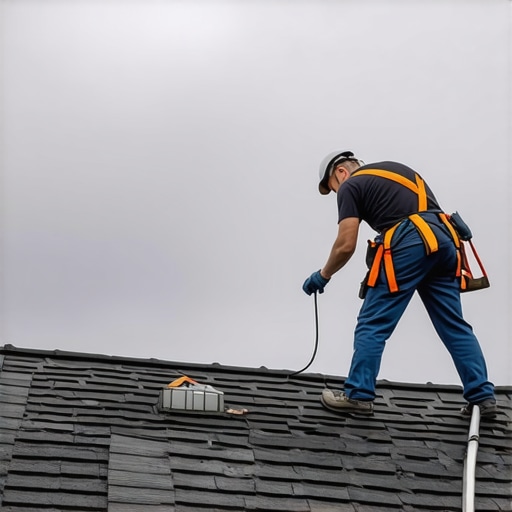
The Knock You Hear After the Clouds Clear
The sky is still that eerie, bruised purple, and your gutters are still gasping out the last of the deluge when the first white pickup truck rolls into your driveway. You know the one. Shiny vinyl decals, a ladder rack that’s never seen a scratch, and a guy with a clipboard telling you he ‘happened to be in the neighborhood’ looking at 2026 storm damage. It’s the classic Storm Chaser opening act, but as someone who has spent two and a half decades crawling through attics and peeling back failed valleys, I’m here to tell you that spotting real damage isn’t about a quick glance from the driveway. It’s about forensics. Understanding how a roof fails requires more than a pair of binoculars; it requires an understanding of fluid dynamics and structural physics. If you want to know what local roofers who actually live in your zip code are looking for, you have to look deeper than a missing shingle.
The Forensic Scene: When the Deck Becomes a Trampoline
Walking on a compromised roof is a sensory experience you don’t forget. A few years back, I was called to a property just after a series of high-wind events. The owner thought they just had a few loose tabs. As soon as my boots hit the square, the deck felt like a sponge. I didn’t even need to see the leaks inside. I knew exactly what I’d find: a slow-motion disaster where wind-driven rain had been forced under the starter strip for months, never quite enough to drip through the ceiling, but plenty to turn the OSB into something resembling wet oatmeal. That’s the reality of storm damage; it’s rarely the catastrophic hole in the roof that ruins you—it’s the invisible moisture that the ‘trunk slammers’ ignore while they’re busy chasing insurance checks. Proper roofing companies don’t just look for what’s gone; they look for what’s been moved.
“The primary purpose of a roof system is to provide weather protection for the building and its occupants, and its performance depends on the interaction of many components.” – National Roofing Contractors Association (NRCA)
1. The Physics of the ‘Lift and Flap’ (Uplift Ratings)
When we talk about wind damage, most homeowners look for shingles on the lawn. But local roofers are looking for the ‘ghost’ of a lift. During a 2026-style wind event, gusts create a vacuum effect on the leeward side of the roof. This aerodynamic lift pulls the shingle tabs upward, breaking the thermal seal. Once that seal is broken, the shingle might lay back down, looking perfectly normal to the untrained eye. However, the internal adhesive is now contaminated with grit and dust. It will never bond again. This creates a shiner—not the missed nail kind, but a flashing vulnerability where the next minor breeze will catch that tab like a sail, driving water directly into the nail penetrations. This is how a roof that ‘looks fine’ on Tuesday collapses into a moldy mess by Friday.
2. Capillary Creep and the Hidden Valley Failure
Water doesn’t just fall; it climbs. In the valley of your roof, where two planes meet, the volume of water is immense. During a heavy storm, if your roofing professional didn’t install a proper cricket or didn’t use a heavy-duty ice and water shield as a secondary barrier, you’re looking at capillary action. This is the mechanism where water molecules are pulled into tight spaces—like the gap between an improperly overlapped shingle and the flashing—against the force of gravity. A forensic roofer looks for the ‘telltale tide mark’—a faint line of silt and granules tucked two inches under the shingle lap. If that silt is there, the water has already been there, and your underlayment is currently the only thing standing between your drywalls and a $20,000 restoration bill.
3. The ‘Shadow Bruise’ of 2026 Hail Patterns
Modern shingles are tougher than they used to be, which makes identifying hail damage more difficult. We no longer see the massive, circular craters of the 90s. Instead, we see ‘shadow bruises.’ This is where the impact of a hailstone doesn’t necessarily break the fiberglass mat immediately but shatters the asphaltic bond underneath. Over the next six months, the granules will begin to shed from that spot because the ‘glue’ holding them is gone. Local roofers who know the 2026 weather patterns use a technique called ‘side-lighting.’ By hitting the roof at a low angle with a high-lumen torch, those subtle depressions become visible. If you wait until the granules are in your downspouts, the insurance company will claim it’s ‘wear and tear’ rather than storm damage. Timing is everything.
“Asphalt shingles shall be fastened to solidly sheathed decks in accordance with the manufacturer’s instructions.” – International Residential Code (IRC) R905.2.1
4. Thermal Expansion and the Flashing Shear
In high-heat regions, the storm isn’t just the rain; it’s the radical temperature drop that follows. When a 140°F roof is suddenly hit by 60°F rainwater, the materials undergo thermal shock. Aluminum flashing and wood decking expand and contract at wildly different rates. A forensic expert looks for ‘sheared fasteners’—nails that have literally been snapped or worked loose by this movement. If your roofing companies aren’t checking the integrity of the counter-flashing around chimneys and dormers after a major storm, they’re missing the most likely entry point for the next leak. You’ll see the rust streaks first, but by then, the masonry is already sucking up moisture like a straw.
5. The Underlayment ‘Belly’
Finally, we look for the ‘belly.’ When moisture gets past the shingles—either through wind-driven rain or ice dams in northern climates—it often gets trapped on top of the synthetic underlayment. Because modern underlayments are so good at being waterproof, they can actually hold a ‘pool’ of water against the plywood for weeks. This causes the wood to swell and creates a slight hump or ‘belly’ in the roof line. You won’t see this from the ground. You have to get a transition level on the surface. Spotting this early is the difference between a simple shingle repair and a full-scale deck replacement. Don’t let a storm chaser tell you a roof is fine just because the shingles are still attached; the real story is written in the wood underneath.
The Bottom Line: Protecting Your Deductible
At the end of the day, local roofers aren’t just there to hammer nails; they are your advocates in a complex system of insurance adjusters and building codes. When you deal with a company that understands these forensic markers, you aren’t just getting a repair; you’re getting a defense against future failure. Don’t be fooled by the quick pitch. Demand a deep dive into the physics of your roof’s specific failure points. Because in the world of roofing, what you can’t see will eventually be the only thing you can think about.