
The Anatomy of a Slow-Motion Disaster
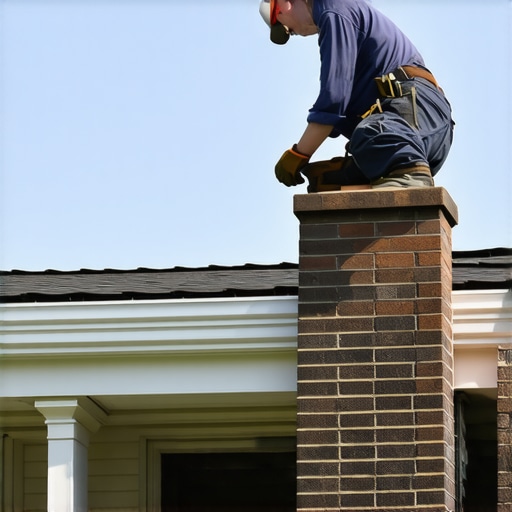
If you are sitting in your living room and notice a tea-colored stain spreading across the drywall near your fireplace, don’t call a painter. You are witnessing a forensic failure of the most complex junction on your roof. My old foreman used to say, ‘Water is patient. It will wait for you to make a mistake.’ In twenty-five years of tearing off shingles and inspecting rotted deck boards, I have learned that the chimney is the primary battlefield where water wins. By 2026, roofing companies are seeing a surge in flashing failures, not because the materials are worse, but because the ‘trunk-slammers’ are getting faster and lazier. Local roofers who actually know their trade don’t just look for a hole; they look for the physics of failure.
‘Flashings shall be installed in a manner that prevents moisture from entering the wall and roof through joints in copings, through moisture-permeable materials and at intersections with parapet walls and other penetrations.’ – International Residential Code (IRC) R903.2
1. The Mastic Mustache (The Lazy Man’s Seal)
The first sign any veteran roofer looks for is an over-reliance on ‘goop.’ If I see a thick, cracked layer of black tar or roofing cement smeared around the base of your chimney, I know exactly what happened. The previous installer skipped the metalwork and tried to solve a structural problem with a tube of caulk. In the heat of a 140°F attic environment, your house moves. The chimney, built on its own footing, moves at a different rate than the roof deck. This differential settlement rips that rigid mastic apart. By 2026, we are seeing ‘high-performance’ sealants fail because they weren’t designed to bridge a half-inch gap caused by thermal expansion. When that seal snaps, capillary action sucks water uphill under the shingles, rotting out the square of plywood faster than you can say ‘insurance claim.’
2. The Ghost of the Missing Cricket
Physics doesn’t care about your budget. If your chimney is wider than 30 inches, the building code requires a cricket—a small, peaked false-roof built behind the chimney to divert water. Without it, the back of your chimney acts like a dam. Debris, pine needles, and snow build up there, creating a ‘wet sock’ effect that holds moisture against the masonry for weeks. Local roofers look for ‘backer’ flashing that has been crushed by ice or ponding water. If there is no cricket, the hydrostatic pressure of standing water will eventually find a shiner (a misplaced nail) in the underlayment and begin the slow rot of your rafters. We call this the ‘pond effect,’ and it is the leading cause of structural fireplace failure in the North.
3. Improper Step Flashing Integration
Real roofing isn’t about the shingles; it is about the metal you can’t see. Step flashing involves individual L-shaped pieces of metal woven into every single course of shingles. I once investigated a forensic scene where a ‘pro’ had installed a single, long piece of ‘L-metal’ along the entire chimney. It looked fine from the ground, but water was diving right behind it. Water travels sideways. If those steps aren’t overlapped by at least two inches, gravity loses, and surface tension wins. We look for rust streaks bleeding out from under the shingles—that is the signature of galvanized metal that has been sitting in a valley of moisture because it wasn’t stepped properly.
‘A roof is only as good as its flashing.’ – Old Roofer’s Adage
4. The Failure of the Counter-Flashing Kerf
The metal should not just be leaned against the brick; it must be embedded. We look for a ‘kerf cut’—a horizontal groove sliced into the mortar joint where the counter-flashing is tucked and then sealed. Many local roofers today are just ‘surface mounting’ flashing with a few Tapcon screws and some silicone. When the UV radiation from the sun bakes that silicone for three years, it peels away like a dead sunburn. A true craftsman knows that the metal must be mechanically locked into the masonry. If I can stick a putty knife behind your flashing, your roof is already dead; it just hasn’t started raining hard enough for you to notice yet.
5. Galvanic Corrosion and Material Mismatch
In 2026, we are seeing more hybrid material failures than ever before. If a contractor installs aluminum flashing against a chimney treated with certain masonry cleaners, or if it touches copper valley tin, you get a battery. Galvanic corrosion eats holes through the metal at a molecular level. We look for ‘pitting’ or white powdery residue on the flashing. This isn’t just ‘old age’; it is a chemical reaction that turns your waterproofing into Swiss cheese. When we do a forensic teardown, we often find the underside of the flashing is completely gone, even while the top looks shiny. It’s like a termite infestation for metal.
The Forensic Verdict
Repairing these issues isn’t about adding more caulk; it’s about ‘The Surgery.’ You have to strip the shingles back to the deck, replace the ‘Ice & Water’ shield, and bend new metal that respects the laws of gravity. Don’t let a ‘storm chaser’ tell you a bit of spray-on sealant will fix a chimney leak. It won’t. It will just hide the rot until your chimney starts leaning away from the house. Look for the signs, demand the kerf cut, and never trust a roofer who doesn’t carry a metal brake on his truck.
This post really drives home the importance of proper flashing installation and inspection. I’ve seen many homeowners overlook these details, assuming that a bit of sealant will do the trick. The point about material mismatch and galvanic corrosion is especially eye-opening—it’s one of those issues that’s not immediately visible but can cause extensive damage over time. Personally, I’ve had my chimney tested for proper kerf cuts and flashing embedding after a small leak appeared unexpectedly. It’s incredible how many problems stem from seemingly minor shortcuts, like surface-mounted flashing or skipping the kerf altogether. For DIYers or even the casual homeowner, what are some key signs to catch early that suggest flashing or brickwork needs professional attention before it turns into a costly repair? I’d love to hear other practical tips or experiences on keeping these critical junctions in tip-top shape.
I completely agree with the emphasis on proper flashing and the dangers of shortcuts like surface mounting or neglecting kerf cuts. In my experience managing a few historic buildings, I’ve seen how even small details, like embedding the flashing properly and avoiding galvanic contact between mismatched metals, can make a huge difference over time. The analogy to a termite infestation for metal is quite vivid and spot on. What’s been interesting for me is that many homeowners and even some contractors overlook these issues until a leak or damage appears, which is often years down the line. Regular inspections, especially after big storms or seasonal changes, can help spot problems early, like rust streaks or white powder residue indicating corrosion. In your opinion, what’s the most effective way to educate homeowners about these seemingly minor but critical details—do you think brochures, home inspections, or workshop demonstrations work best? It feels like increasing awareness could prevent many costly failures before they happen.