
The Tiny Home Illusion: Why Your Green Roof Might Just Be Growing Mold
I’ve spent a quarter-century on ladders, and if I’ve learned one thing, it’s that eco-friendly is often code for expensive experiment. When you’re dealing with a tiny home, you’re not just building a house; you’re building a specialized pressure cooker. Walking on that roof felt like walking on a damp sponge. I knew exactly what I’d find underneath before I even pulled my pry bar. I once did a forensic teardown on a unit where the owner used reclaimed cedar shakes without a proper 1-inch air gap. The plywood beneath looked like wet tobacco. He thought he was saving the planet; he was actually creating a biohazard in a 200-square-foot box. This is the reality when you ignore the physics of roofing. Tiny homes have less attic volume, which means the thermal stress on the roof deck is amplified ten-fold compared to a 3,000-square-foot colonial. If you don’t get the ventilation and material choice right, you’re not building a sustainable home; you’re building a compost bin.
“A roof is only as good as its flashing.” – Old Roofer’s Adage
1. 24-Gauge Standing Seam Metal: The 50-Year Chassis
Forget the cheap corrugated tin you see on old barns. For a 2026 tiny home, standing seam metal is the gold standard for sustainability, mostly because it’s the only material that’s truly 100% recyclable at the end of its life. But here is the catch that most roofing companies won’t tell you: thermal expansion. A 20-foot panel of steel can move up to half an inch during a 50-degree temperature swing. If your local roofers use fixed fasteners instead of expansion clips, the metal will eventually tear itself apart at the screw holes. We call these shiners when a nail or screw misses the mark or backs out, creating a direct path for water. In a tiny home, that water hits your insulation immediately. Use a Kynar 500 resin coating to reflect infrared heat. This prevents the heat from conducting through the metal and baking your interior. It’s about the physics of the solar reflectance index. Without it, you’re just living inside a toaster.
2. Recycled Rubber Composite Shingles: The Hail-Proof Solution
These are made from ground-up tires and plastic waste, which sounds great in a brochure. On the roof, they behave differently than asphalt. They have a high impact rating, which is great if you’re in a storm-prone area. However, you need to look at the chemistry of the polymer bonds. Some cheap composites off-gas VOCs when they hit 140 degrees in the summer sun. You want a product that is UV-stabilized. When local roofers install these, they often treat them like standard asphalt. That’s a mistake. These shingles expand. If they are butt-jointed too tightly, they will buckle and ‘fishmouth’—that’s when the middle of the shingle bows up, allowing wind-driven rain to blow right underneath. Water is patient; it will wait for that one fishmouth to find its way to your roof deck.
3. Building-Integrated Photovoltaics (BIPV): Solar as the Shield
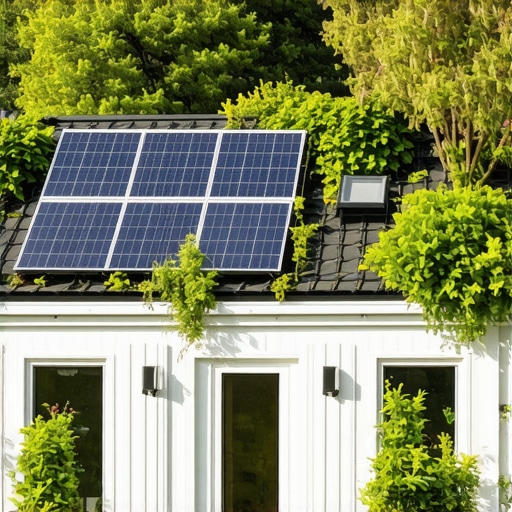
By 2026, we’re moving past clunky solar panels bolted onto brackets. BIPV systems are the actual roofing material. But here is the forensic truth: every electrical penetration is a potential leak. If the flashing around the junction boxes isn’t integrated into the primary water-shedding layer, you’re in trouble. Capillary action can pull water uphill under a solar shingle if the head-lap isn’t sufficient. You need a roofing company that understands electrical and waterproofing simultaneously. Most just hire a sub-contractor who doesn’t care about the integrity of the valley. A valley is where two roof slopes meet; it carries the highest volume of water. If your solar shingles aren’t trimmed and flashed perfectly at the valley, you’ll have a waterfall inside your walls within three years.
4. Thermoplastic Polyolefin (TPO) for Flat Tiny Roofs
If your tiny home has a modern, flat-roof aesthetic, TPO is your best eco-bet. It’s a white, reflective membrane that is heat-welded at the seams. It’s great for urban heat island reduction. However, the failure point is always the ‘scupper’ or the ‘cricket’. A cricket is a small peaked structure built behind a chimney or on the high side of a flat roof to divert water toward the drains. Without a properly built cricket, water ponds. Ponding water is the silent killer of TPO. It creates hydrostatic pressure, which eventually finds a microscopic pinhole in a weld and forced water into your ceiling. I’ve seen TPO roofs where the insulation underneath was so saturated you could wring it out like a towel. Make sure your local roofers understand the slope-to-drain requirements of the International Residential Code.
“The roof is the most important part of the house… it is the primary shelter from the elements.” – Vitruvius, De Architectura
5. The Living Roof: A High-Maintenance Jungle
Everyone loves the idea of a garden on their roof. It’s the ultimate eco-statement. But as a forensic roofer, I see a nightmare of structural load and root penetration. A saturated green roof can weigh 40 pounds per square foot. Most tiny home trailers aren’t rated for that. You need a specialized root barrier and a drainage mat that prevents the roots from ‘eating’ the waterproofing membrane. If those roots reach your structural sheathing, it’s game over. You’ll be replacing the whole roof and the walls. It requires a secondary water resistance layer—a backup plan for when the primary layer fails. Because with a green roof, it’s not if it leaks, but when.
The Warranty Trap: Why Marketing Isn’t Protection
Roofing companies love to pitch ‘Lifetime Warranties.’ In the trade, we know those are mostly fluff. A warranty usually covers ‘manufacturer defects,’ not ‘poor installation.’ If your roofer doesn’t use the right starter strip or misses a few nails, the warranty is void before the truck even leaves your driveway. You need to hire based on the details: ask them how they handle the drip edge and if they use ice and water shield on the eaves. If they don’t know what a shiner is, they shouldn’t be on your roof. Sustainable roofing isn’t just about the material; it’s about the execution of the details that keep the water out for forty years instead of four.