
The Forensic Scene: When ‘Green’ Becomes a Biohazard
Walking on that multi-family roof in the humid belly of the suburbs felt like walking on a damp sponge. I knew exactly what I’d find underneath before the first core sample was even pulled. The building was barely five years old, marketed as a ‘sustainable sanctuary,’ but the smell of rotting organic matter and the visible undulation of the deck told a different story. The previous contractors had installed a vegetative system without accounting for the hydrostatic pressure that builds up when a drainage layer fails. Water doesn’t just sit; it migrates. It finds the one pinhole in a TPO lap weld that wasn’t probed correctly, and it stays there, feasting on the plywood until the structural integrity of the complex is compromised. This is the reality of the eco-friendly roofing boom: if you don’t understand the physics of moisture, your ‘earth-friendly’ choice is just a slow-motion demolition of your asset.
The Multi-Family Eco-Challenge: Beyond the Marketing Fluff
As we head toward 2026, the pressure on property managers and developers to go green is immense. But as a forensic roofer who has spent three decades tearing off the mistakes of the lowest bidder, I’m here to tell you that most ‘eco’ solutions are nothing more than high-priced headaches if the installation is botched. We aren’t just talking about keeping the rain out; we are talking about managing thermal shock and UV degradation in high-density housing. When you have fifty units under one ridge, the stakes for roofing companies are significantly higher. A single leak doesn’t just ruin one living room; it creates a vertical column of mold through three floors of tenancy.
“A roof system’s primary function is to provide weather protection, but its secondary role as a thermal regulator determines the long-term viability of the building envelope.” – NRCA Technical Manual
1. Next-Generation Recycled Composite Shingles
Forget the flimsy rubber-based shingles of the early 2000s. The 2026 standard for multi-family involves high-density polymer composites derived from post-consumer waste. These materials mimic the aesthetic of slate or cedar but offer a 50-year lifespan. However, here is the trade secret: they expand and contract significantly more than natural stone. If your local roofers don’t leave the proper 1/8-inch gap at the valley or the gables, the roof will buckle the first time the sun hits 100 degrees. We call it ‘oil canning’ on metal, but on composites, it just looks like a cheap mess. You need a contractor who understands the specific fastener schedules required to avoid ‘shiners’—those missed nails that provide a direct highway for water to travel from the shingle surface into the attic insulation.
2. Ultra-Reflective TPO with Bio-Based Content
Thermoplastic Polyolefin (TPO) has been the darling of the commercial world, but for 2026, the focus has shifted to bio-based membranes that eliminate phthalates and chlorine. These white roofs are designed to reflect UV radiation, preventing the attic from reaching those 140-degree temperatures that bake the life out of your mechanical systems. But here is the forensic catch: the whiter the roof, the more ‘thermal bridging’ becomes an issue in colder months. If the insulation joints aren’t staggered, you’ll see lines of frost on the underside of the deck, leading to ‘interior rain’ from condensation. It isn’t a leak from the sky; it’s a leak from the physics of poor air sealing.
3. Vegetative Systems with Intelligent Drainage Layers
Green roofs are the ultimate eco-statement, but they are also the heaviest. For a multi-family project, you’re looking at a massive increase in dead load. I’ve seen roofing companies skip the root barrier or use a cheap drainage mat that gets crushed under the weight of the soil. When that happens, the water becomes stagnant. Stagnant water is heavy, and it’s acidic. It will eat through a standard membrane in half the time. The 2026 standard requires a redundant waterproofing layer—usually a hot-applied rubberized asphalt—underneath the actual ‘green’ components. If your roofer isn’t talking about ‘secondary water resistance,’ they are setting you up for a catastrophic failure.
4. Integrated Building-Integrated Photovoltaics (BIPV)
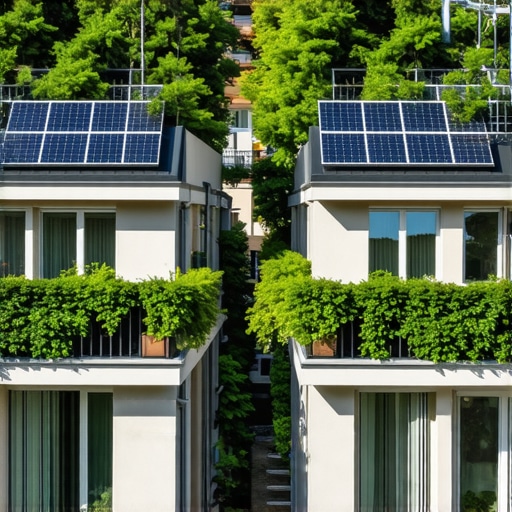
We are moving past the era of bolting heavy solar panels through a perfectly good roof. BIPV systems replace the roofing material itself with solar-active shingles or tiles. While this is great for curb appeal and energy production, it’s a nightmare for heat dissipation. Solar cells get hot. If there isn’t a dedicated ventilation cavity behind the BIPV layer, that heat is conducted straight into the roof deck. This accelerates the ‘cooking’ of the plywood, leading to delamination. You need a cricket installed behind any large solar arrays to ensure water doesn’t pool where the wiring enters the structure.
5. Upcycled Standing Seam Metal Systems
Metal remains the king of longevity. The eco-twist for 2026 is the use of 95% recycled aluminum or steel with ‘cool’ pigments. For multi-family, the standing seam is the only way to go. Avoid exposed fasteners at all costs. An exposed fastener has a rubber washer that will dry-rot in ten years. On a multi-family roof with 10,000 fasteners, that’s 10,000 potential leaks. A standing seam system hides the fasteners under the metal, allowing the roof to slide on clips as it expands. It’s a ‘floating’ system that handles thermal shock better than anything else on the market.
“Where two roof areas intersect, or where a roof terminates at a wall, the flashing must be designed to accommodate the maximum expected differential movement.” – International Residential Code (IRC)
The Warranty Trap: Why ‘Lifetime’ is a Lie
I’ve seen ‘Lifetime Warranties’ that aren’t worth the recycled paper they’re printed on. Most manufacturers’ warranties cover the material, not the labor to fix the disaster caused by a ‘shiner’ or a poorly flashed chimney. For multi-family owners, the real protection is a 20-year NDL (No Dollar Limit) warranty. This means the manufacturer has to inspect the roofing job and certify it. If it fails, they pay for everything. If your local roofers aren’t certified by the manufacturer to offer an NDL, walk away. They are ‘trunk slammers’ who will be out of business before your first leak develops.
Physics Over Aesthetics
At the end of the day, a roof is a giant shield that is being assaulted by UV, wind, and rain 24 hours a day. Going eco-friendly is a noble goal, but it cannot come at the expense of the basic laws of gravity and thermodynamics. Water is patient. It will wait for a tiny crack in your ‘green’ membrane or a poorly installed valley. It will seep in, it will rot your square footage, and it will cost you triple in the long run. When you hire roofing companies for your 2026 project, don’t ask about their eco-credentials first. Ask them how they handle capillary action at the drip edge. If they look at you funny, they aren’t the experts you need.