
The Spongy Truth Under the Fitness Center Floor
Walking on that gym roof felt like walking on a giant, waterlogged sponge. I knew exactly what I’d find underneath before the first core sample was even pulled. It was an old-school built-up roof that had been cooked by a decade of punishing sun and then neglected. When we finally peeled it back, the smell of fermented insulation and stagnant water hit us—a scent every veteran in this trade knows too well. The deck was so compromised from internal humidity meeting external temperature drops that the gym owner was lucky the whole thing hadn’t collapsed onto the squat racks. This is the reality most roofing companies won’t tell you: a roof isn’t just a lid; it’s a living, breathing component of the building’s thermal envelope. As we look toward 2026, the push for eco-friendly gyms isn’t just about ‘feeling green’—it’s about survival in a climate that’s getting weirder and more aggressive.
1. Thermoplastic Polyolefin (TPO) with Advanced Heat-Shield Tech
When you talk to local roofers about commercial spaces like gyms, TPO is usually the first word out of their mouths. But by 2026, we’re looking at next-generation formulations. Gyms are heat factories. Between the body heat of three hundred people hitting treadmills and the massive HVAC units required to keep them from fainting, the thermal load is staggering. A standard white TPO reflects UV, sure, but the failure point is often at the seams. Mechanism zooming: when the sun hits that membrane, it undergoes thermal expansion. If your roofing crew didn’t dial in the robotic welder to the exact ambient temperature of that morning, those seams become brittle. Water doesn’t just ‘leak’ there; it uses capillary action to suck moisture into the polyisocyanurate (ISO) board underneath. Once that board is wet, its R-value drops to nearly zero, and your ‘eco-friendly’ gym is now hemorrhaging energy. Look for 80-mil thick membranes with multi-layered reinforcement to handle the vibration of rooftop units.
“A roof is only as good as its flashing.” – Old Roofer’s Adage
2. Intensive Green Roofs: More Than Just Grass
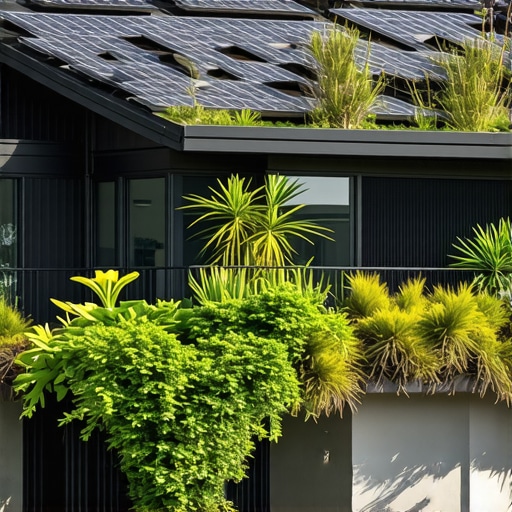
Green roofs are the holy grail for urban gyms, but they are a forensic nightmare if done wrong. By 2026, we’re seeing ‘smart’ vegetative systems. The physics here is about managing the ‘Hydrostatic Pressure.’ You’re putting tons of saturated soil over a structural deck. If the drainage layer isn’t perfect, water sits against the waterproofing membrane. In colder climates, that water freezes, expands, and creates micro-fissures. I’ve seen roofing companies skip the root barrier to save a few bucks per square. Big mistake. Roots are patient; they will find a microscopic void in a seam and pry it open like a crowbar. However, a properly installed green roof can double the life of the underlying membrane by protecting it from UV radiation and thermal shock. It acts as a massive heat sink, keeping the gym cool while providing a literal park for outdoor yoga sessions.
3. Building-Integrated Photovoltaics (BIPV) Standing Seam
Forget those clunky solar panels bolted through the roof—that’s just 500 potential leak points waiting to happen. For 2026, the move is BIPV. These are solar cells integrated directly into the standing seam metal panels. Metal is the king of longevity, but it has a high carbon footprint during manufacturing. To make it eco-friendly, we use high-recycled content steel. The ‘Mechanism of Failure’ in metal roofs is almost always the fasteners. If a ‘shiner’ (a missed nail or screw) is left during the install, or if the thermal expansion isn’t accounted for at the cricket or the valley, the roof will tear itself apart over time. BIPV avoids the penetrations of traditional racks, keeping the structural integrity of the panels while turning the entire 10,000-square-foot gym lid into a power plant.
4. Recycled Polymer Composite Shingles
For boutique gyms or suburban crossfit boxes that want a residential look with commercial strength, recycled composites are the answer. These are often made from post-consumer plastics and rubber. The trade secret here? They are nearly indestructible. While asphalt shingles start losing their granules the moment they hit the sun—clogging up your scuppers and gutters—composites stay stable. In the forensic world, we look for ‘edge lift.’ Because these materials are lighter than slate or tile, they need specific nailing patterns to resist wind uplift. If your local roofers are used to banging out three-tab shingles, they’ll mess this up. They need to understand the ‘hinge point’ of the material to ensure it doesn’t flap and fatigue under high winds.
“Design is not just what it looks like and feels like. Design is how it works.” – Steve Jobs (Architectural Axiom)
5. Fluid-Applied Reinforced Membranes (FARM)
This is the ‘Surgery’ instead of the ‘Band-Aid.’ For gyms with existing roofs that aren’t quite ready for a total tear-off, high-solids silicone or urethane coatings are the sustainable choice for 2026. This avoids sending tons of old roofing material to the landfill. But beware: you cannot just ‘paint’ a roof. If there is moisture trapped in the substrate, a fluid-applied membrane will trap it there, creating ‘blisters.’ I’ve seen blisters the size of a yoga ball because a contractor didn’t perform an infrared moisture scan first. The ‘Mechanism’ here is vapor pressure. As the sun heats the roof, the trapped water turns to steam, expands, and forces the coating off the deck. Done right, with a fully reinforced fabric mesh, it creates a monolithic, joint-free shield that can last 20 years.
The Warranty Trap: Why ‘Lifetime’ is a Lie
In my 25 years, I’ve seen a thousand ‘Lifetime Warranties’ that weren’t worth the recycled paper they were printed on. Most are pro-rated or contain ‘get-out-of-jail-free’ clauses regarding ‘improper ventilation’ or ‘lack of maintenance.’ Gyms are notorious for poor attic-space ventilation because of the complicated ductwork. If the air isn’t moving, heat builds up, and the shingles or membrane ‘cook’ from both sides. When you’re vetting roofing companies, don’t look at the glossy brochure. Ask them how they handle the intake and exhaust balance. Ask them about the flashing at the parapet walls. If they start stuttering, move on. You want a craftsman who understands that water is a relentless invader that never sleeps.