
The Urban Heat Island and the Greenwashing of the Skyline
I’ve spent the better part of three decades crawling over parapet walls and inspecting industrial scuppers, and if there is one thing I’ve learned, it’s that the city is a brutal environment for any building material. Most owners of urban lofts think they are buying a piece of history or a slice of modern luxury, but from where I stand—usually on a 140-degree surface with the smell of old bitumen stuck in my nostrils—they are actually buying a complex thermal engine. As we look toward 2026, the push for eco-friendly roofing isn’t just about saving the polar bears; it’s about survival in an urban heat island that wants to bake your decking into charcoal. When people start talking about ‘green’ solutions, most local roofers just see dollar signs, but a forensic investigator sees potential points of failure. I’ve seen enough ‘innovative’ systems fail within five years because the installer didn’t understand the physics of hydrostatic pressure or how wind-driven rain behaves when it hits a twelve-story vertical face.
The Forensic Scene: When Eco-Friendly Becomes an Expensive Swamp
Walking on that roof felt like walking on a literal sponge. I knew exactly what I’d find underneath before I even pulled my knife out. The owner of a renovated warehouse loft in the downtown district had invested a fortune in what he called a ‘sustainable meadow’ on his roof. Three years later, the ceiling of his top-floor penthouse was weeping brown liquid. When I peeled back the edge of the drainage mat, the smell of anaerobic decay hit me like a physical punch. The ‘eco-friendly’ contractor had ignored the pitch toward the scuppers, allowing water to stagnate. Instead of a garden, he had a high-altitude bog that was slowly liquefying his structural concrete. This is the reality of roofing: water is patient, and gravity never takes a day off. If your roofing companies aren’t talking about the flow rate of your drains before they talk about the species of sedum they’re planting, you are being sold a disaster in waiting.
“A roof is only as good as its flashing, and water will find the path of least resistance every single time.” – Old Roofer’s Adage
1. Extensive Vegetative Systems (The Modern Green Roof)
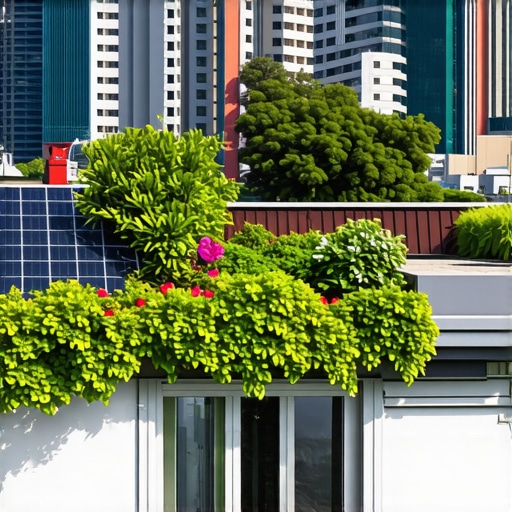
By 2026, the ‘Green Roof’ has evolved from a heavy dirt-pile into sophisticated multi-layer assemblies. We call these ‘extensive’ systems because they are shallow—usually three to six inches of growth medium. The mechanism here isn’t just about the plants; it’s about evapotranspiration. As the sun beats down, the moisture in the plants evaporates, cooling the building through the same physics that makes you feel cold when you step out of a shower. But here is the catch: you are essentially placing a giant, heavy wet blanket on your building. You need to consider the load-bearing capacity of that old loft. Every square (that’s 100 square feet in trade talk) of saturated green roof can add thousands of pounds of dead weight. If you don’t reinforce the joists, you’ll find your roof in your living room. Furthermore, the root barrier is the most critical component. I’ve seen root systems from ‘non-aggressive’ plants eat through a standard TPO membrane like it was paper, creating pinhole leaks that are impossible to track without infrared thermography.
2. Solar-Integrated Metal Roofing (BIPV)
Metal has always been the king of longevity, but the 2026 trend for urban lofts is Building-Integrated Photovoltaics (BIPV). Instead of clunky panels bolted onto the roof—which creates dozens of ‘shiners’ or missed nails that eventually leak—the solar cells are actually baked into the standing-seam metal panels. This is a game-changer for urban density. The physics here involves managing thermal expansion. Metal expands and contracts significantly as the temperature swings from a freezing January night to a scorching July afternoon. If the clips holding the panels aren’t allowed to slide, the roof will literally tear itself apart. You’ll hear it at night—a rhythmic popping and banging sound. That’s the sound of a roof that wasn’t designed for the local climate. When hiring local roofers for BIPV, you need to ensure they understand the galvanic scale. Using the wrong fasteners can cause a chemical reaction between the solar components and the metal roof, leading to rapid corrosion that turns your ‘eco-friendly’ investment into a pile of rust in under a decade.
3. Recycled Composite Slates and Polymers
For lofts with a bit of a pitch, recycled composites are becoming the standard. These are often made from post-consumer plastics and rubber, molded to look like slate or cedar. They are incredibly durable against hail, which is becoming a bigger problem in urban corridors. However, the mechanism of failure here is UV degradation. The sun’s radiation is a relentless hammer that breaks down the polymer chains in the material. By 2026, we are seeing better UV stabilizers, but you still have to watch out for ‘chalking’—where the surface of the tile turns to a fine powder that washes into your gutters and clogs your downspouts. When a roofing company tells you these last 50 years, ask to see a roof they installed 15 years ago. Look at the valleys—the internal angles where two roof planes meet. If they didn’t use a heavy-duty copper or stainless steel liner in those valleys, the recycled tiles will expand at a different rate than the flashing, and you’ll have a waterfall behind your drywall by next spring.
4. High-Emissivity White Membranes (The Cool Roof)
For the flat-roofed industrial loft, a high-emissivity white membrane like a 60-mil or 80-mil TPO (Thermoplastic Polyolefin) is the most cost-effective eco-solution. The physics is simple: reflectance. It bounces the sun’s energy back into the atmosphere rather than absorbing it into the attic space. But here’s the trade secret: a white roof is only ‘cool’ as long as it’s white. In a city, soot, dust, and bird droppings turn that pristine white surface into a dingy grey within two years, cutting your energy savings by 40%. Moreover, in northern climates, these roofs can be ‘too cool.’ During the winter, they don’t allow the sun to help heat the building, which can shift the dew point inside your roof assembly. If the dew point lands inside your insulation, you get interstitial condensation. The plywood starts to rot from the inside out, turning into something resembling soggy oatmeal, and you won’t even know it until your foot goes through the decking during a routine inspection.
“The building envelope must be viewed as a single, continuous biotic system; any break in the thermal or moisture barrier is a systemic failure.” – International Residential Code (IRC) Commentary
The Warranty Trap: Why “Lifetime” Means Nothing
I get tired of hearing roofing companies brag about ‘lifetime warranties.’ In the roofing world, ‘lifetime’ usually refers to the expected life of the product, which the manufacturer gets to define. Most of these warranties are pro-rated and don’t cover labor—the most expensive part of the fix. If your ‘eco-friendly’ roof fails because of ‘improper ventilation’—which is a catch-all excuse for most manufacturers—you are on the hook for the full cost of the tear-off. Real eco-friendliness comes from durability. The greenest roof is the one you don’t have to replace for 40 years. That requires a contractor who understands crickets—the small peaked structures built behind chimneys to divert water—and the importance of secondary water resistance. If they are just slapping shingles over old felt paper, they aren’t roofing; they’re just decorating a future leak.
[image_placeholder_1]
Closing the Case: How to Choose a Contractor for 2026
When you are vetting local roofers for a high-performance urban loft project, stop looking at their brochures and start looking at their boots. A roofer who knows their craft will be obsessed with the details you can’t see. Ask them about the R-value of the polyiso insulation they are using and how they plan to handle the air sealing at the parapet wall bypass. If they look at you like you’re speaking a foreign language, show them the door. The transition to eco-friendly roofing is a necessity for our urban centers, but it requires a forensic level of attention to detail. Don’t let your loft become another cautionary tale in my inspection log. Invest in the physics of the system, not just the aesthetic of the ‘green’ label. Your wallet, and your dry ceiling, will thank you in ten years.