
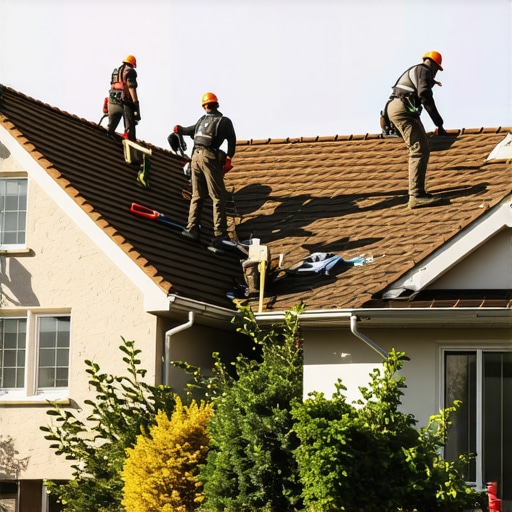
The Knock on the Door: Assessing the 2026 Claim Landscape
The sky turns that sickly shade of bruised-plum purple, the wind starts howling like a banshee, and before you know it, your roof is taking a beating from hailstones the size of golf balls. In the old days, you’d wait six weeks for a guy in a polo shirt to show up with a clipboard, lowball your estimate, and leave you with a leaking mess. But it’s 2026, and the game has changed. If you’re staring at a dining room table covered in drips, you don’t need a salesman; you need a forensic investigator. Local roofing companies have evolved from simple installers into technical advocates who understand the physics of failure better than the adjusters do. My old foreman used to say, ‘Water is patient. It will wait for you to make a mistake, then it will rot your house from the inside out while you’re sleeping.’ That’s never been truer than today, where insurance companies use AI to deny claims before you even hang up the phone. To get a fair shake, you need local roofers who know how to play the documentation game.
“A roof is only as good as its flashing, and a claim is only as good as its data.” – Old Roofer’s Adage
1. Forensic Drone Inspection and The ‘Mechanism of Failure’
In 2026, a legitimate roofer isn’t just climbing a ladder with a chalk stick. They’re deploying high-resolution drones equipped with thermal imaging. Here’s the trade secret: most insurance adjusters look for ‘functional damage’—obvious holes. But a pro looks for the microscopic fracture. When a hailstone hits an asphalt shingle, it doesn’t always break it. It creates a ‘bruise.’ This impact displaces the protective granules, exposing the raw bitumen underneath. Within six months, the UV rays from the sun bake that asphalt, causing it to crack. This is the ‘Mechanism Zooming’ that speeds up claims. By providing the carrier with thermal data showing moisture trapped in the fiber matting immediately after a storm, local roofers prove the damage is present long before the shingles start flapping in the breeze. They aren’t just saying ‘it’s broken’; they are showing the hydrostatic pressure building up in the microscopic crevices. This level of forensic evidence makes it nearly impossible for an adjuster to argue that the damage is just ‘cosmetic weathering.’
2. The Supplementation Strategy: Fighting the ‘Paper-Pusher’ Estimate
Insurance adjusters use software like Xactimate to write estimates, but they often ‘forget’ the local building codes. A ‘trunk slammer’ contractor will take that initial check and run. A real local pro knows about the ‘shiner’ problem. A shiner is a nail that missed the rafter, sticking through the plywood. In a cold snap, that nail acts as a thermal bridge. Warm air from your house hits that cold metal, condenses, and drips. If your roofer isn’t documenting the need for proper ice and water shields or the replacement of rotten fascia boards—which costs double once the shingles are already down—you’re getting fleeced. Local roofing companies speed up claims by submitting ‘Supplements’ before the work even begins. They identify the ‘Cricket’—that little peak behind your chimney—that the adjuster ignored. By citing the IRC (International Residential Code) R905, which dictates specific underlayment requirements, they force the insurance company to pay for a roof that actually meets safety standards, rather than a ‘Band-Aid’ repair. This upfront honesty prevents the ‘wait-and-see’ delays that plague most roofing projects.
“Effective drainage is the first rule of building; if the water stays, the building dies.” – Modern Adaptation of Vitruvius
3. Real-Time Carrier Integration and The Death of the Paper Check
The biggest bottleneck in roofing claims has always been the back-and-forth between the contractor, the homeowner, and the bank. In 2026, top-tier local roofers use direct-to-carrier digital platforms. This means as soon as the roofer snaps a photo of a ‘Square’—that’s 100 square feet of roofing—showing delamination or wind-lift, it’s uploaded to a cloud portal where the adjuster can approve the ‘supplement’ in real-time. We’re talking about cutting the approval process from weeks to hours. This is vital because ‘Water is patient,’ but your plywood isn’t. If your roof stays open or compromised for three weeks while you wait for a paper check, you’re going to end up with mold in the attic. A local roofer who understands the 2026 digital workflow can get the materials on-site while the storm clouds are still on the horizon. They know that every day a claim sits ‘pending’ is a day the structural integrity of your home is at risk. They don’t just ‘do’ roofing; they manage the logistics of a recovery.
Why ‘Lifetime Warranties’ are Often Marketing Smoke
Don’t get distracted by the ‘Lifetime’ sticker on the shingle bundle. In the roofing trade, a ‘Lifetime’ warranty usually covers the material, not the labor to fix a mistake. If a ‘cheap’ contractor installs your shingles with too many ‘shiners’ or fails to ventilate the ridge properly, the manufacturer will walk away from the claim faster than a cat in a rainstorm. You need a local pro who offers a workmanship warranty. They are the ones who will still be in town when your valley starts leaking in three years because of thermal expansion. Roofing is a game of inches and ounces. If the lap isn’t right, or the starter strip is missing, the wind will peel that roof back like an orange. Stick with the veterans who have seen the ‘oatmeal plywood’ disasters and know exactly how to prevent them by following the physics of the roof deck.