
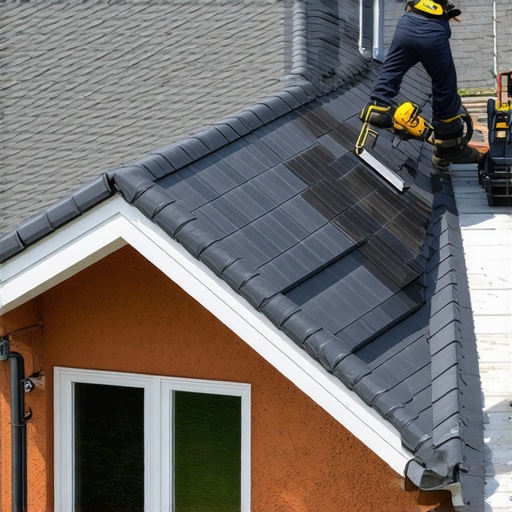
The Anatomy of a $60,000 Failure: Why Smart Shingles Are Testing the Trade
I was standing on a roof in the dead of a humid July morning when I first felt the ‘squish.’ Not the squish of rotting organic felt from the 1980s, but the expensive, high-tech squish of a three-year-old smart shingle system that cost the homeowner more than a luxury sedan. My old foreman used to say, ‘Water is patient. It will wait for you to make a mistake, and it will find the one millimeter of metal you didn’t bend right.’ In 2026, water isn’t just patient; it’s finding new ways to kill the electronics embedded in our roof decks. We aren’t just local roofers anymore; we’re essentially circuit board technicians working on a 45-degree incline.
The issue with these integrated solar and sensor-embedded shingles isn’t the tech itself—it’s the physics of the roof deck. When you combine high-voltage leads with traditional asphalt bypasses, you create a thermal bridge that acts as a magnet for condensation. I’ve spent twenty-five years watching roofing companies slap shingles down like they’re playing a game of speed-tag, but with smart tech, that ‘git ‘er done’ attitude leads to ‘tear it off’ results. We’re seeing a massive spike in ‘shiners’—those missed nails—shorting out entire rows of smart arrays because the installer didn’t account for the wiring harness. This isn’t just a leak; it’s a system-wide blackout.
“The installation of solar-integrated roofing shall be performed in a manner that maintains the weather-resistive integrity of the roof-covering system.” – International Residential Code (IRC) Section R905
Fix 1: Managing the Capillary Pull at the Wiring Penetration
The first major fix we’re seeing involves the way local roofers handle the wire-feed penetrations. Most smart shingles require a ‘trunk line’ that feeds into the attic. In the early days of this tech, guys were just using standard rubber boots. But water has a nasty habit of climbing. Through capillary action, moisture gets pulled under the shingle, hits the wire casing, and follows it straight through the decking. We’re now moving toward a triple-flash bypass. This involves a primary ice-and-water shield membrane, a secondary rigid-flashing plate, and a tertiary UV-stable sealant. If you don’t use a ‘cricket’ or a diverter above the main wire-feed entry, you’re basically inviting a river into the insulation. You have to break the surface tension of the water before it reaches the electronics. We don’t just caulk it; we engineer a path for the water to move around the ‘nerve center’ of the shingle.
Fix 2: Combatting Thermal Expansion Short-Circuits
One thing those glossy brochures don’t tell you is that a roof deck is a living, breathing thing. It expands in the 100-degree sun and shrinks when the frost hits. Traditional asphalt can handle this. Smart shingles, with their rigid internal components, often don’t. I’ve inspected dozens of ‘dead’ squares where the internal copper ribbon snapped because the roof deck shifted just a quarter-inch. The fix that professional roofing companies are adopting in 2026 is the Floating Attachment Method. Instead of nailing the shingle dead-tight to the deck, we’re using specialized clips that allow for micro-movements. Think of it like a bridge expansion joint. If you pin a smart shingle down with six nails like it’s a standard architectural tab, you’re going to snap the circuitry by winter. We have to respect the thermal shock that occurs when a sudden thunderstorm hits a 150-degree roof surface.
“A roof is only as good as its flashing and its ability to shed water without relying on sealants alone.” – National Roofing Contractors Association (NRCA) Guidelines
Fix 3: The ‘Cold-Deck’ Ventilation Overhaul
The silent killer of smart shingles isn’t the rain; it’s the heat from inside the house. In northern climates, warm air leaks into the attic, hits the cold underside of the roof deck, and turns into liquid. With smart shingles, this moisture gets trapped between the integrated backing and the plywood. I’ve seen plywood that looked brand new from the outside but felt like wet cardboard when I pushed a screwdriver through it. The fix is a radical shift in attic ventilation. We are moveing away from simple ridge vents and toward powered cross-ventilation systems that keep the deck temperature within 5 degrees of the ambient air. If the attic is 140 degrees, your smart shingles are baking from both sides. We have to create a ‘cold-deck’ environment to prevent the electronics from de-laminating. This means every square of roofing needs a calculated amount of intake at the soffit to ensure the air is constantly moving, pulling that moisture out before it can settle on the wiring harnesses.
Why Most Roofing Companies Fail the Smart Test
The problem is that many local roofers are still treating smart shingles like they’re just ‘heavy asphalt.’ They aren’t. They are a specialized building material that requires forensic-level attention to detail. When you see a crew rushing through a job, skipping the starter strip or using cheap galvanized nails that will corrode against the smart shingle’s specialized backing, you’re looking at a future repair bill. You have to look for ‘shiners’—nails that missed the rafter and are just hanging out in the attic, acting as a thermal bridge for frost to form on. In 2026, a single shiner can cause a localized humidity spike that fries a $500 shingle. It’s about precision. We use laser-levels now to ensure the wiring channels align perfectly. If you’re off by half an inch, you’re pinching a wire, and that’s a fire hazard. Don’t let a ‘trunk slammer’ touch your smart roof; they’ll be gone before the first short-circuit happens. You need someone who understands the physics of water and the fragility of a circuit board.