
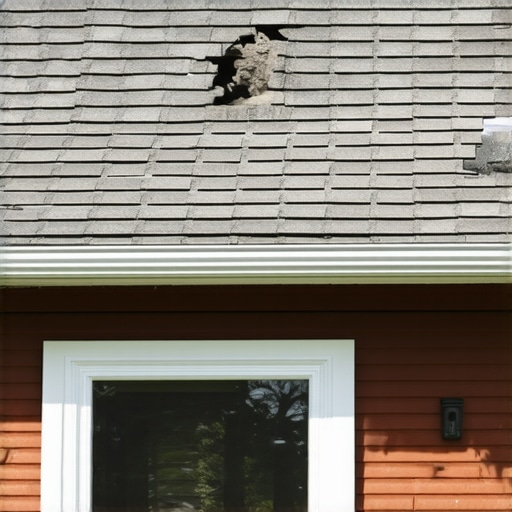
The Silent Decay: Why Your Roof is Planning a 2026 Protest
If you think your roof is a static shield, you are dead wrong. It is a dynamic, multi-layered system undergoing constant biological and physical stress. By the time you see a brown circle on your ceiling, the battle was lost three years ago. As we approach 2026, a specific generation of roofing—mostly those installed during the mid-2000s building surge—is reaching a statistical ‘cliff’ of material fatigue. I have spent 25 years on the roof deck, and I am tired of telling homeowners that their $30,000 asset is now worth zero because of a $50 piece of metal.
Walking on a roof that has reached its limit is a specific sensory experience. Last month, I stepped onto a job site in the Northeast, and the roof felt like walking on a damp sponge. It wasn’t just old; it was rotting from the inside out. I knew exactly what I’d find underneath: black mold soup and plywood that had the structural integrity of wet cardboard. This happens when homeowners ignore the warning signs that the physics of their shelter has failed.
1. The Capillary Crawl: Step Flashing and Wall-to-Roof Failures
Water is a patient predator. It doesn’t always fall straight down; it uses surface tension to crawl sideways and upwards. This is called capillary action. When your roofing was originally installed, the local roofers likely used step flashing where the roof meets a vertical wall. Over twenty years, the house settles, and the wood shrinks. This creates a microscopic gap. In the freeze-thaw cycles leading into 2026, moisture gets sucked into these gaps, moving horizontally behind the shingles and onto the unprotected decking.
“A roof is only as good as its flashing.” – Old Roofer’s Adage
If you ignore this, the water bypasses the shingles entirely. It starts eating the fascia boards and the rafter tails. Most roofing companies will just slap a bead of caulk on it. That is a Band-Aid on a gunshot wound. The caulk will dry out and crack in twelve months. The only real fix is ‘the surgery’: tearing out the siding and shingles at the junction and installing new, oversized step flashing with a proper kick-out at the bottom to divert water into the gutter where it belongs.
2. The ‘Shiner’ Epidemic: Attic Condensation and Thermal Bridging
A ‘shiner’ is a trade term for a nail that missed the rafter and is sticking through the plywood into the attic space. During a cold Northeast winter, that nail becomes a thermal bridge. It gets as cold as the air outside. Meanwhile, your attic is filled with warm, humid air leaking from your living room through an ‘attic bypass.’ When that warm air hits the frozen nail, it condenses. This is called ‘attic rain.’ Each nail becomes a slow-motion faucet dripping onto your insulation.
By 2026, thousands of these shiners will have been dripping for two decades. The resulting rot isn’t visible from the outside. You have to get into the hot, 140-degree crawlspace and look for the black rings around the nail penetrations. If your attic smells like a wet basement, you have a ventilation crisis that is literally dissolving your roof from the bottom up. You need more than a roofer; you need a forensic analysis of your R-value and air sealing.
3. The Cricket Crisis: Why Your Chimney is a Water Magnet
If your chimney is wider than 30 inches, the International Residential Code (IRC) requires a chimney cricket. This is a small peaked roof structure built behind the chimney to divert water. Many builders in the early 2000s skipped this to save three hours of labor. Without a cricket, water slams into the back of your chimney and pools. This creates hydrostatic pressure—the weight of the water pushes it under the shingles.
“The roof shall be shed of all water to the exterior of the building envelope, and drainage shall be provided for all roof areas that are not inherently self-draining.” – IRC Section R903.4
If you don’t have a cricket by 2026, the constant saturation will have likely rotted the header board behind the masonry. You’ll see it as a leak in the fireplace or a weird smell in the living room during summer. Local roofers who know their craft will insist on building a custom cricket and wrapping it in Ice & Water Shield. Anything less is just waiting for the next storm to ruin your hardwood floors.
The Reality of the ‘Lifetime Warranty’
Don’t get sucked into the marketing nonsense. A ‘Lifetime’ shingle is only as good as the guy who nailed it down. If he used four nails instead of six per square, or if he high-nailed the shingle so it isn’t actually biting into the course below, the warranty is void. Most of the failures we see aren’t material failures; they are installation crimes. When you call roofing companies, don’t ask about the shingle brand. Ask them about their drip edge protocol and how they handle valley transitions. If they don’t talk about physics, they aren’t roofers; they’re salesmen. Protect your home before 2026 turns a small repair into a total tear-off.